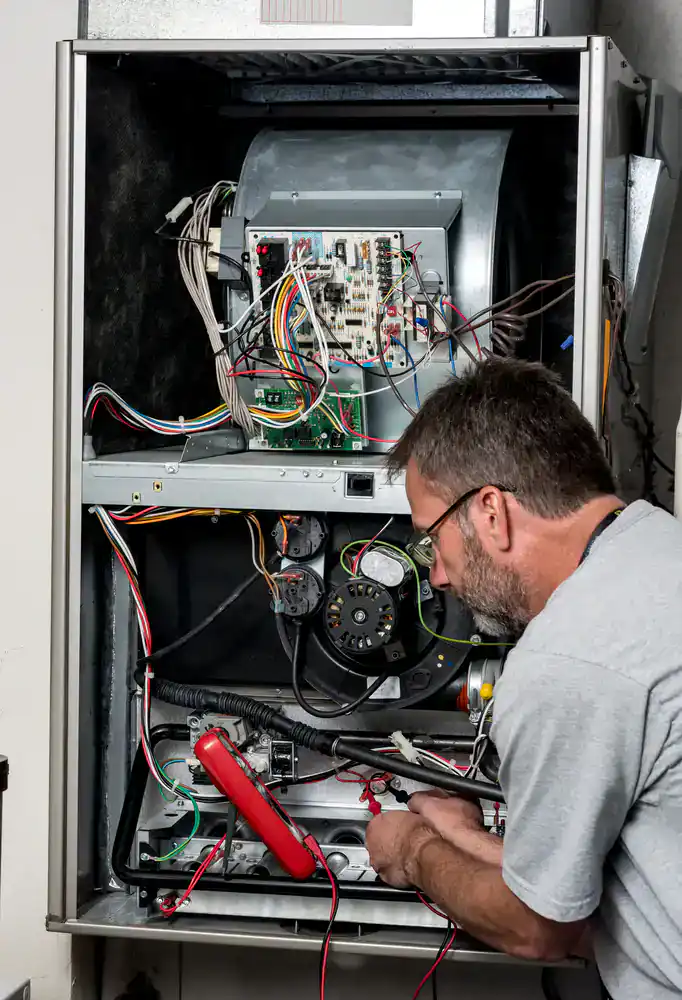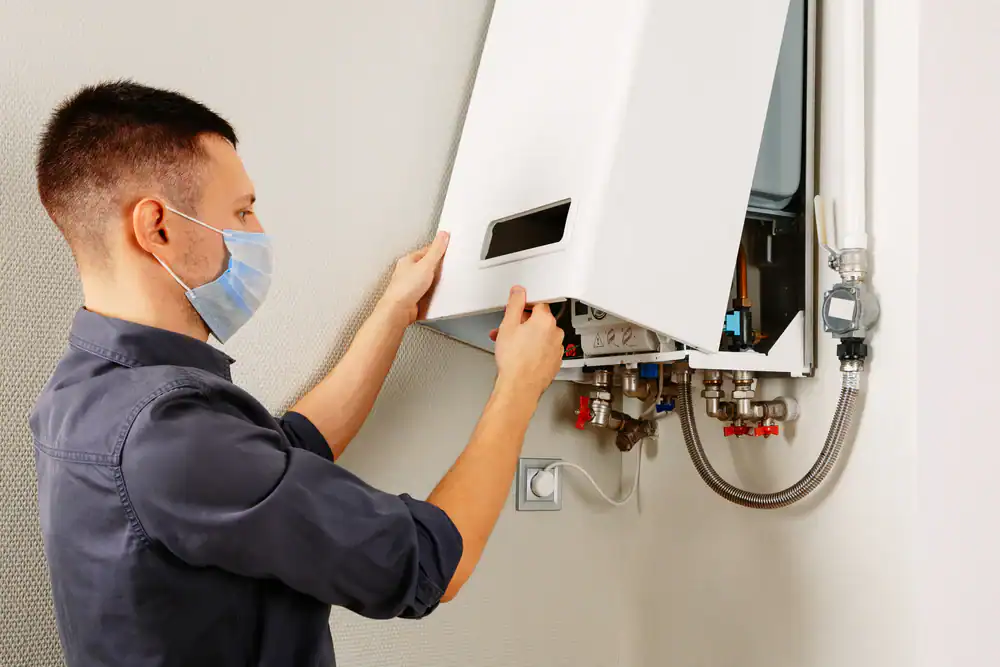
HVAC Repair or Replace: The Framework That Ends the Guesswork
Not sure whether to fix your HVAC or replace it? Here's the honest framework that takes the guesswork — and the pressure — out of the decision.
Share:

Summary:
Your HVAC system stopped working. Or it’s working, but barely — and you’ve already had it repaired twice this year. Now you’re staring at another service call estimate and wondering whether you’re throwing good money after bad.
This is the moment most homeowners make their most expensive HVAC mistake. Not because they’re uninformed, but because they’re deciding under pressure, in discomfort, without a clear framework.
We’ve built this guide to give you that framework. By the time you finish reading, you’ll know exactly how to evaluate your situation — not based on what a contractor is telling you in the moment, but based on the actual numbers and signals that make the answer obvious.
HVAC Repair vs. Replace: How to Actually Make the Call
We use a go-to formula in the industry for this decision, and it’s worth knowing. It’s called the $5,000 rule. Take your system’s age in years and multiply it by the cost of the repair being quoted. If that number exceeds $5,000, replacement is almost always the smarter financial move. If it’s under $5,000, repair typically makes sense.
So if your 12-year-old AC unit needs a $350 capacitor replacement, that’s $4,200 — repair it. But if that same 12-year-old unit needs a $500 repair, you’re at $6,000 — and the math starts pointing toward replacement.
It’s not a perfect formula, but it gives you a rational anchor when emotion and urgency are pulling you in different directions.
What the $5,000 Rule Doesn't Tell You
The $5,000 rule is a starting point, not the whole picture. There are a few other factors that can shift the answer significantly, and ignoring them is where homeowners tend to get burned.
Repair history matters a lot. If your system has needed two or more significant repairs in the past twelve months, that pattern tells you something the formula can’t — the system is entering a failure cycle, and the next repair is probably not far behind. At that point, the cumulative cost of continued repairs often exceeds what a replacement would have cost, and you’ve bought yourself nothing but frustration.
Refrigerant type is another concrete tipping point. Systems built before 2010 often use R-22 refrigerant, which was banned from production in the United States as of January 1, 2020. Supplies still exist, but they’re limited and increasingly expensive. If your system uses R-22 and needs a refrigerant recharge, you’re not just paying for a repair — you’re paying premium prices for a stopgap that will be harder and costlier to repeat next time. That’s a situation where replacement almost always wins, regardless of what the $5,000 rule says.
Energy costs deserve a look too. A system that’s technically running but operating at significantly reduced efficiency is costing you money every month on your utility bills — money that doesn’t show up in any repair estimate but absolutely shows up in your PSE&G bill. Nearly half of the average household’s annual energy spend goes to heating and cooling. Upgrading to a modern, ENERGY STAR-certified system can cut those costs by up to 20%. That’s not a sales pitch — it’s math that belongs in your decision.
Finally, consider what a repair actually fixes. Topping off refrigerant without addressing a leak isn’t a repair — it’s a delay. A contractor who replaces a part without diagnosing why that part failed is handing you a temporary fix. When you’re evaluating a repair quote, it’s worth asking: does this solve the underlying problem, or does it just buy time?

How Long Does an HVAC System Last? The Lifespan Numbers You Need
Age is the single most useful variable in the repair-or-replace decision, and most homeowners don’t know their system’s actual age. If you don’t know yours, check the data plate on the unit — it’ll have a manufacture date, or a serial number you can look up online.
Here’s what typical lifespans look like by system type: central air conditioners generally last 12 to 15 years; furnaces tend to run 15 to 20 years; heat pumps fall in the 10 to 15 year range; and boilers, when properly maintained, can last anywhere from 15 to 30 years.
The straightforward guidance: if your air conditioning unit is older than 10 years, or your furnace is older than 15, replacement deserves serious consideration — not because the system can’t still run, but because it’s operating in borrowed time and at declining efficiency.
This is where a lot of homeowners get caught. A 17-year-old furnace that still heats the house feels fine. It’s not broken, so why replace it? The answer is that a system running at the tail end of its expected lifespan is costing you more to operate, more to repair, and carrying a much higher probability of failing at the worst possible time — the middle of a cold snap in January, when emergency replacement pricing applies and scheduling is tight.
In Essex County, where winters regularly push below 20°F and summers routinely top 90°F, that kind of failure isn’t just inconvenient — it’s a real problem. The older housing stock throughout Montclair, Bloomfield, Glen Ridge, Maplewood, and South Orange means many local homeowners are running systems that are 20 or more years old. If that’s you, the lifespan data is telling you something worth paying attention to.
When to Replace Your HVAC System: Signals That Make the Answer Clear
Sometimes the $5,000 rule and the lifespan data still leave you in a gray zone. The repair cost isn’t enormous, the system isn’t ancient, but something still feels off. There are a handful of signals that cut through the ambiguity and point clearly toward replacement.
Repeated repairs are the most obvious one. If you’ve been cycling through service calls — a motor one spring, a capacitor the next, a refrigerant issue the following summer — the individual costs might each look manageable, but the pattern is telling you the system is deteriorating across the board. At that point, you’re not maintaining equipment; you’re financing a slow decline.
Is It Worth Repairing a 15-Year-Old AC Unit or Furnace?
This is one of the most common questions we hear, and the honest answer is: it depends on the repair, but the odds are increasingly not in your favor.
A 15-year-old central air conditioner is at or past the upper end of its expected lifespan. A minor repair — a capacitor, a contactor, a thermostat — might be worth doing if the system has been well-maintained and hasn’t had a history of problems. But anything involving the compressor, the coil, or the refrigerant circuit on a 15-year-old unit starts to look like a losing bet. Those are major components, and replacing them on an aging system often costs a significant portion of what a new system would cost — without the efficiency gains, the warranty, or the peace of mind.
A 15-year-old furnace sits right at the edge of its expected lifespan as well. If it’s been serviced regularly and has a clean bill of health outside of one specific issue, a modest repair might extend it a few more useful years. But if it’s been running without regular maintenance, if the heat exchanger has any concerns, or if this is the second or third repair in recent memory, replacement is almost certainly the better financial decision over a 3-to-5-year horizon.
For Essex County homeowners specifically, New Jersey mandates minimum efficiency standards for any replacement system installed under permit. When you replace, you’re not just getting new equipment — you’re getting equipment that meets current SEER2, AFUE, and HSPF2 minimums under the NJ Uniform Construction Code. That means measurably better efficiency than whatever you’re replacing, which has a real impact on your monthly energy costs going forward.
And if you’re a PSE&G customer — which covers most of Essex County — there’s an HVAC Instant Rebates Program available for upgrades to qualifying ENERGY STAR equipment. That’s a concrete financial offset that belongs in your replacement math, not an afterthought.

Essex County Boiler Owners: There's a Third Option Worth Knowing About
Most repair-or-replace guides are written with central AC and forced-air furnaces in mind. If you have a boiler — which is common throughout Essex County’s older housing stock, particularly in the Victorian-era and early 20th-century homes that define neighborhoods like Montclair, Glen Ridge, and South Orange — the decision has an additional dimension that most guides completely ignore.
When an oil boiler needs a significant repair, the real question isn’t always “fix this boiler or buy a new one.” For many homeowners in Essex County, the more important question is: is this the moment to stop running on oil entirely?
Oil-to-gas conversion is something we specialize in, and it’s a pathway that makes compelling financial sense for a lot of Essex County homeowners who are already facing a major boiler repair. The cost of oil heating has been volatile for years. Converting to natural gas eliminates that price exposure, and a modern gas boiler or heating system operates at significantly higher efficiency than most aging oil systems. When you factor in the long-term fuel cost difference alongside the repair cost you were already facing, conversion often becomes the most financially rational choice — not the extravagant one.
This isn’t a pitch to replace something that doesn’t need replacing. If your oil boiler is relatively young and the repair is minor, fix it. But if you’re looking at a major repair on an aging oil system, you owe it to yourself to at least understand what conversion would look like before you commit. We’ve been doing this work in Essex County since 1973, and we can walk you through the actual numbers — not a sales estimate, but an honest comparison of your options.
That’s the kind of conversation that tends to make the decision obvious, whichever direction it goes.
Making the Right HVAC Decision for Your Home in Essex County
The repair-or-replace decision doesn’t have to be a stressful guess. With the $5,000 rule as your anchor, your system’s age and lifespan benchmarks as context, and a clear read on your repair history and refrigerant type, the answer usually becomes clear without anyone having to pressure you into it.
The homeowners who end up with regret are almost always the ones who decided in a panic — patching a system that was already past its useful life, or replacing something that had years left in it because a contractor made replacement sound urgent. A good framework removes both of those risks.
If you’re working through this decision right now and want a straight answer from someone who’s been doing this work in Essex County for over 50 years, reach out to Adriatic Aire. We offer free estimates, we’ll tell you what we actually think, and we won’t recommend replacement if repair is genuinely the right call.
Article details:
- Published by:
- Adriatic Aire LLC
- Published to:
- Last modified:
- September 29, 2026
Share:
Continue learning: