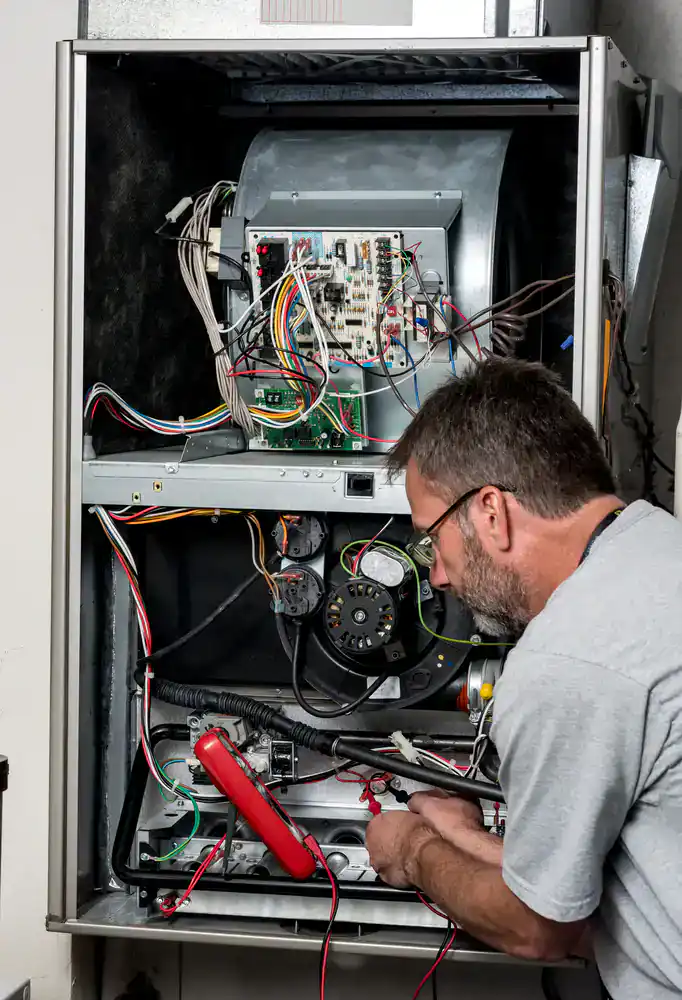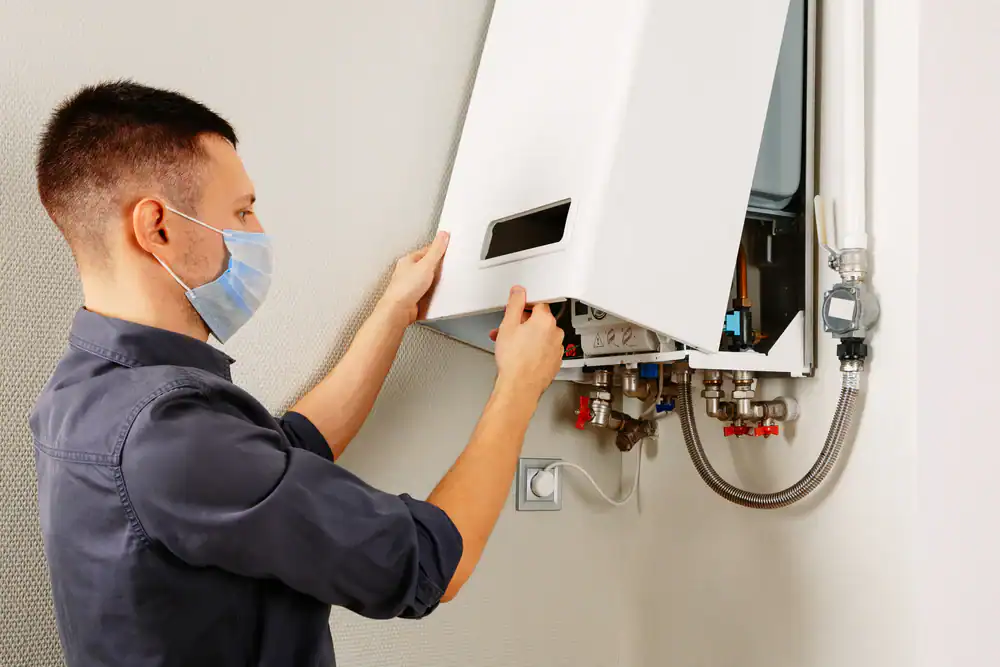
Air Conditioner Replacement Cost Breakdown for Essex County, NJ
What does it actually cost to replace an AC in Essex County? Here's the honest breakdown — no fluff, no pressure, just the numbers and facts you need.
Share:

Summary:
Your AC stops working on a 92-degree day in July, and suddenly you’re on the phone trying to figure out how much this is going to cost — with no good baseline and no time to research. It’s a stressful spot to be in. The quotes you get can vary by thousands of dollars, and it’s not always obvious why.
This page is here to change that. We’re going to walk through what actually drives AC replacement costs in Essex County, what fair pricing looks like in this specific market, and what separates a solid installation from one you’ll regret. By the end, you’ll know exactly what questions to ask.
What Does Air Conditioner Replacement Cost in Essex County, NJ?
For most homes in Essex County, a full central AC replacement — equipment and installation — runs somewhere between $5,500 and $12,000. That’s a wide range, and it’s wide for real reasons. The size of your home, the condition of your existing ductwork, the efficiency rating of the system you choose, and the complexity of the installation all pull that number in different directions.
Northern New Jersey — Essex, Bergen, and Hudson counties specifically — runs $1,600 to $3,000 higher than the rest of the state for the same system. Labor rates in this part of New Jersey run 20 to 30 percent above the state average, largely because of proximity to New York City. That’s not a contractor markup — it’s the market.
Why the Installed Price Is So Much Higher Than the Unit Price
This is one of the most common points of confusion we hear from homeowners. You look up a 3-ton AC unit online, see it listed at $2,500, and then get a contractor quote for $7,000 and wonder what happened to the other $4,500.
Here’s what that gap actually covers. The equipment itself is just one piece. A proper installation also includes copper refrigerant line sets, a condensate drain line, a new mounting pad for the outdoor unit, an electrical whip connecting the unit to your panel, and the refrigerant charge itself. Then there’s the labor — typically several hours of skilled work from a licensed technician — and the building permit, which Essex County municipalities require and which runs $100 to $250 depending on your town. Montclair, Glen Ridge, Cedar Grove, and Verona all have their own building departments, and permits are not optional. They protect your homeowner’s insurance coverage and your home’s resale value.
There’s also the matter of proper commissioning — verifying that the system is operating correctly, that refrigerant levels are accurate, and that airflow through your ductwork is balanced. A contractor who skips this step is leaving efficiency and longevity on the table.
Contractor-supplied equipment often carries better warranty coverage than homeowner-supplied equipment. Some manufacturers void their warranty if the unit wasn’t purchased through a licensed dealer. That “cheaper” unit you found online could end up costing you more if something goes wrong in year three.
When you add it all up, the installed cost reflects real work, real materials, and real accountability. A quote that seems unusually low almost always means something is being left out — and you’ll find out what when the bill comes or when something fails.
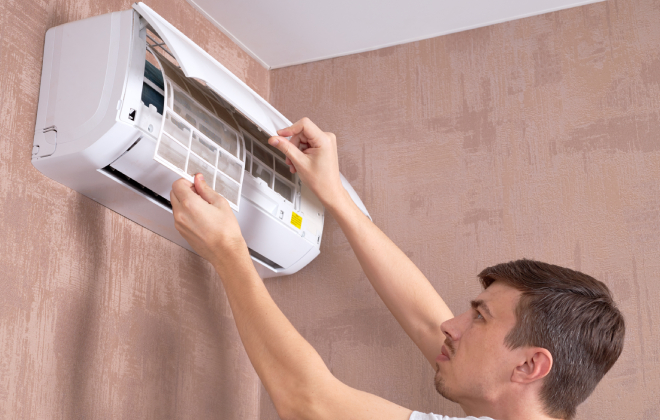
Should You Repair or Replace Your AC System?
This is the question most homeowners are actually wrestling with, and it deserves an honest answer rather than a reflexive push toward replacement.
A useful rule of thumb the industry uses is called the $5,000 rule: multiply the age of your system in years by the cost of the repair being recommended. If that number exceeds $5,000, replacement is usually the smarter financial move. So if your 14-year-old unit needs a $400 repair, you’re probably fine fixing it. If that same unit needs a $700 repair, you’re at $9,800 on the scale — and replacement starts making a lot more sense.
Age matters for another reason too. Systems manufactured before 2010 often use R-22 refrigerant, which has been phased out in the United States since 2020. If your system runs on R-22 and develops a refrigerant leak, the cost to recharge it has become extremely high — and supply is limited. In that situation, a repair is often just delaying an inevitable replacement by a year or two at significant cost.
Essex County’s older housing stock adds another layer to this conversation. Many homes in Montclair, South Orange, and Glen Ridge were built between 1920 and 1960. These homes often have original ductwork that’s undersized by modern standards, and electrical panels that may need upgrading to support a new high-efficiency system. If ductwork modifications or panel work are needed, those costs get added to the replacement total — but they’re also one-time investments that improve your home’s comfort and efficiency for decades. A good contractor will tell you upfront if those additional items are necessary, and what they’ll cost, before you commit to anything.
The repair versus replace decision isn’t always obvious, and any contractor who pushes replacement without walking you through the math isn’t giving you the full picture. We’ve always believed that an honest answer — even when it means a smaller job — is the right one.
How AC System Sizing Actually Works — and Why It Matters More Than You Think
Bigger is not better when it comes to air conditioning. An oversized AC unit cools your home so quickly that it shuts off before it’s had time to pull humidity out of the air. You end up with a house that feels cold but clammy, a system that cycles on and off constantly — which accelerates wear — and energy bills that don’t reflect the efficiency rating you paid for.
Proper sizing requires a Manual J load calculation. This accounts for your home’s square footage, ceiling height, insulation quality, window area and orientation, local climate data, and the condition of your ductwork. It’s the industry standard — and a meaningful number of contractors skip it in favor of rough rules of thumb. If a contractor quotes you a system size without doing a load calculation or asking detailed questions about your home, that’s worth asking about.
What SEER2 Ratings Mean for Your Replacement Cost in 2026
If you’ve gotten any AC quotes recently, you may have noticed the term SEER2 and wondered how it differs from the SEER ratings you’ve seen in the past. It’s a fair question, and it has a direct impact on what you’ll pay.
SEER2 is the updated efficiency rating system that took effect January 1, 2023, replacing the older SEER standard with a more rigorous testing methodology. The minimum SEER2 rating for new residential AC equipment in the North and Central US region — which includes New Jersey — is 13.4 SEER2, roughly equivalent to a 14 SEER under the old scale. This means the cheapest, least efficient new equipment available today is more efficient than the baseline equipment sold just a few years ago, and it’s priced accordingly.
Higher-efficiency systems — 16 SEER2 and above — cost more upfront but deliver lower monthly operating costs. For a home in Essex County that runs the AC from late May through September, the difference in energy costs between a baseline and a mid-to-high-efficiency system can add up meaningfully over a 15-to-20-year equipment lifespan. Whether that premium makes financial sense depends on your current utility costs, how much you run the system, and how long you plan to stay in the home.
There are also financial incentives worth knowing about. The federal Inflation Reduction Act allows homeowners to claim a tax credit of up to $600 for a qualifying high-efficiency central AC installation, or up to $2,000 for a heat pump system. PSE&G and JCP&L — the two primary utilities serving Essex County — both offer rebates through New Jersey’s Clean Energy Program for high-efficiency HVAC equipment. These rebates don’t require you to do anything complicated; we can tell you which systems qualify and help you navigate the paperwork.
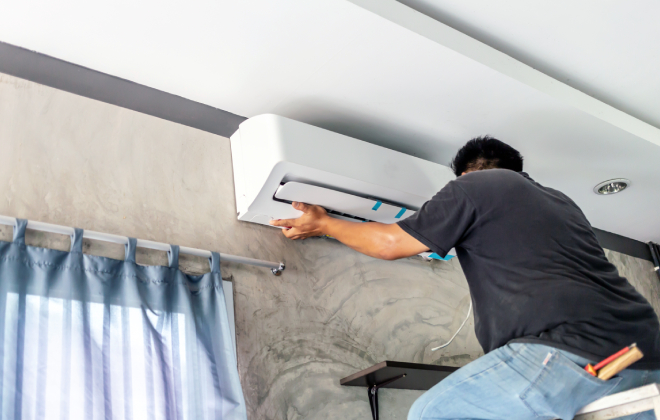
Essex County Homeowners: Is an Oil-to-Gas Conversion Worth Considering?
If your home in Montclair, Verona, Cedar Grove, or anywhere else in Essex County still runs on oil heat, an AC replacement is a natural moment to think about the bigger picture. Many of the older homes in this area were built when oil was the dominant fuel source, and a significant number of them have never made the switch to natural gas.
An oil-to-gas conversion — replacing your oil-fired boiler or furnace with a gas system — can reduce annual heating costs substantially, and it eliminates the logistical hassle of oil deliveries and tank maintenance. When you’re already having HVAC work done, the timing makes sense: the contractor is already in your mechanical room, the permitting process overlaps, and the disruption to your home is consolidated into one project rather than two.
New Jersey’s Clean Energy Program offers incentives for this type of conversion, and the long-term operating cost difference between oil and gas heat in a Northern New Jersey winter is significant. We’ve been doing oil-to-gas conversions in Essex County since before most HVAC companies in this area were in business, and it’s a service we know well. If your home is still on oil, it’s worth having the conversation when you’re already looking at your HVAC system.
There’s also a broader point here about doing things in the right order. Replacing your AC without evaluating your heating system — especially in an older home — can mean missing an opportunity to address both at once and save on combined labor costs. Replacing a furnace and AC together typically saves $1,000 to $2,000 in labor compared to doing them separately. If both systems are aging, that’s worth factoring into your decision.
Getting an Honest AC Replacement Quote in Essex County
The most important thing you can do before hiring anyone is make sure you’re comparing apples to apples. A complete, honest quote should include the equipment model and efficiency rating, labor, all materials, the permit cost, and any additional work — ductwork modifications, electrical upgrades — spelled out clearly. If a quote is vague, ask for the breakdown. If a contractor can’t provide one, that tells you something.
The right system for your home is the one that’s sized correctly for your specific house, installed with permits, and backed by a contractor with a real track record in Essex County. Not the biggest unit, not the cheapest option, and not a quote that skips the details.
We’ve been doing this work in Essex County since 1973. If you’re trying to figure out what a replacement would actually cost for your home — no pressure, no upsell — reach out to us for a free estimate and a straight answer.
Article details:
- Published by:
- Adriatic Aire LLC
- Published to:
- Last modified:
- November 26, 2026
Share:
Continue learning: