Furnace Short Cycling: Why It Happens and How to Fix It
Your heat keeps kicking on and off but never warms the house. Here's what's usually behind it, what to check first, and what a real diagnosis looks like.
Share:
Summary:
Your heat comes on, runs for a few minutes, shuts off, and then does it all over again. The house never quite warms up. You’re left wondering whether that clicking and humming is wearing something out, or setting you up for a no-heat call the first week it drops below freezing. That’s furnace short cycling, and it’s one of the most common things Essex County homeowners ask us about. The cause is often smaller than you’d fear. But in a county full of pre-war houses, the first thing to sort out is what you’re actually heating with.
What Is Furnace Short Cycling?
A furnace in a healthy cycle runs for around five minutes or more before it shuts off. If yours starts, quits in under five to ten minutes, and fires up again moments later, that’s short cycling. The house never settles at the temperature you set, and some rooms stay cold.
Short cycling is the symptom. The cause is what you need to find, and there are many possibilities, from a dusty sensor to a furnace that’s too big for the house. Every restart also strains the igniter, the motors and the electrical parts, so it’s worth sorting out before it becomes a repair you didn’t plan on. Usually that happens during the first hard cold snap of the season.
Do You Have a Furnace or a Boiler?
Here’s something almost every guide on this topic skips. They assume forced air, with a furnace pushing warm air through ducts. In Essex County, NJ, that’s only part of the picture. A lot of the housing in Montclair, Bloomfield, Glen Ridge, the Oranges and Maplewood dates from the 1880s through the 1940s, and plenty of those homes still run on original steam or hot-water boilers feeding cast-iron radiators. Colonials in places like Upper Montclair are more likely to have warm-air furnaces, and many houses have been changed over the decades into something in between.
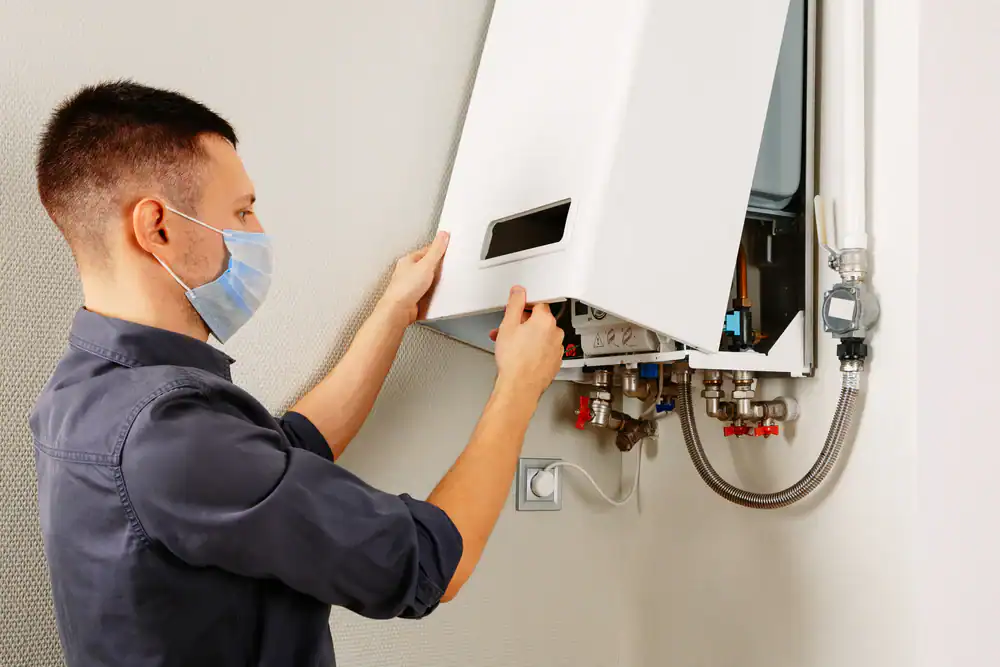
So before anything else, look at how the heat reaches your rooms. Vents and registers mean a furnace. Radiators or baseboard units mean a boiler. If you bought the house after someone swapped one system for another, or you have a furnace on one floor and radiators on another, check both. Plenty of people search “furnace short cycling” when what they really have is a boiler that keeps shutting down moments after it starts.
That matters because the fixes differ. Filters, registers and duct airflow are furnace problems. A boiler has its own list of causes, and we’d rather look at yours than guess from a distance. Our boiler repair work covers steam and hot-water systems. On our own site, we’ve put common New Jersey boiler repairs at roughly $200 to $600, with about $400 being typical for a standard residential job. Either way, getting the system type right keeps you from paying for the wrong repair.

Why Does My Furnace Keep Turning On and Off Every Few Minutes?
If you do have a furnace, the cause usually falls into three groups: airflow, sensing and sizing. Airflow is the most common. A clogged filter chokes the furnace until it overheats and shuts itself down, and closed or blocked registers do the same thing. There’s a twist we see after people fix the obvious. A new filter with a higher MERV rating can restrict airflow more than the old one, and the cycling starts right after a filter change. A thinner media cabinet or a lower-rated filter often settles it.
Sensing is the second group. A flame sensor coated in dust, which happens easily after a summer sitting idle, can’t confirm the flame, so the furnace shuts the gas off and tries again. A thermostat in direct sun or next to a drafty door can also tell the furnace the house is warm when it isn’t.
Sizing is the one older homes are known for. A furnace that’s too big heats the space in minutes and shuts off. If the cycling began the week a new furnace went in, oversizing is the first suspect. Ductwork matters too. In pre-war Essex County homes that have been renovated more than once, the ducts often don’t match the equipment connected to them, and a newer furnace on original or modified ducts can behave badly. You’ll often notice it as one back bedroom that barely gets any air.
What can you safely check tonight? The filter, the thermostat batteries and location, and whether every register is open. If none of that helps, stop there and call us.
Furnace Repair for Short Cycling: What a Real Diagnosis Looks Like
Short cycling is a clue. Swapping a part and hoping it stops is how people end up paying for two or three visits and still hearing the same click, hum and shutoff at 2 a.m. Some of our customers come to us after exactly that, with a system another company worked on that’s still acting up.
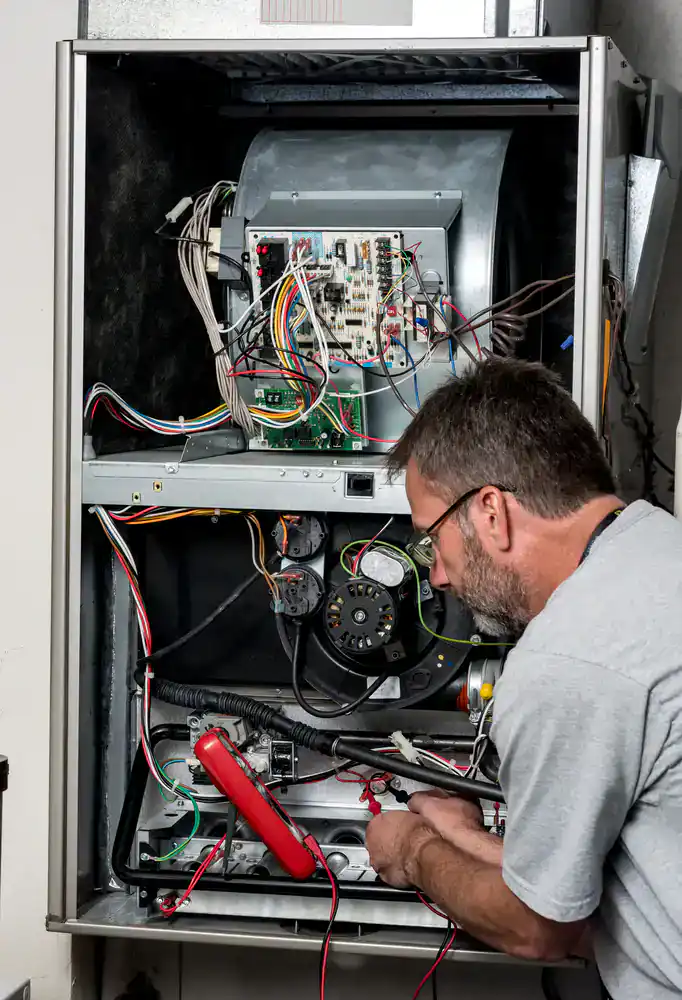
For HVAC repair that sticks, we start by confirming what you have. Then we check airflow, the flame sensor, the limit switch that shuts the furnace down when it overheats, the thermostat’s location and settings, the venting, and whether the equipment is the right size for the house. We tell you what we found and what we recommend, and we wait for your approval before doing any work. We’ve been family-run in Essex County since May 15, 1973, so most of the homes we walk into are ones we’ve seen the like of before.
How Much Does It Cost to Fix a Short-Cycling Furnace?
It depends on the cause, and the range is wide. The numbers below are typical ranges from industry sources, mostly from outside New Jersey, so treat them as a rough ladder and not a quote.
A new filter runs about $20 to $60. Cleaning a flame sensor generally falls between $100 and $250, and if the sensor has to be replaced, expect roughly $200 to $350. At the far end, when a furnace really is oversized and has to be replaced, you’re typically looking at about $3,500 to $8,000. The gap between those two ends is exactly why a proper diagnosis should come before anyone brings up replacement.
Age shifts the math. Furnaces generally last 15 to 20 years. If yours is 15 or older and you’re on your second or third cycling-related repair, whether it’s a sensor, an igniter or a limit switch, those parts are telling you something about the whole unit. If it’s younger and there’s one fixable cause, repair usually makes more sense. We’d rather say that plainly than push you toward a replacement that a $200 part might have avoided.
In many Essex County homes, the real variable is the ductwork. Replacing a furnace without looking at ducts that have been modified over the years can just trade one problem for another. We give free estimates, and we put the numbers in front of you before any work begins.
Is Furnace Short Cycling Dangerous, and When Should I Call an HVAC Contractor?
Short cycling itself mostly costs you comfort and wears parts faster, so there’s no reason to panic. The exception is when the furnace is shutting down because it’s overheating. The high-limit switch trips to protect the unit, and if it keeps tripping, something is wrong with airflow or, possibly, the heat exchanger. Make sure the carbon monoxide alarm in your home works, and if the furnace keeps overheating, have a technician run a combustion test. If you smell burning, see soot, or an alarm goes off, shut the furnace down and call right away.
Timing matters here. Heating failures spike every winter, and a furnace that’s been cycling quietly through October tends to become a no-heat call the first below-freezing week in Maplewood, South Orange or Nutley. Calling before then is usually cheaper and calmer. If it does happen at night, our calls are answered 24/7 for emergency furnace repair.
When you call any HVAC contractor, ask for their New Jersey HVACR license number and Home Improvement Contractor registration, along with proof of insurance. New Jersey requires the Master HVACR Contractor License, and anyone worth hiring will hand that over without hesitation. That goes for us too.
One more note for the summer months. Air conditioners short cycle as well, with different causes. If your AC turns on and off quickly, the same approach applies, and as an air conditioning contractor serving Essex County, we handle AC repair the same way: find the cause first, then talk about the fix.
Need Help With Furnace Short Cycling in Essex County, NJ?
Furnace short cycling is a symptom with a lot of possible causes, from a dusty flame sensor to a furnace that’s too big for the house. Start by figuring out whether you have a furnace or a boiler, check the filter, thermostat and registers, and don’t keep fighting it if the cycling continues. Fixing the actual cause is nearly always cheaper than replacing parts one at a time.
If you’re in Montclair, Glen Ridge, Bloomfield, Maplewood, South Orange, or anywhere else in Essex County, NJ, Adriatic Aire can look at your heating system, tell you what’s going on, and give you a free estimate before anything gets done. Give us a call and we’ll take it from there.
Article details:
- Published by:
- Adriatic Aire LLC
- Published to:
- Last modified:
- November 26, 2026
Share:
Continue learning: