How A Clean Fall Furnace Lowers Your Essex County, NJ Energy Bills All Season Long
Your furnace might be running, but is it running efficiently? Here is what Essex County homeowners should know before heating season starts.
Share:
Summary:
Your furnace is running. Heat comes out when you turn it on. So why does your gas bill keep climbing every winter?
For many Essex County homeowners, the answer is not the weather or the utility company; it is the furnace itself, quietly working harder than necessary because no one has inspected it in a year or two. Systems running dirty, clogged, or slightly out of calibration do not announce their problems. They simply cost you more every single month until something breaks.
Here is what happens inside your heating system, and why fall is the right time to address it.
How A Dirty Furnace Quietly Raises Your Heating Bills
A furnace does not have to stop working to cost you money. It just has to work harder than it should. When filters are clogged, heat exchangers are coated in buildup, or burners do not fire cleanly, your system must run longer cycles to reach the temperature set on your thermostat.
Longer cycles mean more gas burned. More gas burned means a higher bill every single month of the heating season. Research consistently puts energy savings from properly maintained furnaces at anywhere from 5 to 30 percent, which is not a small number.
For homes in Montclair, West Orange, or anywhere across Essex County paying significant money to heat through New Jersey winters, restoring that efficiency before November is a worthwhile investment.
What Happens During A Furnace Tune-Up?
This is a question most homeowners never think to ask, and it is worth understanding because a real tune-up involves far more than a simple filter swap.
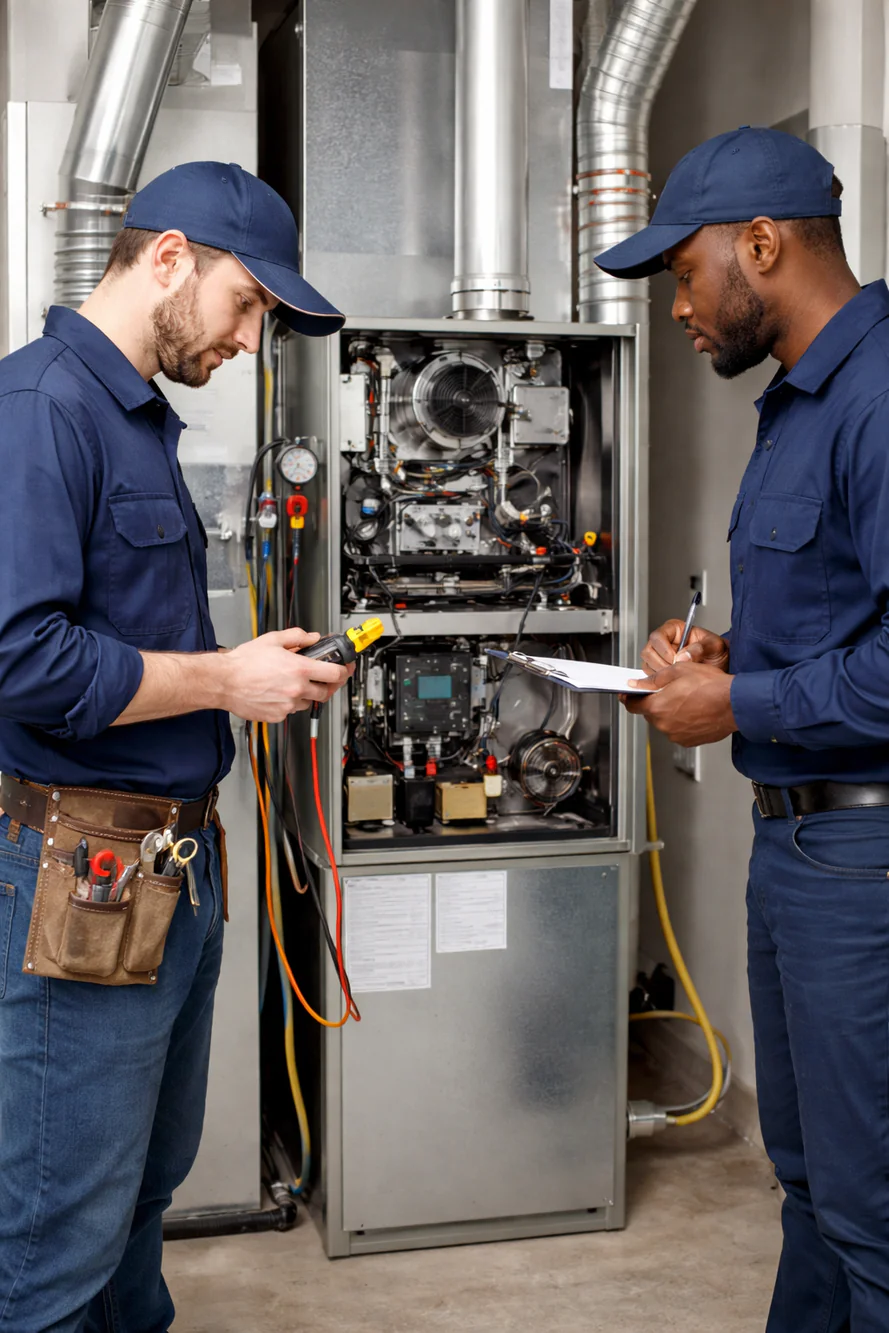
A thorough furnace inspection covers the heat exchanger, burners, thermostat calibration, blower assembly, flue pipe and chimney draft, safety controls, and the condensate line. Each component affects how efficiently your system runs.
A cracked heat exchanger presents not just an efficiency problem, but a safety issue. Unbalanced burners mean uneven combustion, wasting fuel. A struggling blower moves less air, requiring systems to run longer to push heat through the house.
The entire process takes roughly an hour when performed properly. That is minimal time relative to what it prevents. Technicians who know what to look for can catch $150 problems before they become $1,500 emergencies in January. That is the math behind preventive maintenance, measuring value not by tune-up fees, but by the repair calls they replace.
Dirty coils alone reduce HVAC efficiency by around 21 percent, according to industry data. That places a heavy drag on systems supposed to heat homes rather than compensate for neglect. Restoring efficiency requires no parts replacement, just cleaning, calibrating, and checking existing hardware.
One detail worth noting: fall is the correct time for this work, not December. By the time the first hard freeze hits Essex County, whether a November Nor’easter or a February polar vortex, your furnace is already under heavy load. Scheduling tune-ups in September or October ensures readiness before demand peaks, contractor schedules fill, and systems face high pressure without prior inspection.
Does My Essex County Home Have A Furnace Or A Boiler (And Does It Matter?)
It matters more than most people realize, and it is a common question in Essex County specifically.
If you live in a newer home built within the last 30 or 40 years, you likely operate a forced-air furnace. Heat is generated by gas burners, distributed through ductwork, and pushed into rooms by blowers. That represents the system most people picture when hearing the word “furnace.”
However, Essex County contains a significant number of older homes. Think of the Victorians and Tudors in Montclair, Glen Ridge, and South Orange, or the pre-war Colonials in Maplewood and Bloomfield. Many were built with steam or hot water boilers, representing cast-iron systems distributing heat through radiators rather than ducts. Some converted from oil to gas over the years, while others still run on oil.
The maintenance needs for these systems differ from standard forced-air furnaces, and not all contractors understand them well. We have serviced Essex County heating systems since 1973, accumulating over 50 years of experience with aging cast-iron boilers, converted oil systems, and older radiator setups. The county’s housing stock is diverse, and maintenance approaches must match.
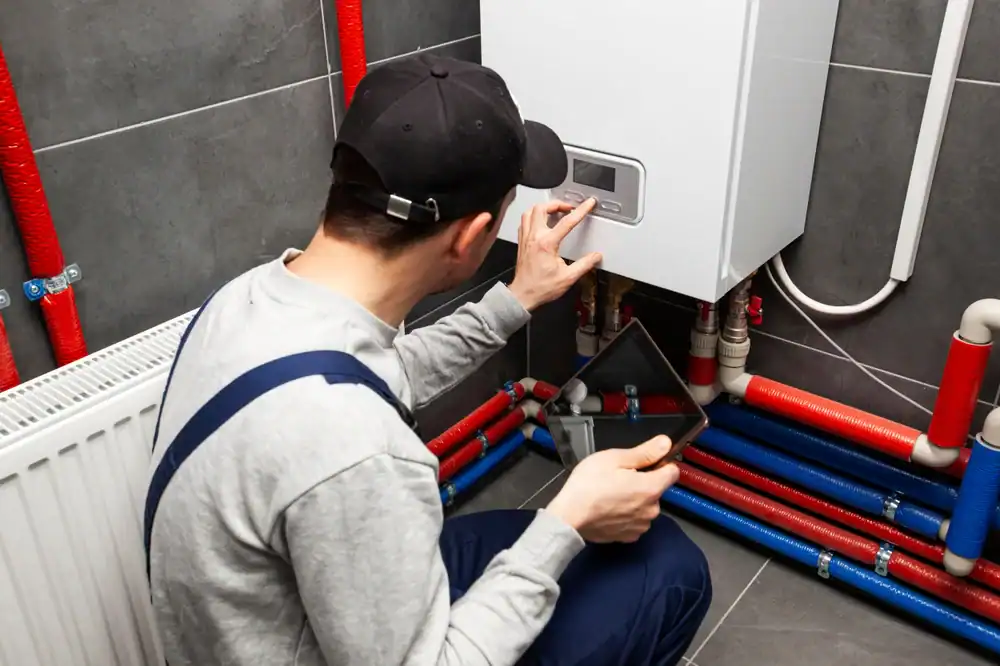
If you are unsure whether you operate a furnace or a boiler, examine your heating equipment. Furnaces connect to ductwork and vents, while boilers connect to pipes and radiators. Either way, annual pre-season service is the standard answer, though inspection procedures vary based on equipment type. We service both systems with full expertise.
What Essex County Homeowners Should Know Before Hiring An HVAC Technician
The Essex County HVAC market features numerous contractors of varying quality. In an industry where every company claims honesty, professionalism, and experience, determining who to trust before someone arrives at your door can prove challenging.
Several items warrant verification before scheduling appointments. New Jersey requires all HVAC contractors to hold state HVACR licenses, which are mandatory and verifiable. Our license number is 19HC00022600, issued by the New Jersey State Board of Examiners of Heating, Ventilating, Air Conditioning and Refrigeration Contractors. We also hold Home Improvement Contractor License #13VH05686500. Both remain current and publicly searchable through the New Jersey Division of Consumer Affairs.
How Do I Know If An HVAC Contractor In Essex County Is Licensed?
This represents a fair question, and more homeowners should ask it before work begins rather than afterward.
In New Jersey, HVACR licensing is rigorous, requiring four-year apprenticeships approved by the United States Department of Labor plus additional field experience, followed by state exams covering technical knowledge and business law. It is a meaningful credential earned through dedication.
Unlicensed contractors operate illegally, exposing hiring homeowners to severe consequences, including voided insurance claims, failed resale inspections, and potential liabilities under the New Jersey Consumer Fraud Act. When contractors hesitate or provide vague answers regarding license numbers, that response speaks volumes.
Legitimate contractors provide license numbers immediately without hesitation. We publish ours openly because transparency defines proper business practices.
Beyond licensing, observe communication styles. Do contractors explain their findings and offer options, or do they dictate replacements and present bills? Do they state prices upfront or surprise you at the conclusion? In a county where median home values approach $630,000, heating maintenance professionals deserve high standards, and reputable providers welcome those expectations.
We built our Essex County reputation on telling people what their systems require rather than chasing revenue. Our reviews reflect this philosophy, with customers frequently mentioning being advised to repair rather than replace, receiving clear pricing beforehand, and witnessing work completed precisely as quoted.
Is A Fall Furnace Tune-Up Worth It, Or Is It Just Another Upsell?
This represents a reasonable objection. The HVAC industry has a reputation for using tune-ups to pitch unneeded repairs, making healthy skepticism understandable.
Here is the honest answer: tune-ups prove worthwhile when technicians perform comprehensive work and report transparent findings. They lack value when limited to 20-minute visual checks followed by laundry lists of recommended services. Homeowners deserve clarity on what service tier they receive.
Legitimate furnace tune-ups address every component impacting system performance, extending beyond easily accessible parts. Procedures should approach an hour, concluding with thorough explanations of findings, completed work, and items requiring future attention. Technicians finishing in 15 minutes and immediately recommending $800 in repairs invite skepticism.
The financial logic for proper maintenance remains clear. Systems running at degraded efficiency waste monthly fuel expenses during heating seasons. Mid-January failures, when Essex County HVAC companies face peak workloads and emergency rates apply, cost significantly more than fall inspections. Furthermore, annual care extends equipment lifespans closer to 20 years instead of 15.
Spreading that math across equipment lifespans highlights clear value. Scheduling during September or October avoids the late-season rush, longer wait times, and tight availability. Beating the seasonal rush proves smarter, ensuring heating systems stand ready before Essex County winters arrive.
Getting Your Essex County Furnace Ready Before Winter Costs Less Than You Think
The Essex County heating season is long, cold, and unforgiving when breakdowns occur. Fortunately, most failures are preventable through a single annual pre-season inspection.
Clean, calibrated furnaces burn less fuel, run shorter cycles, and avoid straining to reach target temperatures on cold January nights. Those tangible benefits appear directly on monthly gas bills from November through March.
If you own an older home in Montclair, Glen Ridge, South Orange, or elsewhere in Essex County featuring cast-iron boilers or converted heating systems, do not wait. Partner with professionals who understand those systems thoroughly. We have provided reliable heating service in Essex County since 1973 and remain ready to inspect your heating equipment before the season begins.
Article details:
- Published by:
- Adriatic Aire LLC
- Published to:
- Last modified:
- October 13, 2026
Share:
Continue learning: