Air Conditioner Repair Costs by Type in Essex County, NJ
Your AC stopped working and you want a number before you call anyone. Here's what repairs actually cost in Essex County, NJ — by type, by part, and by situation.
Share:
Summary:
Your AC stopped working on one of the hottest days of the summer. You’re not sure what’s wrong, and before you call anyone, you want to know: is this a $300 fix or a $3,000 problem?
That’s a reasonable thing to want to know. The frustrating reality is that most cost guides online give you a range so wide it’s basically useless.
We’ve broken down what AC repairs actually cost in Essex County, NJ — by the specific part or problem — so you can walk into that service call with a realistic benchmark and recognize a fair quote when you hear one.
AC Refrigerant Cost: What a Recharge Actually Runs in Essex County, NJ
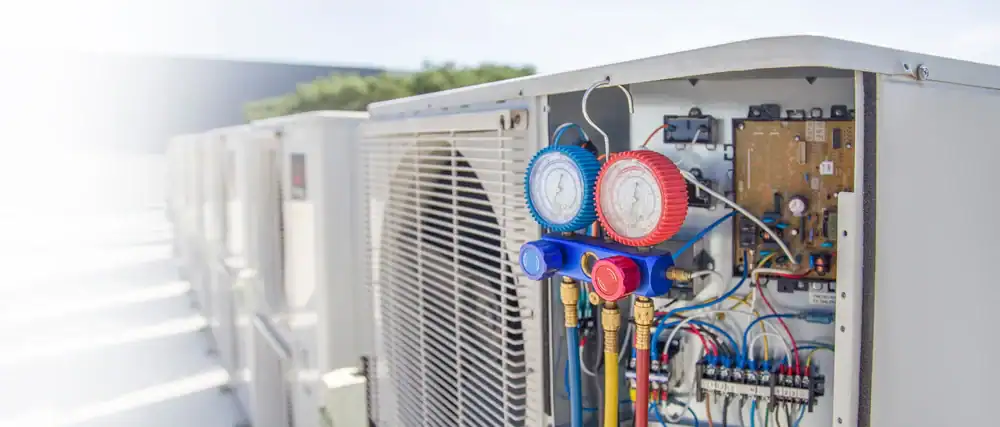
Refrigerant is one of the most misunderstood line items on any AC repair invoice. Homeowners often assume it’s like oil in a car — something that gets used up and needs to be topped off periodically. It doesn’t work that way. A properly functioning air conditioner should never need more refrigerant. If yours is low, there’s a leak somewhere in the system, and a recharge without finding and fixing that leak is a temporary patch, not a repair.
That distinction matters a lot when you’re looking at the cost. Paying for refrigerant twice in two summers is far more expensive than paying once to fix the leak properly the first time.
R-410A vs. R-22: Why Your AC's Age Changes the Price Entirely
The refrigerant in your system depends almost entirely on when it was installed. If your AC was put in before 2010, it almost certainly uses R-22 — the refrigerant commonly known as Freon. If it was installed between 2010 and 2024, it likely uses R-410A. Systems manufactured after January 1, 2025 use a newer refrigerant called R-454B.
Why does this matter for your repair cost? Because R-22 hasn’t been legally produced or imported in the United States since January 1, 2020. Every pound of R-22 available today is reclaimed from decommissioned systems, and the supply is shrinking every year. That scarcity drives the price up significantly. In 2025, R-22 runs roughly $100–$250 per pound installed — and some sources are reporting reclaimed stock at $500–$600 per pound in certain markets. A full recharge of an R-22 system can cost anywhere from $750 to $4,500 depending on how much refrigerant the system needs and where you’re sourcing it.
R-410A is more available, but that’s changing. As of January 1, 2025, no new HVAC equipment can be manufactured using R-410A in the United States. The existing supply is service-only, and prices have been trending 15–25% higher year over year as a result. A recharge of an R-410A system currently runs $200–$600 total, or roughly $40–$90 per pound installed.
For Essex County homeowners, this has a real practical implication. A lot of the housing stock here — particularly in communities like Montclair, West Orange, Bloomfield, and South Orange — includes homes built in the mid-20th century with HVAC systems that have been retrofitted, updated in pieces, or left running long past their expected lifespan. If your system is 15 or more years old and needs a refrigerant recharge, the cost of that recharge alone should prompt a serious conversation about whether repair or replacement makes more financial sense. Two or three R-22 recharges over a few years can easily cost more than a new, efficient system that uses modern refrigerant and comes with a warranty.
Only technicians who hold EPA Section 608 certification are legally permitted to purchase or handle refrigerants. This is a federal requirement under the Clean Air Act — not a suggestion. If a company is offering refrigerant work and can’t confirm their technicians hold this certification, that’s a red flag worth taking seriously.
What Does It Mean When a Tech Says You "Need More Refrigerant"?
It means there’s a leak. Full stop. Refrigerant doesn’t evaporate, it doesn’t get consumed, and it doesn’t need seasonal top-offs. If a technician tells you your system is low on refrigerant and goes straight to adding more without discussing where the refrigerant went, ask the question directly: where is it leaking?
A responsible technician will perform a leak test before or alongside any refrigerant recharge. Leak detection typically costs $100–$330 depending on the complexity of the system and where the leak is located. That cost is worth it — because adding refrigerant to a leaking system just means you’ll be paying for another recharge in a year or two, and the leak will likely get worse in the meantime.
The repair cost after finding the leak depends on where it is. A minor leak in an accessible location might be a straightforward fix. A leak in the evaporator coil — which is inside your air handler — can lead to coil replacement costs in the $900–$2,300 range for the coil itself. That’s a different conversation than a simple recharge, and it’s exactly the kind of situation where getting a detailed, written estimate before authorizing any work is important.
In Essex County’s climate — where summers regularly push into the upper 80s and 90s, and aging systems are working harder than ever — an AC system running with low refrigerant isn’t just uncomfortable. It’s working harder than it should, putting extra strain on the compressor, and setting you up for a more expensive failure down the road. Catching and fixing a refrigerant leak early is almost always the cheaper path.
AC Capacitor Replacement Cost: The Most Common Summer Repair
If your air conditioner suddenly stopped working on a hot day, there’s a reasonable chance a capacitor failed. Capacitor failure is the single most common AC repair call during summer months, and it’s also one of the most affordable fixes when it’s caught before it causes secondary damage.
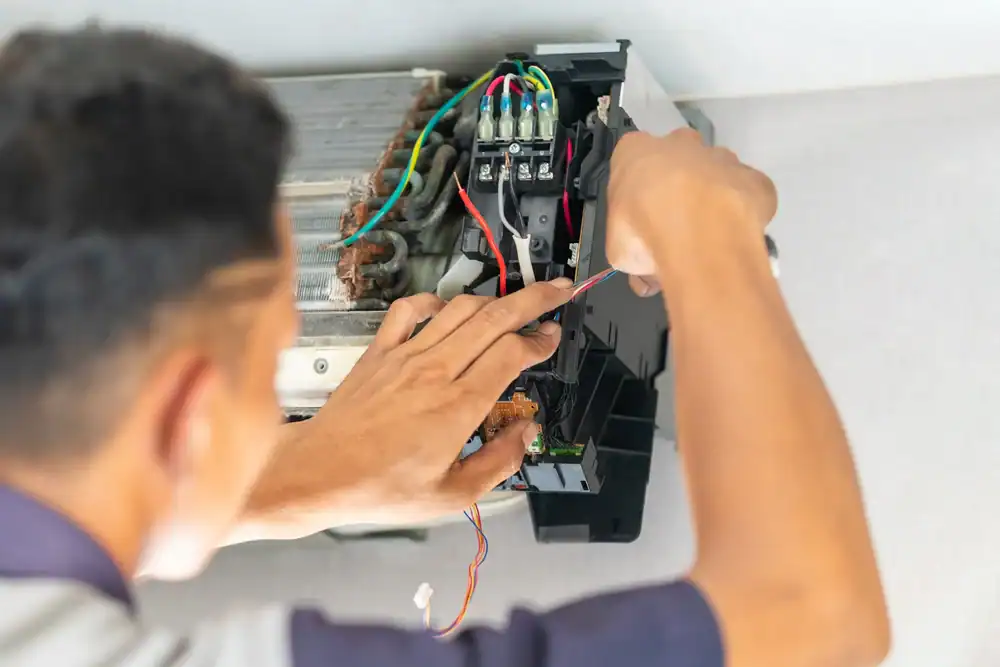
A capacitor is a small electrical component that helps start and run the motors in your AC system — the compressor and the fan. When it fails, the system either won’t start at all or will struggle to run, which puts enormous strain on the compressor. The longer a bad capacitor goes unaddressed, the more likely it is to take the compressor with it — and compressor replacement is a $1,200–$2,500+ repair that often tips the scale toward full system replacement.
How Much Does AC Capacitor Replacement Cost?
The part itself is inexpensive — a replacement capacitor typically costs $15–$80 depending on the type and specifications. What you’re actually paying for is the technician’s time, the diagnostic work, the service call, and the labor to safely replace the component. All-in, capacitor replacement runs $250–$400 for most residential systems.
Some homeowners are surprised by this number when they look up the part cost online. But there’s an important reason not to treat this as a DIY job: capacitors store an electrical charge even after the system is powered off, and discharging them incorrectly can cause serious injury. This is work that belongs with a licensed technician.
Capacitors most commonly fail during summer months, when electrical demand on the system is at its peak. Heat, age, and power surges all accelerate wear. Most capacitors have a lifespan of roughly 10–20 years under normal conditions, though systems that run hard through New Jersey’s humid summers tend to see failures on the shorter end of that range.
For homeowners in communities like Caldwell, Cedar Grove, Glen Ridge, or Verona — where older homes often have HVAC systems that have been running for 15 or 20 years — a capacitor replacement is frequently the repair that buys another several years of reliable service from an otherwise sound system. It’s worth doing promptly. A $300 capacitor repair that gets delayed by a week of hot weather can turn into a $1,500 compressor problem if the struggling motor is pushed too hard in the meantime.
When you call for a capacitor repair, ask for a written estimate before any work begins. The diagnostic fee — typically $75–$200 for a standard service call — should be disclosed upfront. We offer free estimates on every project, which eliminates that initial uncertainty entirely.
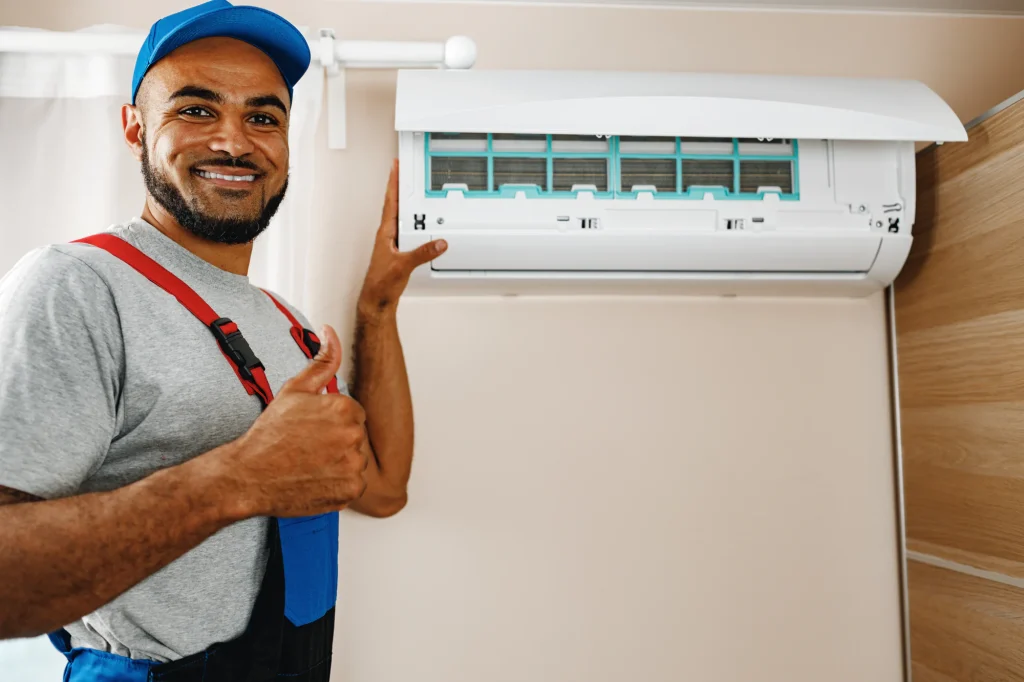
AC Coil Cleaning Cost and Why Dirty Coils Are a Silent Problem
Dirty coils don’t announce themselves the way a failed capacitor does. Your system keeps running, the air keeps blowing — but the efficiency quietly drops, your energy bills quietly climb, and the compressor quietly works harder than it should. Industry data suggests dirty coils can reduce system efficiency by up to 30%. That’s a meaningful number on a summer electric bill in Essex County.
There are two sets of coils in a central air system: the evaporator coil (inside, in the air handler) and the condenser coil (outside, in the unit you can see in your yard or on a roof). Both accumulate dirt, dust, and debris over time, and both need periodic cleaning to keep the system running efficiently.
Evaporator coil cleaning runs $100–$400 if the coil can be cleaned in place. If it needs to be removed for a thorough cleaning, that cost rises to $400–$700. Condenser coil cleaning — the outdoor unit — is typically less involved, running $75–$230. Having both coils cleaned in a single visit generally comes out to around $250, making it one of the most cost-effective maintenance tasks available for a central AC system.
For Essex County homeowners, coil cleaning is particularly relevant given the region’s climate. The area’s humid summers accelerate the accumulation of biological growth on evaporator coils. Homes near parks, wooded areas, or with heavy landscaping around the outdoor unit tend to see condenser coils clog faster with debris. In older homes — which make up a significant portion of the housing stock in places like Maplewood, South Orange, and parts of Montclair — ductwork and air handlers that haven’t been serviced in years can contribute to faster coil fouling.
The best time to address coil cleaning is before peak season — spring, ideally March through May. Scheduling a coil cleaning in April means your system goes into the summer running at full efficiency, and you’re not competing with every other homeowner in Essex County for a service appointment during a July heat wave. Emergency and after-hours service calls during peak summer months carry a 30–50% premium over standard rates, so avoiding that scenario has real dollar value.
Coil cleaning is often included as part of an annual maintenance agreement, which covers a pre-season inspection, cleaning, and system check. If you don’t currently have a maintenance plan and your system hasn’t been professionally serviced in more than a year, a coil cleaning visit is a reasonable place to start.
Getting an Honest AC Repair Estimate in Essex County, NJ
The most important thing you can do before authorizing any AC repair is get a written estimate that breaks down parts and labor separately. A fair quote for a capacitor replacement looks different from a fair quote for a refrigerant recharge — and knowing the difference is the best protection against paying more than you should.
Essex County’s summers are getting hotter. The region’s aging housing stock and increasingly intense heat demand mean your AC system needs to be reliable. That’s a reason to take your system seriously — to fix small problems before they become expensive ones, to understand what your refrigerant situation actually is, and to schedule maintenance before July when everyone else is calling at the same time.
If you want a straight answer about what’s wrong with your system and what it’s going to cost to fix it, Adriatic Aire has been giving those answers to Essex County homeowners since 1973. We offer free estimates on every project, and we’ll tell you exactly what we found and what we recommend — without pushing you toward anything you don’t need.
Article details:
- Published by:
- Adriatic Aire LLC
- Published to:
- Last modified:
- October 22, 2026
Share:
Continue learning: