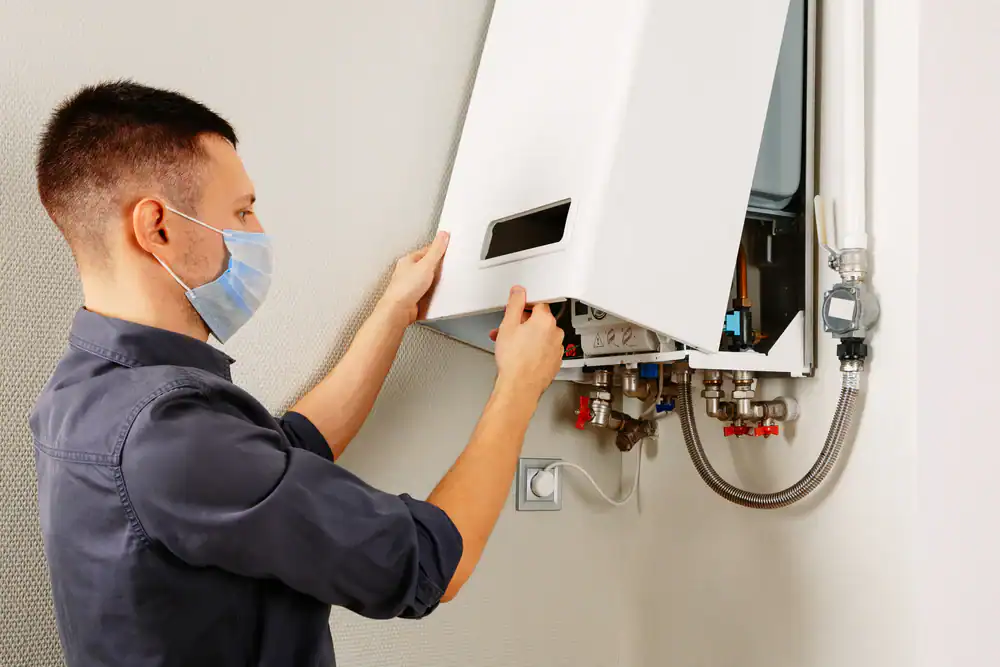
Gas Furnace vs. Electric Furnace: Which Fits Your Essex County Home?
Trying to decide between a gas and electric furnace in Essex County? Here's what the numbers actually look like — and what most comparison guides won't tell you.
Share:
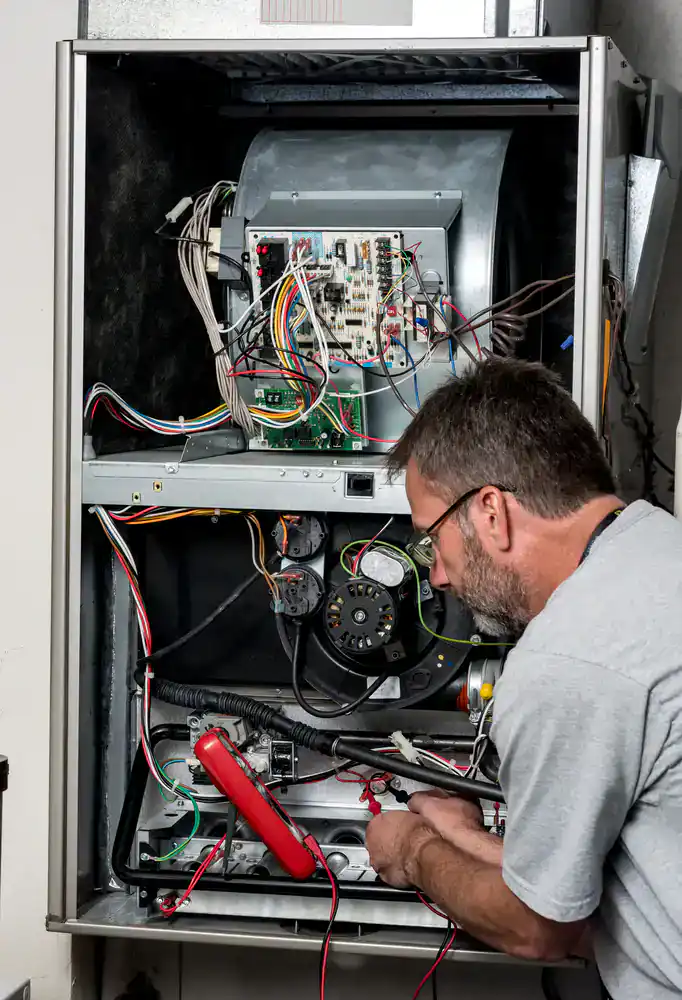
Summary:
You’re replacing a heating system — or maybe you’re finally done with oil and trying to figure out what comes next. Either way, you’ve probably landed on the same question most Essex County homeowners eventually ask: gas furnace or electric furnace? The internet gives you a hundred different answers, most of them hedged so carefully they’re useless. We’ve been installing and replacing heating systems in Essex County since 1973, and we’ve seen this decision play out in every kind of home — from century-old Victorians in Montclair to newer builds in Livingston. Here’s what actually matters.
How Gas and Electric Furnaces Actually Work
A gas furnace burns natural gas to produce heat, then pushes that warm air through your home’s ductwork via a blower. The efficiency of that process is measured by AFUE — Annual Fuel Utilization Efficiency — which tells you what percentage of the fuel you’re paying for actually becomes usable heat. Modern gas furnaces range from 80% to 98% AFUE, with high-efficiency models now the standard for new installations.
An electric furnace works differently. Instead of combustion, it uses resistance heating elements — essentially large versions of the coils inside a toaster — to generate heat. Every bit of electricity fed into the unit becomes heat, which is why electric furnaces carry a 100% AFUE rating.
That 100% figure is where a lot of homeowners get tripped up. More on that in a moment.
Why "100% Efficient" Doesn't Mean Cheaper to Run in Essex County
Here’s the thing about that 100% efficiency rating: it measures what happens inside the unit, not what it costs you to run it. Efficiency at the equipment level and efficiency at the wallet level are two completely different things — and in Essex County, confusing them is an expensive mistake.
Electricity in New Jersey runs approximately $0.165 to $0.26 per kilowatt-hour. Natural gas through PSE&G costs roughly $1.25 to $1.35 per therm. When you convert both to the same unit of heat delivered, natural gas is significantly cheaper — cheap enough that even an 80% efficient gas furnace beats a 100% efficient electric furnace on operating cost in this market.
The numbers bear this out. A high-efficiency gas furnace costs Essex County homeowners approximately $710 per heating season. An electric furnace running through a New Jersey winter can exceed $2,400 per season. That’s a gap of more than $1,700 every single year. Over the 15 to 20-year lifespan of a gas furnace, that difference compounds into real money — tens of thousands of dollars over the ownership horizon.
This is the conversation that most online comparison guides skip, because they’re written for a national audience. But New Jersey’s electricity rates are among the highest in the region, and Essex County winters are genuinely cold. When temperatures drop into the single digits during a January polar vortex — something Essex County homeowners know well — a gas furnace is delivering powerful, fast heat while an electric system is running up an enormous bill trying to keep pace.
There’s one honest counterpoint worth making: electric furnaces typically last 20 to 30 years, compared to 15 to 20 years for gas. That longer lifespan is a real advantage. But in Essex County, the annual operating cost gap is wide enough that gas still wins the total cost of ownership calculation for most homes with access to natural gas service.

What Essex County's Older Homes Add to This Decision
If you live in Montclair, Maplewood, Caldwell, South Orange, or many of the other established communities in Essex County, there’s a good chance your home was built before forced-air heating was standard. A lot of these homes — particularly the Victorians and early-20th-century colonials that define the character of these neighborhoods — were originally built with boiler and radiator systems. That history matters when you’re weighing a gas furnace against an electric furnace, because you may not just be swapping one furnace for another. You may be making a decision about your entire heating infrastructure.
For homeowners coming from a boiler system, adding a forced-air furnace of either type means installing ductwork throughout the home — a significant undertaking that affects both cost and project scope. This is a scenario where getting a proper assessment from an experienced local contractor isn’t optional; it’s the only way to know what you’re actually dealing with before you commit to anything.
There’s also the oil heat question. A meaningful portion of Essex County homeowners are still on oil — a legacy of the pre-natural-gas era — and many of them are now weighing their options as oil prices remain volatile and aging boilers approach the end of their service life. For these homeowners, the gas vs. electric furnace question is really part of a larger fuel transition decision. We specialize in oil-to-gas conversion, and it’s a conversation we have regularly with homeowners across Essex County who are ready to move on from oil but aren’t sure which direction to go next.
The short version: if your home has natural gas access — which most developed communities in Essex County do, through PSE&G’s well-established infrastructure — a high-efficiency gas furnace is almost certainly the better long-term choice. If you don’t have gas access, or if running a gas line to your property isn’t practical, an electric furnace is a legitimate and safe option. The right answer depends on your specific home, and a free estimate is the fastest way to get clarity.
Electric Furnace vs. Gas Furnace Cost: Installation and Operating Expenses
Cost comparisons between gas and electric furnaces usually focus on one number — the installation price — and ignore everything that comes after. That’s a mistake. The upfront cost is real, but it’s only part of what you’ll actually spend over the life of the system.
Electric furnaces are generally less expensive to install. Gas systems involve more components — gas lines, venting, combustion hardware — which adds to the installation complexity and cost. But as we’ve already established, the operating cost gap in New Jersey flips that equation fairly quickly. Understanding both sides of the ledger is what lets you make a genuinely informed decision.
Electric Furnace Cost in Essex County, NJ
Electric furnace installation in Essex County typically runs between $2,500 and $5,500. That range reflects differences in equipment size, the complexity of your existing electrical system, and whether your panel needs to be upgraded to handle the load — electric furnaces draw significant amperage, and older homes in Montclair or Bloomfield may require an electrical panel upgrade before installation is even possible, which adds to the total project cost.
The installation itself is simpler than a gas system. There’s no flue, no venting, no combustion components to inspect. That simplicity is part of why the upfront cost is lower and why electric furnaces have a longer service life — fewer mechanical components means fewer things that can wear out or fail.
What the installation quote won’t show you is what comes after. At $0.165 to $0.26 per kilowatt-hour, running an electric furnace through a New Jersey winter is expensive. The $2,400-plus annual operating cost cited earlier isn’t a worst-case scenario — it’s a realistic figure for a standard Essex County home. If you’re replacing a system in a smaller home, or if you’re pairing the furnace with rooftop solar, the math can shift. But for most homeowners in West Orange, Livingston, or Caldwell running a standard electric furnace as their primary heat source, the operating costs are the dominant factor in the long-run calculation.
The honest summary: electric furnaces make the most financial sense when natural gas access isn’t available or practical, when the home is small and the heating load is modest, or when the installation is part of a broader electrification strategy that includes solar or a heat pump hybrid setup. For a typical Essex County home with gas access, the lower installation cost of an electric furnace is usually outpaced by higher operating costs within a few years.
Gas Furnace Installation Cost and What Drives the Range in Essex County
Gas furnace installation in Essex County runs between $3,800 and $12,000. That’s a wide range, and it reflects real variables: the size and efficiency tier of the equipment, whether your home already has gas lines and ductwork in good condition, and the complexity of the venting required for your specific system and home layout.
High-efficiency gas furnaces — those rated at 90% AFUE or above — sit at the higher end of the equipment cost spectrum, but they’re also where the operating savings are most pronounced. Upgrading from an older mid-efficiency furnace (80 to 83% AFUE) to a high-efficiency model (90 to 98% AFUE) can reduce your annual heating costs by 20 to 30%. For a home that was previously spending $1,400 a year on gas heat, that’s a meaningful reduction that contributes to the system paying for itself over time.
Homes without existing gas service will need a gas line run to the property before installation can proceed. Depending on distance from the main line and local utility requirements, that work starts at $500 and can go higher. It’s a real cost to factor in, but for most homes in established Essex County communities where PSE&G’s gas infrastructure is already in place, the line extension is often shorter and less expensive than homeowners expect.
Gas furnace installation in New Jersey requires a licensed Master HVACR Contractor. This isn’t a preference — it’s state law, regulated by the NJ Division of Consumer Affairs. A proper installation includes pulling permits, performing a combustion analysis, and scheduling inspections. We hold NJ License No. 19HC00022600 and have been installing systems in Essex County for over 50 years. We pull permits, we do the inspections, and we do the job correctly the first time — because that’s the only way to do it.
Financing is available through FTL Finance for homeowners who want to move forward with a high-efficiency gas system without covering the full cost upfront. The long-term operating savings make the math work even more clearly when you’re not paying the full installation cost out of pocket on day one.
Which Furnace Is Right for Your Essex County Home?
For most Essex County homeowners with access to natural gas, a high-efficiency gas furnace is the better long-term choice. The operating cost advantage in New Jersey is too large to ignore — more than $1,700 per year compared to electric resistance heating — and the performance difference in a genuine Northeast winter is real and immediate.
Electric furnaces have their place. They’re a legitimate option when gas access isn’t available, when the home is small, or when the installation is part of a broader energy strategy. But the “100% efficient” label isn’t a reason to choose electric heat in New Jersey. It’s a number that describes the unit, not your utility bill.
If you’re coming from oil heat, or if you’re not sure what your home’s infrastructure can support, the starting point is a conversation — not a commitment. We offer free estimates on every project, and we’ve been helping Essex County homeowners navigate exactly this decision since 1973. Reach out and we’ll tell you what your home actually needs.
Article details:
- Published by:
- Adriatic Aire LLC
- Published to:
- Last modified:
- October 27, 2026
Share:
Continue learning: