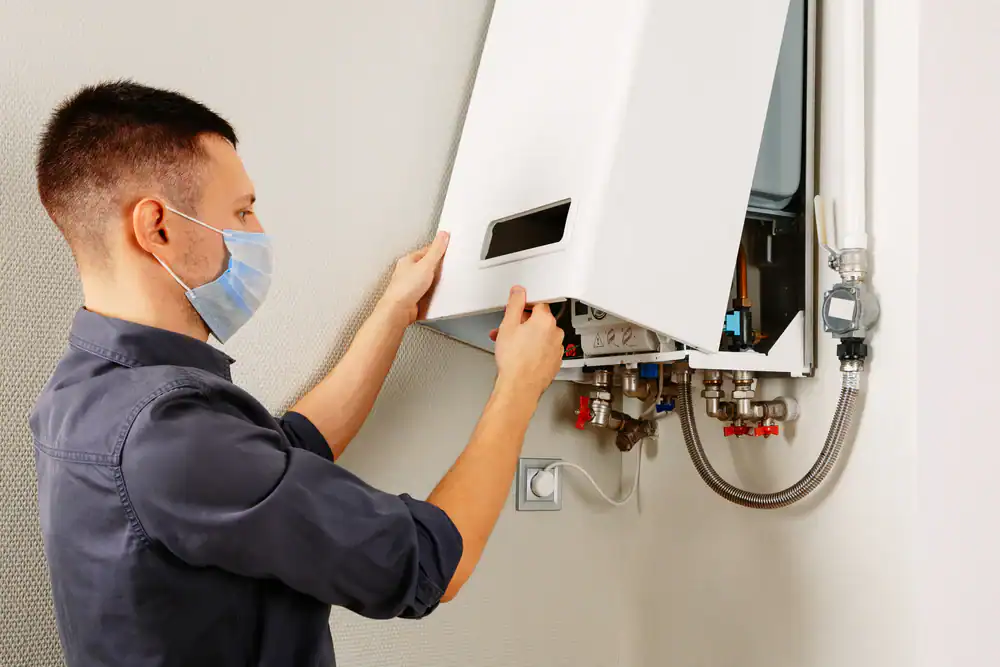
Furnace Maintenance Checklist for Essex County, NJ Winters
A practical furnace maintenance guide written for Essex County homes — older systems, unpredictable winters, and all the things most checklists skip.
Share:
Summary:
Most homeowners don’t think about their furnace until it stops working. And it almost never stops working on a convenient Tuesday afternoon in October. It stops working at 6 AM on the coldest morning of the year, when every HVAC company in Essex County is already booked and emergency rates are in full effect.
The good news is that most mid-winter breakdowns are preventable. Not with anything complicated — just the right maintenance done at the right time of year. This checklist is built for Essex County homes specifically, because what works in a newer construction in the Sun Belt doesn’t always apply to a 1940s colonial in South Orange or a Victorian with cast-iron radiators in Glen Ridge.
What Furnace Maintenance Actually Covers — and What Most Homeowners Miss
There’s a common misconception that furnace maintenance means changing the filter and calling it done. Filter replacement matters — the U.S. Department of Energy estimates it can reduce energy consumption by 5 to 15 percent on its own — but it’s one step in a much longer process.
A proper annual tune-up covers the parts of your system that a homeowner can’t safely inspect without training: the heat exchanger, the gas valve, the flue and venting, the blower motor, the ignition system, and the combustion quality. These aren’t abstract concerns. A cracked heat exchanger, for example, can allow carbon monoxide to circulate through your home without triggering any obvious symptoms until it’s a serious problem.
What Does a Furnace Tune-Up Actually Include?
When a qualified technician services your furnace before winter, the visit should cover a lot more than a visual once-over. Here’s what a thorough tune-up looks like in practice.
The technician will inspect the heat exchanger for cracks or damage — this is the single most important safety check on any gas furnace. A hairline crack that’s invisible to the untrained eye can allow combustion gases, including carbon monoxide, to enter your living space. The U.S. Consumer Product Safety Commission specifically recommends annual professional inspection of all fuel-burning heating systems for exactly this reason.
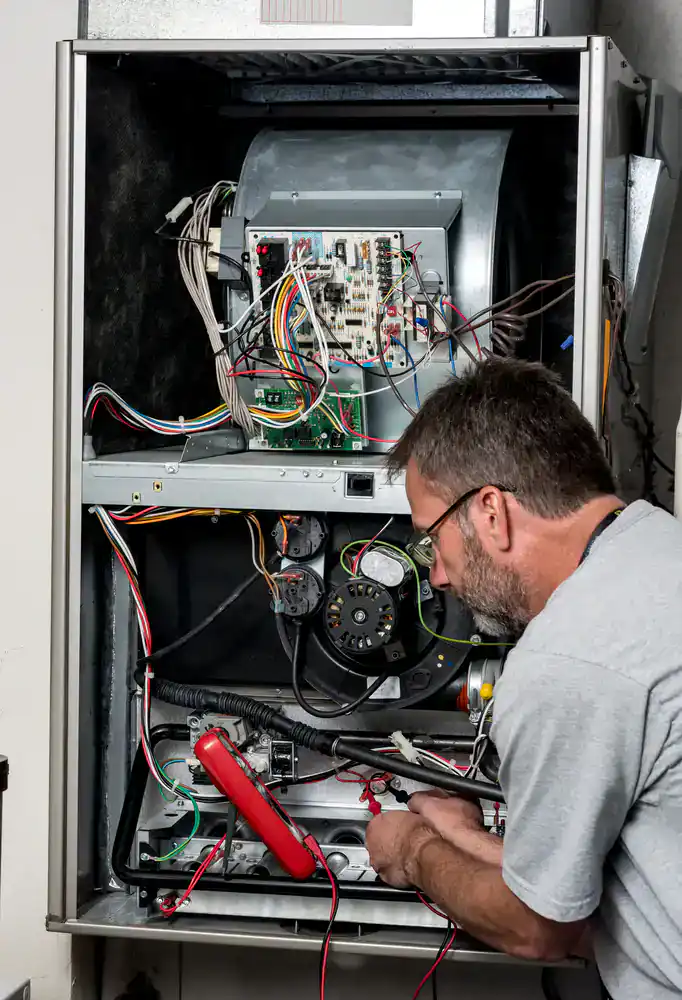
From there, a good tune-up includes testing the ignition system and burners to confirm they’re firing cleanly and efficiently, checking gas pressure and the condition of the gas valve, inspecting the flue and venting for blockages or deterioration, lubricating the blower motor and checking the belt if applicable, and testing all safety controls and limit switches to make sure the system shuts down correctly if something goes wrong.
The technician should also check your air filter and advise on replacement frequency. For most Essex County homes, a MERV 8 to 12 filter is the right range — effective enough to catch particulates without restricting airflow. During heating season, check it monthly and replace it every one to three months depending on your household.
One thing worth noting: if your home has a steam boiler rather than a forced-air furnace — which is common in older parts of Montclair, Bloomfield, and Belleville — the maintenance checklist looks different. Steam systems require checking pressure gauges, inspecting radiator vents, testing the low-water cutoff, and sometimes desooting the boiler itself. A technician who only works on modern forced-air equipment may not be the right fit for that kind of system.

When Should You Schedule Furnace Maintenance in Essex County?
The honest answer is September or October — before the heating season starts and before every other homeowner in Essex County has the same idea.
Here’s why the timing matters more than most people realize. In December and January, HVAC companies across the county are fielding emergency calls around the clock. Technicians are stretched, appointment windows are longer, and when a repair is needed, parts may not be immediately available. A standard repair that runs around $300 on a weekday morning in October can cost significantly more as an emergency call on a Saturday night in January — the premium for after-hours and emergency service is real.
Scheduling in the fall also gives you time to make non-pressured decisions. If a technician finds something during a tune-up that suggests your furnace is approaching the end of its useful life — most gas furnaces last 15 to 20 years with proper maintenance, and considerably less without it — you have weeks to think through your options, get a second opinion if you want one, and choose equipment and timing that works for your budget. When the furnace dies in February, that decision gets made in a panic.
There’s also a practical scheduling advantage. Fall appointments are easier to get, and you’re more likely to have a specific technician you’ve worked with before rather than whoever is available next. For homeowners in older Essex County communities who have steam boilers or aging systems with particular quirks, that continuity matters. Someone who already knows your system can spot changes that a first-time visitor might miss entirely.
If you missed the fall window, late February or early March — after the worst of winter has passed — is a reasonable second choice. A post-season inspection can catch damage that accumulated over the winter before it turns into a bigger problem in the fall.
Furnace Repair vs. Replacement: How to Think Through the Decision
At some point during a maintenance visit or a repair call, the question comes up: is it worth fixing, or should I just replace it? It’s a fair question, and the honest answer depends on a few specific factors — not on what’s most profitable for the technician standing in your basement.
Age matters most. A furnace that’s under 15 years old and has been reasonably maintained is almost always worth repairing unless the repair cost is substantial. A furnace that’s pushing 20 years and has had repeated issues is a different conversation. The repair-versus-replace math shifts when you’re looking at a major component failure on an aging system.
How Do You Know If Your Furnace Is Still Worth Repairing?
The most useful rule of thumb we use is this: if the repair cost is more than half the cost of a new system, and the furnace is already in the back half of its expected lifespan, replacement usually makes more financial sense. But that calculation only works if you’re getting an honest read on both numbers — and that’s where a lot of homeowners get into trouble.
Heating repair in Essex County can run anywhere from $75 to $1,500 depending on what’s broken. Most homeowners pay around $300 for standard repairs. A blower motor replacement or a new ignition control module sits in a very different range than a cracked heat exchanger or a failed heat exchanger assembly, which starts to push into territory where replacement becomes worth considering.
What you want from a technician in this conversation is a clear explanation of what’s wrong, what it will cost to fix it, how long the fix is likely to last given the age and condition of the system, and what a comparable replacement would cost. If you’re getting pressure to replace without a clear breakdown of those four things, that’s a signal to ask more questions or get a second opinion.
It’s also worth thinking about efficiency. Older furnaces often operate at 60 to 70 percent AFUE — meaning 30 to 40 cents of every dollar you spend on gas is lost as waste heat. Modern high-efficiency systems run at 90 to 98 percent AFUE. If your heating bills have been climbing and your system is aging, some of that cost is the system itself, not just energy prices.
What Essex County Homeowners With Older Homes Should Know About Heating Systems
Essex County’s housing stock is genuinely different from most of New Jersey. A significant share of homes in communities like Montclair, Glen Ridge, Bloomfield, Belleville, and Newark were built before 1960 — and many of them are still running on the original heating infrastructure, or close to it. That means steam boilers with cast-iron radiators, aging oil-fired systems, and ductwork that was designed for a different era.
Generic furnace maintenance advice — the kind written for a 2005 split-level in a newer suburb — doesn’t always translate. Steam boilers, for example, are durable systems that can last 30 to 50 years with proper care, but they need maintenance that’s specific to how they work: checking and adjusting system pressure, inspecting and replacing radiator air vents, testing the low-water cutoff, and periodically flushing sediment from the system. Skip those steps and you get banging pipes, uneven heat, and eventually a system that fails at the worst possible time.
Belleville’s housing stock in particular has a high concentration of homes still running on oil heat. If that’s your situation, the maintenance checklist includes checking the oil tank, inspecting the oil filter and nozzle, and having a combustion efficiency test done annually. It’s also worth knowing that oil-to-gas conversion is an active option for many of these homes — natural gas typically heats faster, costs less to operate over time, and removes the need to monitor tank levels all winter. It’s not the right move for every home, but it’s worth understanding if you’re facing a major heating repair on an aging oil system.
The broader point is that heating a pre-war home in Essex County requires someone who’s actually worked on these systems before — not someone who’s only comfortable with modern forced-air equipment. The problems are different, the maintenance is different, and the repair-versus-replace math can look completely different when you’re dealing with a well-maintained steam boiler versus a neglected one.
Ready to Get Your Furnace Ready for a New Jersey Winter?
The window between now and the first real cold snap is the best time to get ahead of this. A furnace that’s been inspected, cleaned, and confirmed safe going into winter is one less thing to worry about when the temperature drops overnight and everyone else is scrambling.
The checklist isn’t complicated. Change or check the filter. Schedule a professional tune-up before November. Know the age and maintenance history of your system. And if your home has a steam boiler or an older oil-fired system, make sure whoever you call has actually worked on that type of equipment before.
We’ve been doing this in Essex County since 1973 — from steam boilers in Montclair to forced-air systems in Livingston to oil-fired units in Belleville. If you want a straight answer about what your system needs and what it doesn’t, that’s exactly what we do. Reach out to Adriatic Aire before the season starts, and we’ll make sure you’re not the one calling for emergency service in January.
Article details:
- Published by:
- Adriatic Aire LLC
- Published to:
- Last modified:
- November 5, 2026
Share:
Continue learning: