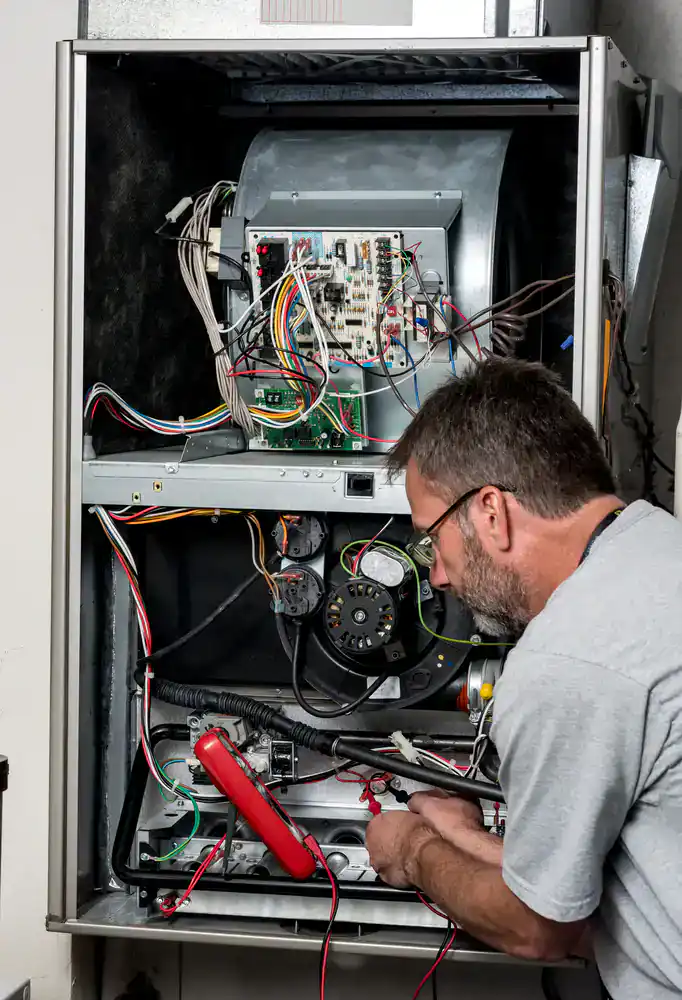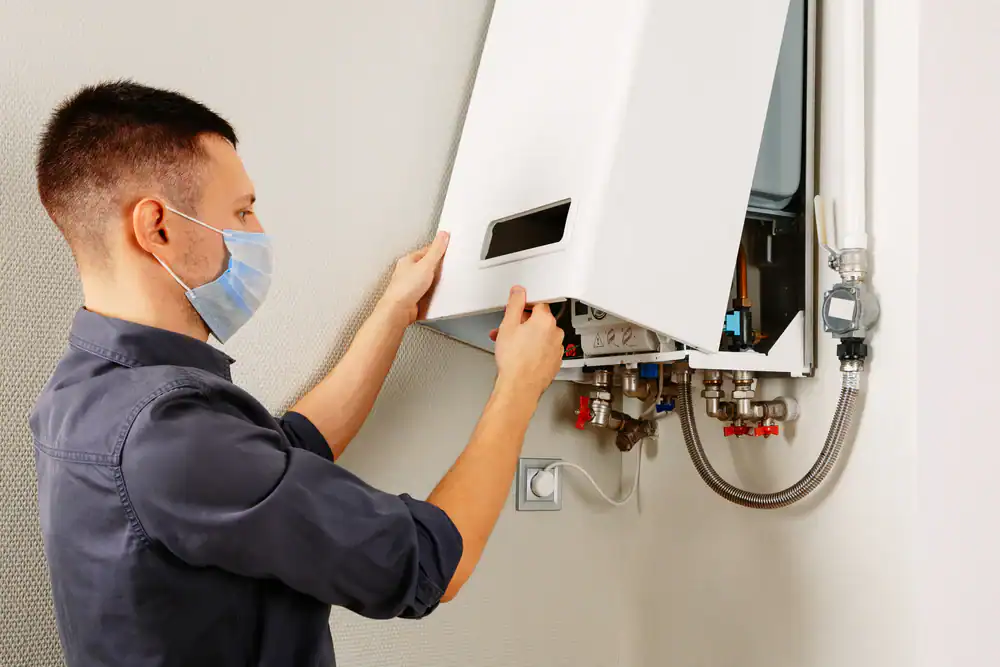
Boiler vs. Furnace In Essex County, NJ: Which Heating System Is Right For Your Home?
Trying to decide between a boiler and a furnace in Essex County? The answer might already be built into your home's walls.
Share:

Summary:
Most comparisons between boilers and furnaces treat the decision like a blank slate, as if you’re building a new house and can pick whatever you want. But if you live in Essex County, that’s probably not your situation. You have a home that’s already built, already plumbed, and already wired for a specific type of heat.
In a county where the median home in Maplewood was built in 1938 and Montclair’s most sought-after streets are lined with Victorians from the late 1800s, the infrastructure your home already has is the single most important factor in this decision. Let’s talk through what that means for you.
What's The Real Difference Between A Boiler And A Furnace?
A furnace heats air and pushes it through ductwork into your rooms. A boiler heats water, or generates steam, and sends it through pipes to radiators or baseboard units. That’s the core difference, and it matters more than most people realize.
Furnaces deliver warmth quickly. You adjust the thermostat and feel it within minutes. Boilers take longer to respond, but they heat more evenly and tend to feel more comfortable over time: no dry air, no drafts from vents, just steady radiant warmth spreading from the radiators.
Neither system is objectively better. They’re different tools, and the right one depends almost entirely on what your home is already set up for.
Why Most Essex County Homes Don't Have A Free Choice Between The Two
Here’s what generic comparison articles won’t tell you: if your Essex County home was built before World War II and has cast-iron radiators in every room, you almost certainly don’t have ductwork. Without ductwork, switching to a furnace isn’t just a matter of swapping equipment. It means cutting into walls, ceilings, and floors throughout your entire house to run new duct runs. That’s a major renovation, not a heating upgrade.
The math rarely works in favor of switching. When you factor in the full cost of installing ductwork in a finished older home, the supposed cost advantage of a furnace evaporates quickly. In many cases, replacing your existing boiler with a modern, high-efficiency unit is the more practical and more affordable path, even if the boiler itself costs more upfront than a furnace would.
We’ve been navigating this reality in Essex County since 1973. The pre-war housing stock of towns like Glen Ridge, South Orange, Bloomfield, and the Oranges is overwhelmingly boiler territory. These homes were designed around radiant heat, and most of them perform beautifully when the boiler is properly sized, correctly installed, and well maintained.
That said, there are situations where switching to forced air makes sense, typically in homes that are undergoing significant renovation anyway, or in newer sections of the county where ductwork may already exist. The honest answer is that it depends on your specific home, not on which system sounds better in a blog post.
Before any decision is made, we always recommend a professional assessment. Understanding what you have, including the type of heat (steam or hot water), the age and condition of your current system, and if your existing piping is up to the job, is the only way to give you a real answer rather than a general one.
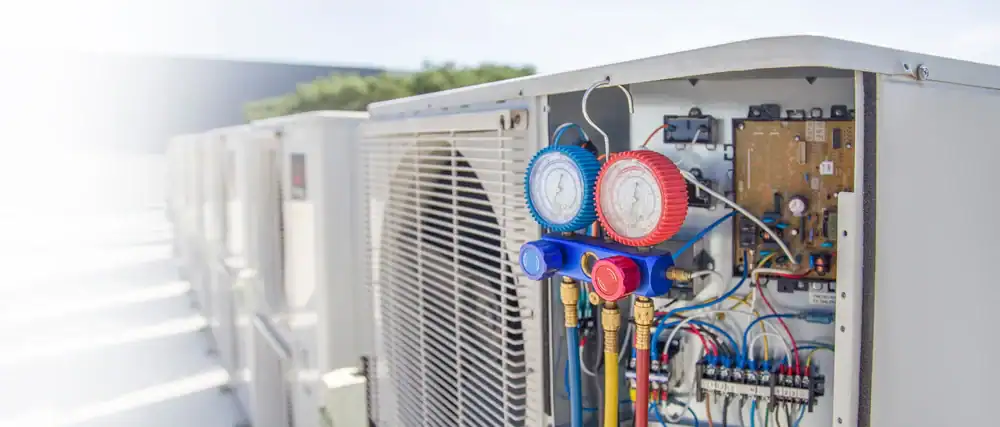
Steam vs. Hot Water Boilers: An Important Distinction For Older Essex County Homes
If your Essex County home has radiators, there’s one more question worth understanding before you make any decisions: do you have a steam system or a hot water system? They look similar from the outside, but they work very differently, and the distinction affects everything from replacement cost to how the system is installed.
A hot water boiler (also called a hydronic system) circulates heated water through pipes and into radiators or baseboard units using a pump. It’s a relatively straightforward system, and modern hot water boilers can reach efficiency ratings well above 90% AFUE, which means more than 90 cents of every dollar you spend on fuel goes directly toward heating your home.
A steam boiler works on a different principle entirely. It heats water until it turns to steam, and that steam, which expands to roughly 1,700 times the volume of liquid water, pushes itself through the pipes without any pump at all. The steam gives up its heat at the radiators, condenses back into water, and drains back to the boiler. It’s elegant, and it’s been working reliably in Essex County homes for over a century.
Modern steam boilers can reach 80 to 85% AFUE. That’s lower than what hot water systems can achieve, but it’s a significant improvement over an older unit that may be converting only around 60% of its fuel into usable heat. If your steam boiler is 25 or 30 years old, which is common in Montclair and Bloomfield where many homes are on their second boiler, the efficiency gap between your current system and a new one can translate into real, measurable savings every month.
One important note about steam systems: a lot of the problems homeowners attribute to a failing boiler, such as banging pipes, uneven heat, and rooms that never warm up, are often caused by improper near-boiler piping or years of deferred maintenance. A properly tuned steam system in an older Essex County home runs quietly and heats evenly. If yours doesn’t, that’s worth investigating before you assume the whole system needs to go.
How To Know If You Need Heating Repair Or Full Replacement
This is the question most homeowners are really asking when they start comparing boilers and furnaces. Not “which technology is better,” but “do I need to spend the money right now, and if so, how much?”
The honest answer is that age and efficiency together tell most of the story. A boiler that’s under 15 years old, running reasonably well, and just needs a repair is usually worth fixing. A boiler that’s pushing 25 or 30 years, cycling on and off constantly, and driving up your gas bill every winter is probably telling you something.
The trickier cases fall in between, and that’s where a professional assessment, not a sales pitch, is what you need.
Signs Your Boiler Or Furnace May Need Replacement In Essex County
Rising heating bills without a change in usage are one of the clearest signals. As boilers and furnaces age, they lose efficiency. A system that was installed at 80% AFUE twenty years ago may be running at 65% or lower today, burning significantly more fuel to produce the same amount of heat. You feel it in your bills before you notice anything else.
Uneven heat is another common indicator, showing up as some rooms uncomfortably warm and others that never quite get there. In a steam system, this often points to maintenance issues that are still fixable. But in a system that’s been neglected for years, it can reflect deeper problems with the equipment itself.
Frequent repairs are the clearest financial signal. There’s a point where the cost of keeping an aging system running starts to outpace the cost of replacing it. If you’ve had the same boiler serviced two or three times in the past couple of years, it’s worth having an honest conversation about if you’re buying time or buying yourself a problem.
For Essex County homeowners specifically, the age of the housing stock makes this calculation more common than in newer suburbs. Many homes in Maplewood, Nutley, Cedar Grove, and Verona are on their original or second-generation boiler. If yours was installed in the 1990s or earlier, it’s not a question of if it will need replacement; it’s a question of when. You also have to decide if you want to be the one making that call or have January make it for you.
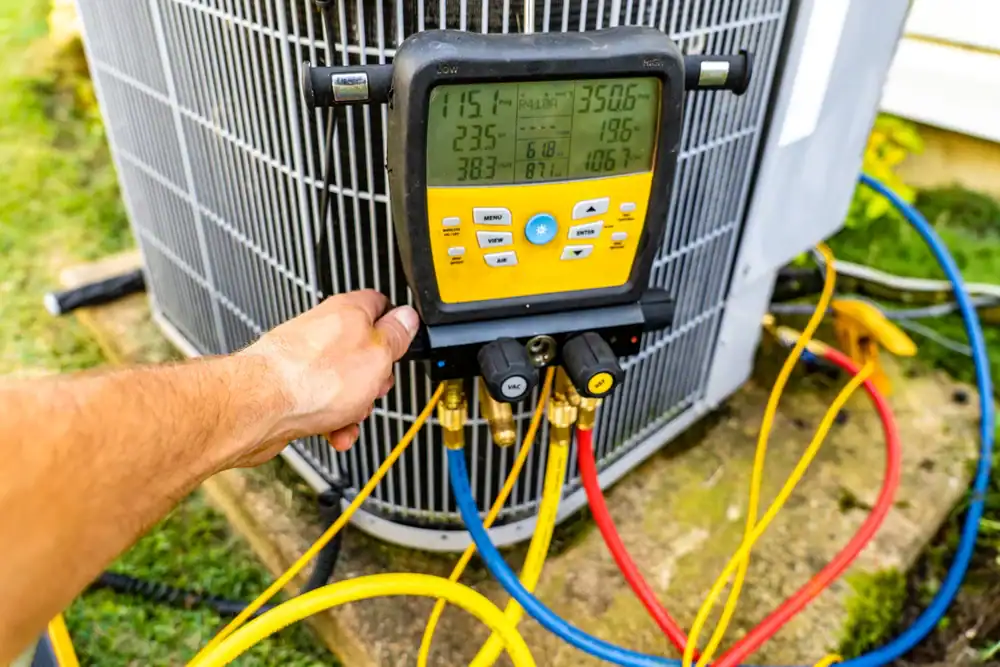
What Boiler And Furnace Installation Involves In New Jersey
In New Jersey, installing a boiler or furnace isn’t a job you can hand off to just anyone with a van and a set of tools. The state requires contractors to hold a NJ Master HVACR license to legally perform this work. Every installation must be permitted and pass municipal inspection. That’s not a formality. It is a legal requirement, and skipping it creates real problems for homeowners at resale, with insurance, and with liability.
We hold full NJ Master HVACR credentials, pull every required permit, and make sure every installation passes inspection. That’s not a selling point we invented; it’s the baseline for doing this work correctly, and it’s something you should verify with any contractor you consider.
Beyond licensing, the quality of a boiler installation comes down to the details. For a steam system especially, the near-boiler piping, which is the configuration of pipes directly off the boiler, has to be done right. Get it wrong and you end up with water hammer, short cycling, and a system that never performs the way it should. This is one of the reasons experience with Essex County’s specific housing stock matters. The homes here aren’t generic, and the installations shouldn’t be either.
We also offer oil-to-gas conversions for homeowners in older parts of Essex County who are still running oil-fired systems. Many homes in the county made this switch years ago, but plenty haven’t. If you’re paying oil prices every winter and wondering if the conversion makes sense, it’s a conversation worth having.
Before any work begins, you’ll know exactly what the job involves and what it costs. No surprises, no obligation. We’ve been doing this since 1973, and we’ve never found a reason to change that approach.
Getting The Right Heating System For Your Essex County Home
If there’s one thing to take away from all of this, it’s that the boiler vs. furnace question almost always answers itself once you look at your actual home, not the abstract comparison. For most homeowners in Essex County’s older towns, the infrastructure is already there. The smarter question is if you should repair what you have, replace it with a more efficient version of the same system, or explore an upgrade like an oil-to-gas conversion.
The worst time to figure all of this out is in the middle of January with no heat. The best time is now, before the heating season puts your system under pressure and before technician schedules fill up.
If you’re not sure where you stand, Adriatic Aire is happy to take a look. We’ve been working in these homes for over 50 years, and we’ll give you a straight answer about what you truly need, not what’s easiest to sell.
Ready to Make Sure Your Home is Winter-Ready? Don’t wait for the first freezing night to discover your heating system can’t keep up. Contact Adriatic Aire today to schedule a comprehensive assessment of your home’s heating needs. Call us or book an appointment online to ensure your Essex County home stays warm, efficient, and comfortable all winter long!
Article details:
- Published by:
- Adriatic Aire LLC
- Published to:
- Last modified:
- November 19, 2026
Share:
Continue learning: