Boiler Inspection Before Winter: What It Covers and Why
A boiler inspection isn't just a checkup. For Essex County homes with aging steam systems, it's the difference between a warm winter and a cold, expensive one.
Share:
Summary:
Most people don’t think about their boiler until the heat doesn’t come on. By then, it’s November, every HVAC company in Essex County is slammed, and you’re looking at emergency rates and a wait. The smarter move — and the one that actually protects you — is scheduling a boiler inspection in September, before the rush, before the cold, and before a small problem becomes a big one.
This guide explains what a real inspection covers, why it matters more than you might think, and what’s different about the older steam systems that heat so many homes across Essex County.
What Does an Annual Boiler Service Actually Include?
A proper annual boiler service is not a technician glancing at your unit for fifteen minutes and handing you a bill. It’s a full review of every component that keeps your system running safely and efficiently — and there are more of them than most homeowners realize.
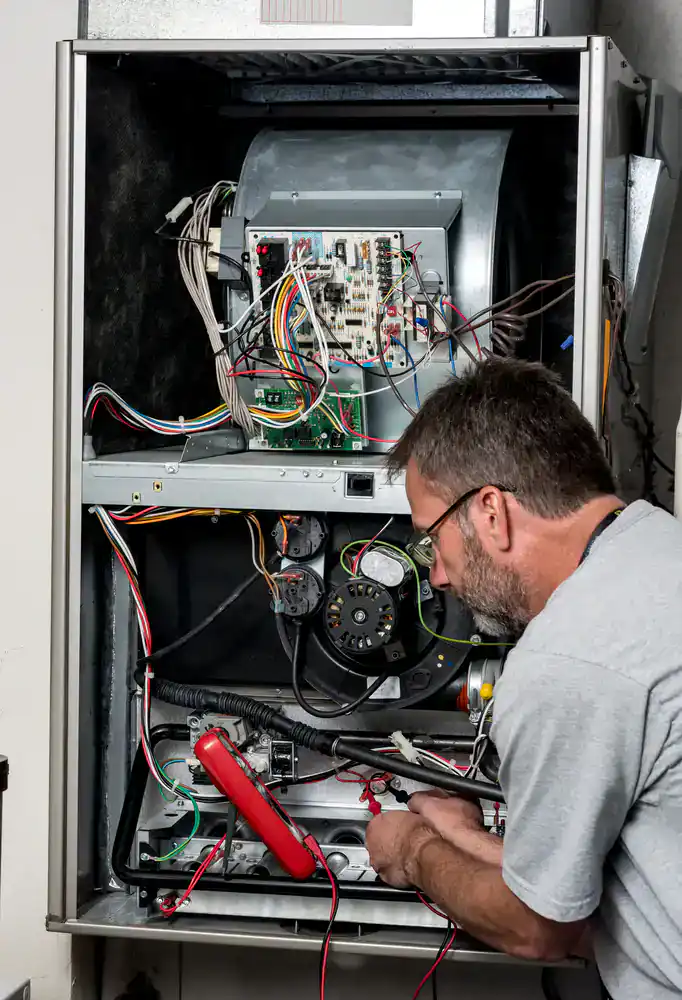
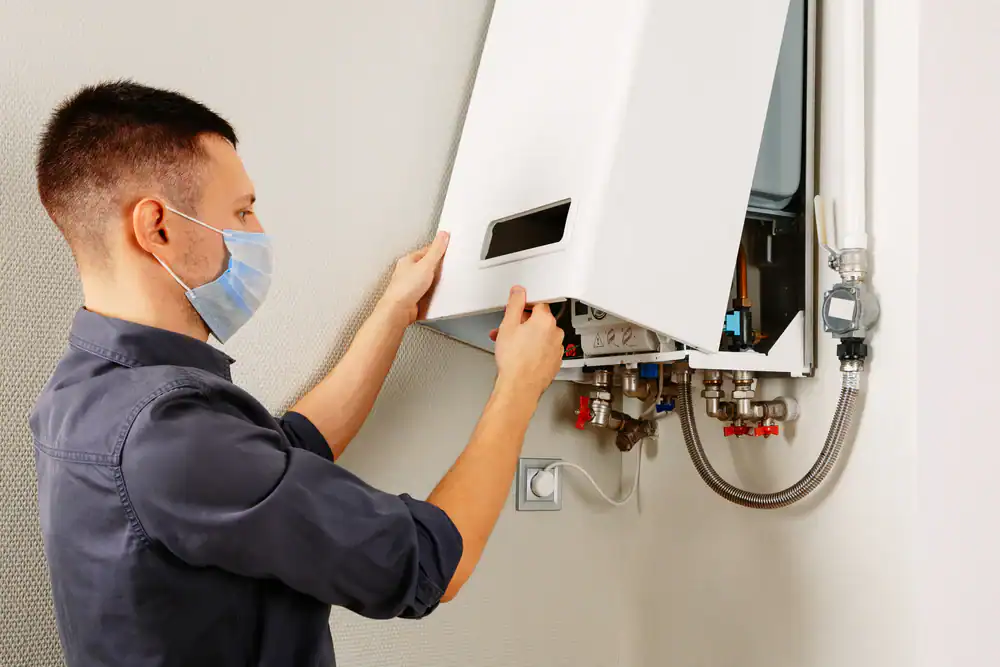
The inspection covers the burners, heat exchanger, circulator pump, expansion tank, pressure relief valve, and all safety controls. We check for corrosion, leaks, and damage throughout the boiler body and piping. The flue is inspected to confirm that combustion gases are venting safely outside. Combustion analysis is performed — this measures efficiency, carbon monoxide output, and draft pressure, and it’s the part of the inspection that catches invisible problems before they become dangerous ones.
If any of that gets skipped, it’s not a real inspection.
Heating System Check: What We're Actually Looking For
When we do a heating system check, we’re not just confirming that the boiler fires. We’re looking at the whole picture — how the system starts, how it runs, how it shuts down, and whether every safety device along the way is doing its job.
The pressure relief valve, for example, is a small component most homeowners never think about. It’s designed to release pressure if the system gets too high, preventing a dangerous situation. If it’s been stuck or corroded for a season or two, it won’t protect you when it matters. Same with the low water cutoff — it’s supposed to shut the boiler down if water drops too low, but only if it’s been tested and is actually working.
Carbon monoxide is the other thing we’re always watching for. A cracked heat exchanger can leak CO into your living space without any visible sign that something is wrong. You can’t smell it, you can’t see it, and a boiler that fires and heats the house every morning gives you no reason to suspect it. That’s exactly why combustion testing is part of every inspection we do — not an optional add-on, not something we skip when things look fine on the surface.
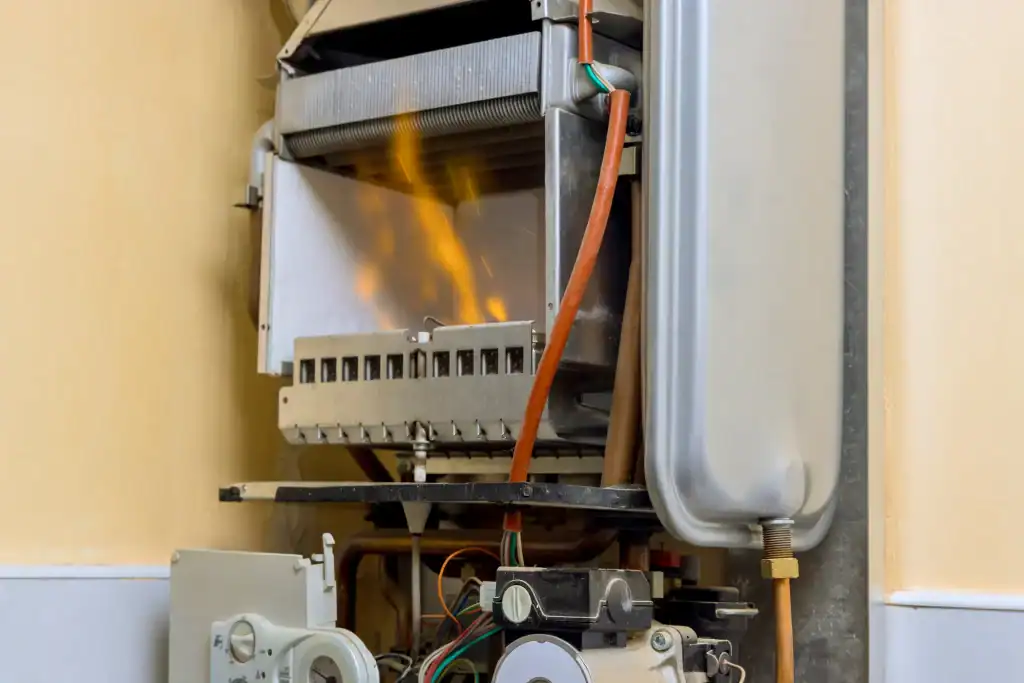
There’s also the efficiency side of it. Soot buildup on the heat exchanger reduces how effectively the boiler transfers heat, which means the system burns more fuel to produce the same warmth. Annual cleaning addresses that directly. A boiler that hasn’t been serviced in a few years is almost certainly running less efficiently than it should be, and that shows up on your gas bill long before it shows up as a breakdown.
Most boiler manufacturers also require documented annual professional maintenance to keep the warranty valid. If a major component fails and there’s no service record, the manufacturer can deny the claim. That’s a detail a lot of homeowners find out at exactly the wrong moment.
Steam Boiler Inspection: Why It's Different From Standard Boiler Service
Here’s something most HVAC companies won’t tell you upfront: servicing a steam boiler is genuinely different from servicing a hot-water or forced-air system, and not every contractor knows how to do it properly.
Essex County’s older suburban towns — Montclair, Glen Ridge, South Orange, Maplewood, West Orange — were built primarily between the 1880s and 1940s. Steam heat was the dominant residential technology during that era, and a large portion of the homes in these communities still have their original steam piping with a boiler that was installed sometime in the last few decades. These systems work differently, fail differently, and require a technician who actually understands them.
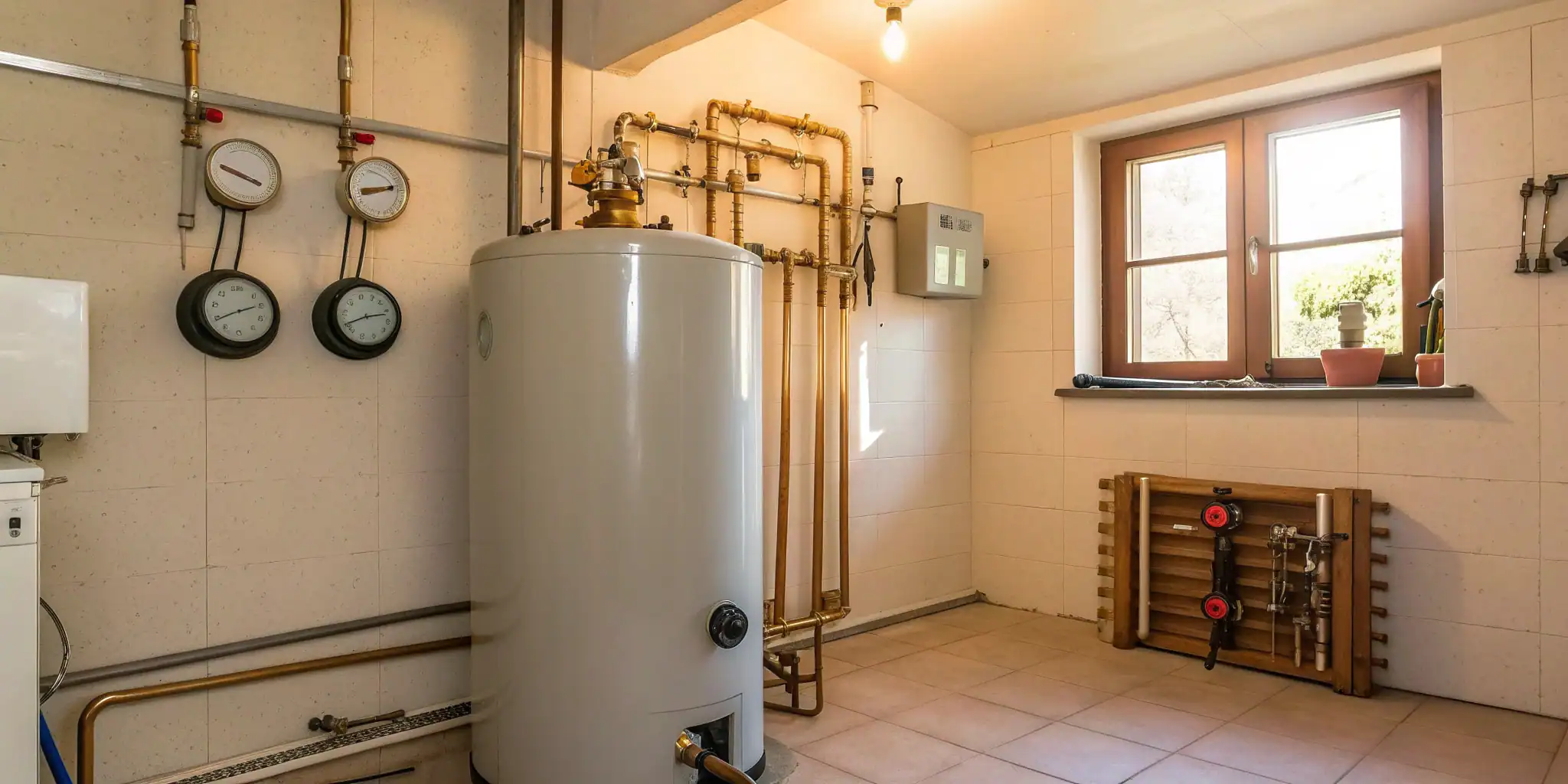
On a steam system, the inspection includes things that simply don’t apply to other boiler types: reading the sight glass to verify proper water level, checking operating pressure against the correct range for the connected radiation, inspecting venting behavior at each radiator, and confirming that the piping is pitched correctly so condensate returns to the boiler the way it’s supposed to. Water hammer — that banging and clanking sound that keeps people up at night — is almost always a symptom of something that a proper steam inspection would catch and address.
We’ve been working on steam systems in Essex County since 1973. That’s not a credential we mention to fill space — it’s the difference between a technician who recognizes what they’re looking at when they open up a 1930s steam system and one who’s figuring it out as they go. If you own an older home in Essex County and your heat comes through cast-iron radiators, the person inspecting your boiler needs to have real experience with that type of system. Not familiarity. Experience.
New Jersey also has specific regulatory requirements around boiler inspections that most homeowners aren’t aware of. Under N.J.A.C. 12:90, steam boilers require annual inspections, and hot water heating boilers require external inspection every 12 months and internal inspection every 24 months. The state’s Mechanical Inspection Bureau of Boiler and Pressure Vessel Compliance has been enforcing these standards since 1913, and under N.J.S.A. 34:7-26, the responsibility for compliance falls on the owner. That’s worth knowing.
Boiler Not Working? What It Usually Means — and How Inspection Prevents It
When a boiler stops working in the middle of winter, it rarely fails without warning. The warning signs were usually there — they just weren’t caught in time. A pressure reading that was creeping up. A circulator pump that was running slower than it should. A venting issue that was building gradually over months.
That’s the real argument for annual inspection: not that something is definitely wrong, but that you want to know before it becomes a problem at 11 PM in January when the temperature in Essex County is in the low 30s and you have a house full of people.
Common Reasons Boilers Stop Working in Winter
The most common boiler failures we see in the winter months are almost always things that could have been caught earlier. A pressure relief valve that was already compromised. A circulator pump that had been struggling for a season. A low water condition that the cutoff didn’t catch because the cutoff itself hadn’t been tested. These aren’t random failures — they’re the predictable end result of deferred maintenance.
Ignition problems are another frequent culprit. If the pilot light or ignition system isn’t inspected and cleaned before the heating season, it can fail to light when the thermostat calls for heat. That’s the call we get most often in October and November from homeowners who turned their heat on for the first time and got nothing.
Frozen or blocked flue venting is something that catches people off guard too. If the flue terminal is partially obstructed — by debris, by a bird’s nest, by anything — the boiler’s safety controls will shut the system down to prevent CO from backing up into the home. It looks like a boiler failure. It’s actually the system doing what it’s supposed to do. But it still leaves you without heat until someone comes out to clear it.
For homeowners in Essex County who are still on oil heat, there’s an additional layer to consider. We don’t service oil-fired boilers for repair — our focus is on converting oil systems to natural gas and replacing aging equipment with high-efficiency alternatives. If an inspection reveals that an oil boiler is nearing the end of its life, we can walk you through what a conversion would look like, what it costs, and what the long-term picture looks like on your heating bills.
Why September Is the Right Time to Schedule a Boiler Inspection in Essex County
Essex County winters are real. Upper Montclair averages around 30 inches of snow and temperatures that sit in the 30s throughout January and February. When the cold hits, it hits hard, and boilers that weren’t serviced in the fall run at maximum load from December through February with no margin for error.
The practical problem with waiting until October or November is that every qualified HVAC contractor in the area is already overbooked. The calls start coming in the moment the first cold snap arrives, and companies that do steam system work — which requires a specific skill set that not every contractor has — fill up fast. Scheduling in September means you get a full-length inspection, not a rushed one. It means there’s time to order and install any parts before the heating season starts. And it means you’re not paying emergency rates because you waited until the system failed.
We’ve been doing this in Montclair and across Essex County long enough to know how this plays out every year. The homeowners who call in September get the appointment they want, get the peace of mind they’re looking for, and go into winter knowing their system is ready. The homeowners who call in November get put on a waitlist.
There’s also the question of what happens if the inspection turns something up. If a component needs to be replaced, September gives you options — you can compare, you can plan, and you can have the work done without urgency driving the decision. That’s a very different position than discovering the same problem on a cold Tuesday night in January.
Our Home Comfort Membership Plan covers the annual heating inspection in the fall and the cooling system in the spring, with every visit backed by a 90-day diagnostic warranty. If repairs are needed, members receive a 10% discount and a one-year parts and labor warranty. It’s designed for homeowners who want consistent, scheduled service rather than reactive calls — which, in a county full of older homes and aging systems, is usually the smarter approach.
Schedule Your Boiler Inspection Before the Essex County Rush
A boiler inspection isn’t something you do because something is wrong. You do it because you want to know your system is safe, running efficiently, and ready for the months when you actually need it. In Essex County, with its pre-war housing stock and high concentration of steam systems, that means working with someone who knows these systems — not just someone who services boilers in general.
We’ve been doing this work in Montclair and across Essex County since 1973. We show up on time, we tell you what we find, and we don’t recommend anything you don’t need. If your boiler is due for an inspection — or if you honestly can’t remember the last time it was serviced — September is the right time to get it on the calendar.
Reach out to Adriatic Aire to schedule your pre-season boiler inspection. Free estimates on every visit, 24/7 availability, and a team that actually knows what it’s looking at.
Article details:
- Published by:
- Adriatic Aire LLC
- Published to:
- Last modified:
- September 30, 2026
Share:
Continue learning: