7 Signs You Need a Heating System Replacement
Your heating system won't always fail dramatically. Here are seven signs it's already telling you something's wrong — before it leaves you in the cold.
Share:
Summary:
Most heating systems don’t fail with a bang. They give you months of quiet signals — a slightly higher gas bill, a room that never quite warms up, a noise you’ve been meaning to mention to someone. Easy to ignore when the heat is still technically coming on.
But there’s a real cost to waiting. The homeowner who replaces a failing furnace in October on their own schedule pays far less — in money, in stress, and in options — than the one scrambling for a contractor in the middle of a January cold snap. We’ve seen both scenarios play out countless times across Essex County, and the difference is significant.
This post is about helping you get ahead of that. Here are seven signs your heating system may be telling you it’s time.
How Long Should a Furnace or Boiler Actually Last?
Before you can decide whether to replace your system, it helps to know where it stands on the clock. According to DOE and AHRI modeling, the median service life for a residential gas furnace is around 18 years. ASHRAE puts the standard lifespan at 20 years for gas furnaces and 25 years for gas boilers. ENERGY STAR recommends at least considering replacement once a system hits 15 years.
That doesn’t mean a 17-year-old furnace needs to go tomorrow. But it does mean the math starts to shift. Repairs that made sense at year eight look different at year eighteen — and efficiency losses that were minor early on have been compounding for a long time.
The 7 Signs Your Heating System May Need to Be Replaced
The first sign most homeowners notice is rising energy bills without any obvious cause. If your gas or oil usage is climbing year over year but your habits haven’t changed, your system is likely working harder to produce the same amount of heat. A furnace that’s 15 or more years old can run at an efficiency rating as low as 56%, compared to 90% or higher in a modern high-efficiency unit. That gap adds up fast on a real heating bill.
The second sign is uneven heating — rooms that never quite get comfortable, cold spots on the first floor while the second floor bakes, or a system that runs constantly but can’t keep pace with the thermostat. This often signals that the equipment is undersized for current conditions or has lost significant capacity over time.
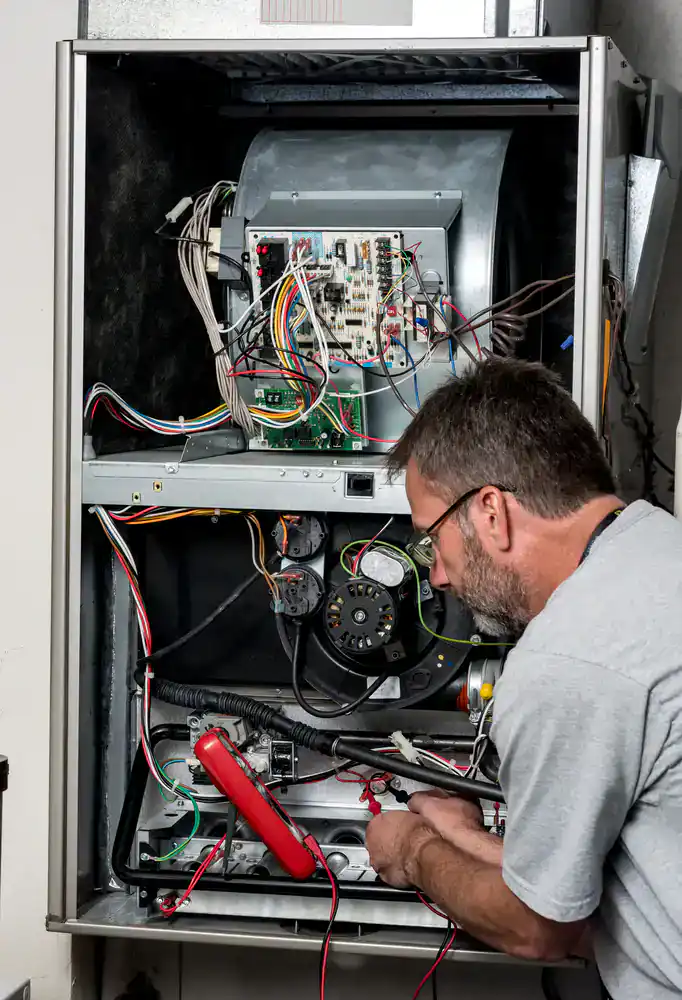
Third: strange noises. Banging, rattling, screeching, or a low rumbling that wasn’t there a few years ago. Some of these sounds are minor maintenance issues. Others — particularly a low boom when the burner ignites — can indicate delayed ignition or a cracked heat exchanger, both of which deserve immediate attention.
Fourth is the repair frequency problem. If you’ve called for service two or three times in a single heating season, you’re no longer maintaining a working system — you’re funding a failing one. A useful rule of thumb: if the cost of a repair, multiplied by the system’s age in years, exceeds $5,000, replacement almost always wins financially.
Fifth is excessive dryness inside your home during winter. Older furnaces, especially those that have lost efficiency, often struggle to maintain proper humidity levels. If you’re going through humidifier refills constantly or noticing dry skin and static electricity throughout the house, the heating system may be part of the problem.
Sixth is a yellow or flickering burner flame. A healthy gas furnace burns with a steady blue flame. Yellow, orange, or dancing flames can signal incomplete combustion — and in some cases, a cracked heat exchanger that’s allowing carbon monoxide to enter your living space. This one isn’t something to monitor and revisit. It’s a call-a-technician-today situation.
Seventh is age combined with any of the above. A 20-year-old system that’s running fine is still a system with a limited runway. When age stacks on top of rising bills, odd sounds, or a recent repair visit, the picture becomes clear.
What a Cracked Heat Exchanger Actually Means for Your Family
Of all the signs on this list, a cracked heat exchanger is the one that tends to get minimized — and it shouldn’t be. The heat exchanger is the component that separates combustion gases from the air that circulates through your home. When it cracks, those gases — including carbon monoxide — can mix with your heated air and move through your ductwork.
Carbon monoxide is colorless and odorless. You won’t smell it. You won’t see it. The symptoms of low-level exposure — headaches, dizziness, fatigue — are easy to attribute to a winter cold or a bad night’s sleep. That’s what makes it dangerous.
A yellow or dancing flame is one visible indicator that something may be wrong with combustion. Soot or black marks around the furnace are another. But the only way to know for certain is a professional inspection. A cracked heat exchanger typically cannot be repaired cost-effectively — the repair cost often approaches or exceeds the cost of a new system, and on a furnace that’s already 15 or 20 years old, replacement is almost always the right call.
We mention this not to alarm you, but because it’s the sign that most homeowners don’t know to look for. Essex County has a lot of older homes — in Montclair, Glen Ridge, South Orange, Maplewood, and Bloomfield, it’s common to find furnaces that have been running since the late 1990s or early 2000s. If yours is in that range and you haven’t had an inspection recently, it’s worth scheduling one before the season gets fully underway.
Should You Repair or Replace Your Heating System?
This is the question most homeowners are actually wrestling with when they start searching for answers. And it’s a fair one — replacement is a significant decision, and nobody wants to spend money they don’t have to.
The honest answer is that it depends on three things: the age of the system, the cost of the repair, and how efficiently the system has been running. When all three are working against you at the same time, repair becomes the more expensive choice — even if the upfront number looks smaller.
How to Think Through the Repair vs. Replace Decision
The $5,000 rule is a useful starting point. Take the estimated repair cost and multiply it by the system’s age in years. If that number exceeds $5,000, replacement is generally the better financial move. A $600 repair on a 10-year-old furnace is a reasonable investment. That same $600 repair on a 22-year-old furnace is a different calculation entirely.
But the repair-versus-replace math doesn’t stop there. Efficiency losses are a real, ongoing cost that most homeowners don’t factor in. A furnace running at 60% efficiency on a $2,000 annual heating bill is wasting roughly $800 every year compared to a modern 95% AFUE system. Over five years, that’s $4,000 — money that’s already gone, with no equipment to show for it.
There’s also the timing factor. A system that’s been repaired once this season is statistically more likely to need attention again before the season ends. Every repair buys time, but it doesn’t buy certainty. And certainty — knowing your heat will come on when you need it — has real value, especially when Essex County temperatures drop into the teens and the county activates Code Blue cold weather emergency protocols.
The homeowners who tend to feel best about their replacement decisions are the ones who made them proactively, not reactively. They had time to get a free estimate, think through their options, and choose equipment that fit their home — not just whatever was available for a next-day emergency install in February.
What to Know About Heating System Replacement in Essex County, NJ
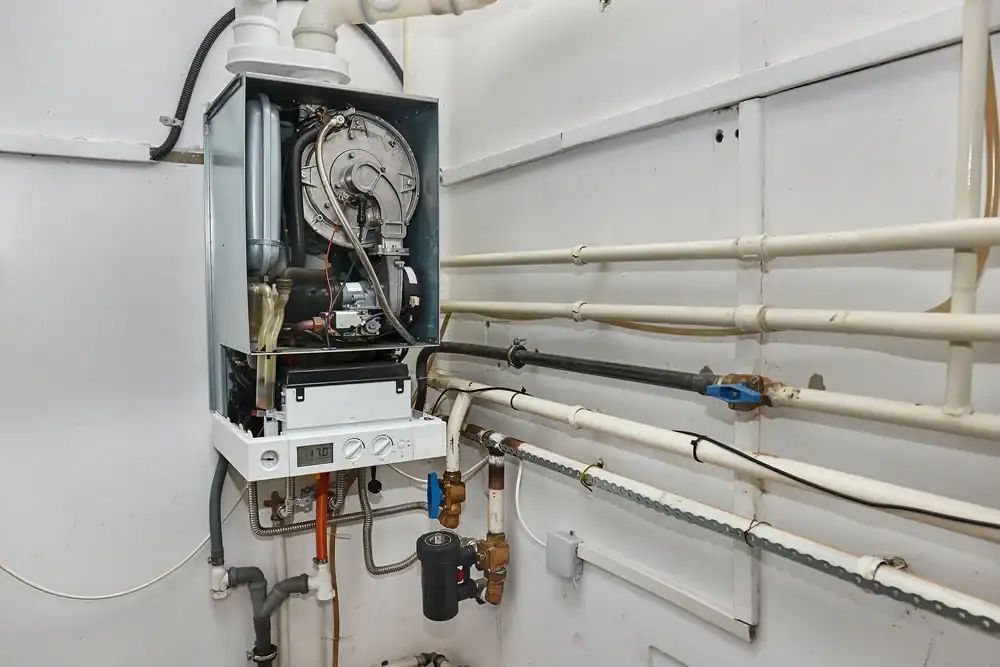
Essex County’s housing stock is older than most people realize. The towns that make up the bulk of our service area — Montclair, Glen Ridge, South Orange, Maplewood, Bloomfield, Cedar Grove, Verona, Nutley, Caldwell, and Millburn — were largely built out between the 1880s and the 1960s. A significant share of those homes were originally designed around steam boiler systems or early hot-water boilers. Many have been updated once or twice since then, but the replacement systems from the 1980s and 1990s are now well into their expected service life.
That matters for a few reasons. Steam boilers require specific expertise that not every HVAC contractor has. Sizing a replacement correctly in an older Essex County home — particularly one with original radiators and older distribution piping — takes experience with the actual systems these homes were built around, not just familiarity with modern forced-air installs. We’ve been working on heating systems in Essex County homes since 1973, which means we’ve seen the full range of what’s out there, from aging cast-iron boilers in South Orange Victorians to newer forced-air systems in Caldwell colonials.
New Jersey also requires a permit for all HVAC installations under the NJ Uniform Construction Code. Any contractor who suggests skipping the permit process is putting you at risk — unpermitted work can affect your homeowner’s insurance and create real problems at resale. We handle the permitting process as part of every installation.
One more thing worth knowing: if you’re considering a high-efficiency replacement, there may be rebate programs available through the NJ Clean Energy Program that can offset part of the cost. We can walk you through what’s available when you call for your free estimate.
Ready to Find Out If Your Heating System Needs to Be Replaced?
If any of the seven signs in this post sounded familiar, you don’t have to guess. A straightforward inspection will tell you exactly where your system stands — and whether repair or replacement makes more sense for your home and your budget.
We’re not going to tell you that you need a new system if you don’t. Our business runs almost entirely on referrals, which means our reputation in Essex County matters more than any single sale. If a repair is the right call, that’s what we’ll tell you.
Adriatic Aire has been serving Essex County homeowners since 1973. If you want a straight answer from people who know these homes and these heating systems, give us a call. Free estimates, no pressure.
Article details:
- Published by:
- Adriatic Aire LLC
- Published to:
- Last modified:
- October 1, 2026
Share:
Continue learning: