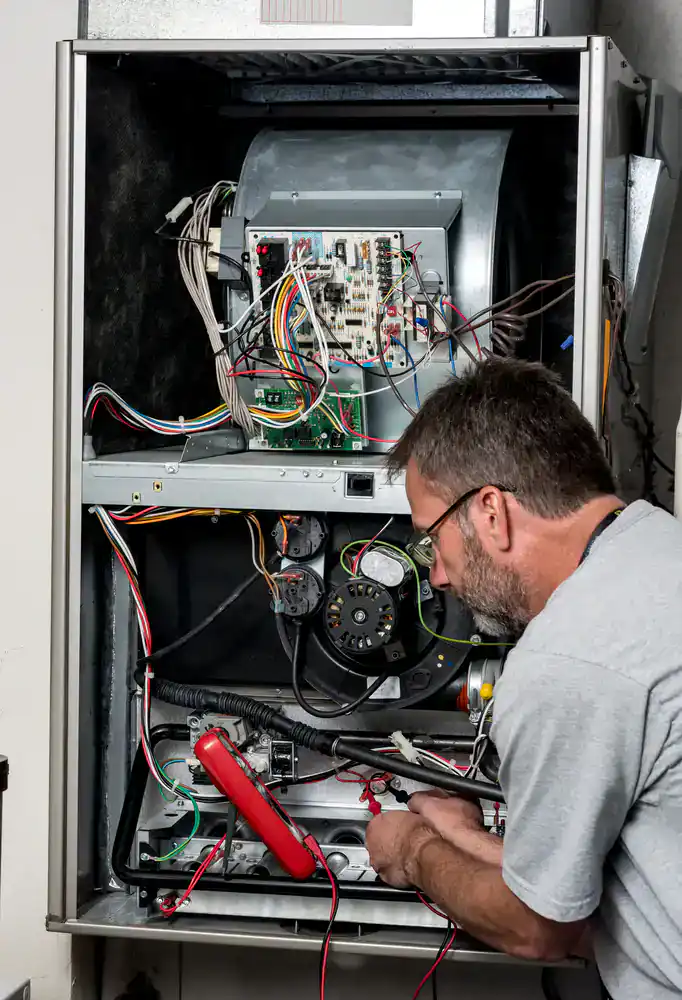
Boiler Repair Cost Breakdown: Essex County, NJ Fix Costs for 2026
Got a repair quote and not sure if it's fair? Here's what boiler repair actually costs in Essex County, NJ — broken down by part, labor, and situation.
Share:
Summary:
You’ve got a broken boiler and someone just handed you a repair quote. Now you’re wondering if the number is fair, whether fixing it even makes sense, or whether you’re about to throw money at a problem that’s going to come back in six months. That’s a stressful place to be — especially when it’s January in Essex County and your house is cold.
This guide gives you the real numbers: what boiler repairs typically cost in Essex County, what drives the price up or down, and how to make a clear-headed decision when the pressure is on. No fluff, no upselling — just the information you need.
What Does Hot Water Boiler Repair Cost in Essex County, NJ?
Nationally, the average homeowner pays around $424 for a boiler repair, with most jobs falling somewhere in the $190 to $659 range. But those are national numbers, and Essex County isn’t an average market. Labor rates here run $85 to $125 per hour — at the higher end of what you’ll see across the country, which reflects New Jersey’s cost of living. That means a repair that costs $300 in the Midwest might run $450 to $500 here before parts are even factored in.
Hot water boiler repair — also called hydronic heating repair — covers everything from a failed circulator pump to a stuck zone valve to a pressure relief valve that’s leaking. Each job has its own cost range depending on the part, the system, and how accessible the equipment is. The diagnostic visit alone typically runs $75 to $200, and that fee is usually credited toward the repair if you move forward.
What you pay also depends on whether you’re dealing with a straightforward single-component failure or something that points to a deeper issue. We’ll tell you the difference upfront.
Water Heater vs. Boiler Repair: Are You Calling About the Right System?
This comes up more than you’d think. A boiler heats your home by circulating hot water through pipes to radiators or baseboard heaters. A water heater heats the domestic hot water you use for showers and dishes. They’re different systems, they fail in different ways, and they have different repair costs. Some homes have a combination unit — a combi-boiler — that handles both, and those have their own repair considerations.
If your radiators are cold but your hot water is fine, you’re dealing with a boiler problem. If your shower runs cold but your heat is working, it’s likely the water heater. Getting that distinction right before you call saves time for everyone.
For water boiler repair specifically — meaning the system that heats your living space — the most common calls we see in Essex County involve circulator pump failure, zone valve issues, and pressure problems. In older homes throughout Essex County, particularly in Montclair, Maplewood, and South Orange, sediment buildup and worn components are frequent culprits after years of continuous use. These aren’t catastrophic failures in most cases. They’re the natural result of a system that’s been working hard for decades.
When we come out for a diagnostic, we cover more than just the obvious symptom. We check gas pressure, test the thermostat, inspect the expansion tank, and look at the heat exchanger to give you a complete picture of what’s actually going on — not just what broke today, but what might break next month if it’s left unaddressed. That full-system look is what separates a real repair from a temporary fix.
Boiler Pump Replacement Cost: What to Expect
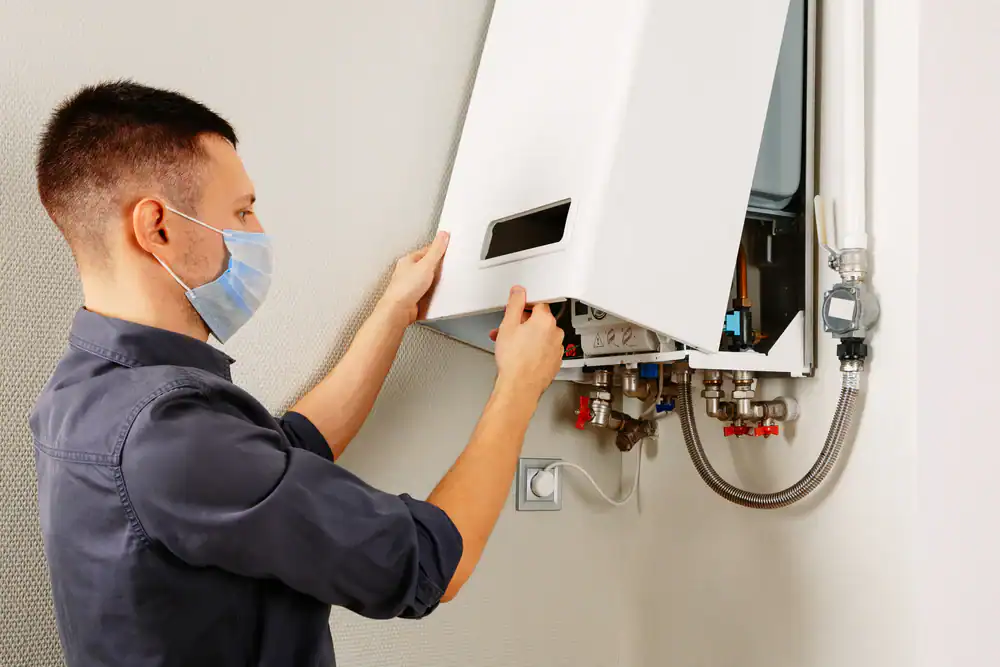
The circulator pump is one of the most commonly replaced components in a hot water boiler system. It’s the part that moves heated water through your pipes and out to your radiators or baseboards — when it fails, you lose heat, sometimes in one zone, sometimes throughout the whole house. You might hear the pump running but feel no warmth coming from the radiators, or you might notice the pump is completely silent when the system calls for heat. Either way, it’s a clear sign the pump needs attention.
Boiler pump replacement in Essex County typically runs $300 to $1,100 installed, depending on the pump type and the complexity of the job. A standard single-speed pump on a straightforward system sits toward the lower end of that range. A variable-speed ECM pump — which is more energy-efficient and increasingly common in newer installations — costs more for the part itself, pushing the total toward the higher end. Access difficulty matters too. A pump tucked into a tight mechanical room in a pre-war Montclair Colonial takes longer to replace than one in an open basement in Livingston.
The pump replacement itself is typically a same-day job. We drain the relevant section of the system, swap the pump, refill and bleed the lines, and verify that heat is circulating properly before we leave. It’s one of the more satisfying repairs because the result is immediate and obvious — the heat comes back on.
What’s worth knowing is that a failed circulator pump, on its own, is not a reason to replace the entire boiler. If the system is otherwise in good shape and under 15 years old, a pump replacement is almost always the right call. If the boiler is older, the pump is just the latest in a string of repairs, and the system is running inefficiently, that’s a different conversation — and one worth having honestly before you spend $400 to $800 on a pump for a system that’s approaching the end of its life.
Repair or Replace? The Decision Essex County Homeowners Actually Face
This is the question that matters most, and it’s the one that gets the least honest treatment in this industry. Most contractors either push repair because that’s what they were called to do, or push replacement because the margins are better. What you actually need is a clear framework.
The standard starting point is what’s called the 50% rule: if the cost of the repair exceeds 50% of what a new boiler would cost, replacement deserves serious consideration — especially if the system is more than 15 years old. A new boiler installation in Essex County typically runs $6,500 to $11,500 for most homes, all-in. That means if you’re looking at a repair quote over $3,000 to $4,000 on an aging system, the math starts to favor replacement.
Age and condition together tell the real story. A 12-year-old boiler with a bad circulator pump is a very different situation from a 22-year-old boiler that’s been repaired three times in the past five years and is running at 60% efficiency. The first one you fix. The second one you replace.
When Boiler Repair Makes Sense — and When It Doesn't
If your boiler is under 10 years old and you’re dealing with a single component failure — a zone valve, a thermostat, a pressure relief valve — repair is almost always the right move. These are normal wear items. Replacing them costs $150 to $500 in most cases, the system gets another decade or more of life, and you’re done. That’s a straightforward decision.
The calculus changes when the system is older and the failures start compounding. A boiler that’s 20-plus years old, running at reduced efficiency, and showing signs of uneven heating or pressure inconsistency isn’t just a circulator pump problem. It’s a system that’s telling you something. Older boilers typically operate at 56 to 70% efficiency. Modern high-efficiency units run at 90% or better. Over a full heating season in Essex County — which runs roughly October through April — that efficiency gap translates into real money on your gas bill every month.
Heat exchanger failure is the clearest signal that replacement makes more sense than repair. A cracked heat exchanger is both expensive to fix (typically over $1,000, often significantly more) and a potential carbon monoxide risk. When we find a compromised heat exchanger on a 20-year-old boiler, the honest recommendation is almost always replacement, not repair.
The homes we see most often in this situation are the pre-war Colonials and Tudors in Maplewood, the older Victorians in Montclair Heights, and the early-twentieth-century homes in Caldwell and Bloomfield. These are beautiful houses with boilers that have been running reliably for decades — but eventually, decades catch up. If you’re in one of those homes and you’re on your third repair in two years, it’s worth having a direct conversation about what the next five years look like for that system.
The Third Option: Oil-to-Gas Conversion in Essex County
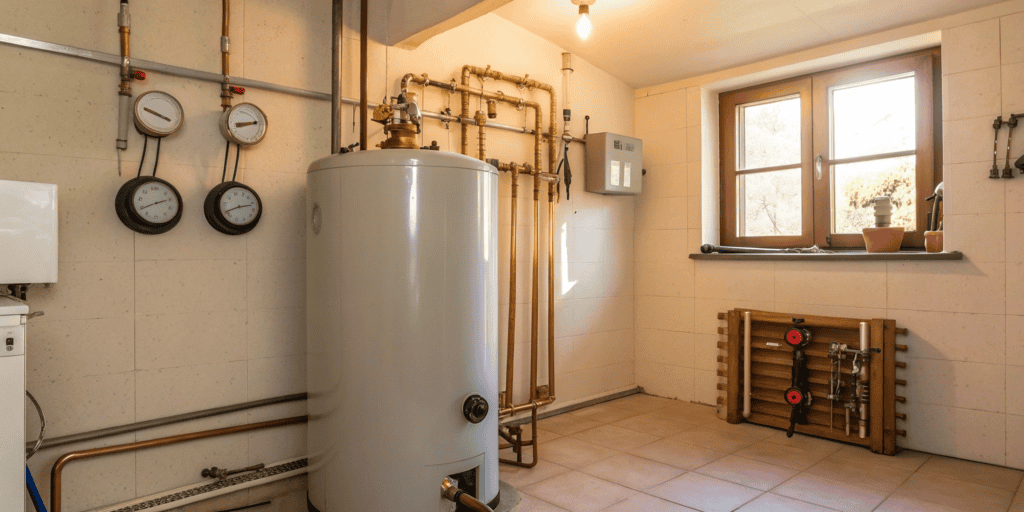
Most boiler repair cost guides give you two options: fix it or replace it with the same type of system. But for a significant number of Essex County homeowners — particularly those with aging oil-fired boilers — there’s a third option that most contractors never bring up: converting from oil to gas.
Natural gas heats approximately 75% of New Jersey homes, but there’s still a meaningful stock of oil boilers in Essex County, particularly in homes built before natural gas infrastructure was fully extended to residential neighborhoods. If you’re one of those homeowners, you already know the frustrations: heating oil prices fluctuate significantly, parts for older oil boilers are increasingly difficult to source, and the repair costs tend to run higher than comparable gas system work.
Converting from oil to gas often costs less than replacing an oil boiler with another oil boiler. You eliminate the ongoing expense and volatility of heating oil, gain access to a more efficient fuel source, and may qualify for rebates through NJ utility programs. The conversion involves installing a new gas boiler, connecting to the existing gas line (or having one extended to your home if needed), and decommissioning the oil system. It’s not a small project, but for homeowners who are already facing a major repair bill or a replacement decision on an oil system, it’s frequently the most financially sensible path.
This is a conversation worth having before you approve a costly repair on a system that’s already struggling. The question isn’t just “how much does it cost to fix this?” — it’s “what’s the smartest way to heat this house for the next 20 years?” For oil boiler owners in Essex County, the answer is often gas conversion. We specialize in this work, and we’ll give you the honest comparison between your options before you spend a dollar on anything.
Getting a Fair Boiler Repair Quote in Essex County, NJ
Here’s the short version of everything above. Most boiler repairs in Essex County fall somewhere between $190 and $659, with labor running $85 to $125 per hour. Part-specific jobs like pump replacement run $300 to $1,100 installed. If your repair quote is approaching 50% of what a new system costs — and your boiler is over 15 years old — replacement deserves a serious look. And if you have an oil boiler, gas conversion may be the option that makes the most financial sense long-term.
What matters most is getting a straight answer from someone who isn’t trying to sell you something you don’t need. That means a full diagnostic before any work is quoted, transparent pricing before anything is touched, and an honest conversation about whether repair or replacement is actually the right call for your specific system.
If you’re in Essex County and you’re trying to figure out what to do with a broken boiler, Adriatic Aire has been doing this work since 1973. Reach out and we’ll give you a free estimate and a clear answer — no pressure, no guesswork.
Article details:
- Published by:
- Adriatic Aire LLC
- Published to:
- Last modified:
- October 4, 2026
Share:
Continue learning: