Which HVAC Projects Require a Permit in Essex County, NJ?
Share:
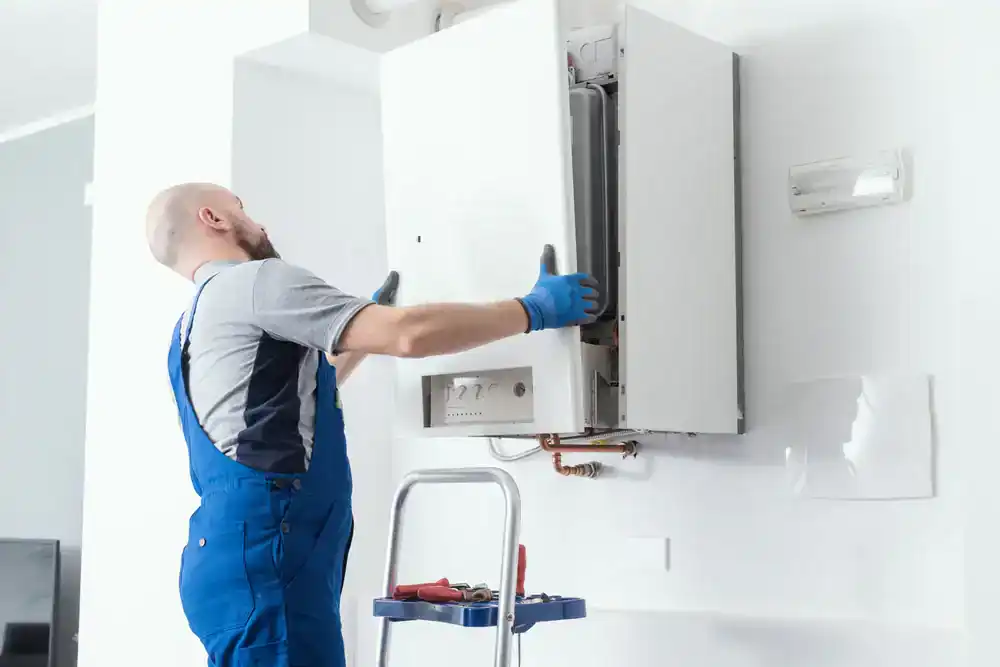
If a contractor ever told you that your furnace swap or AC replacement doesn’t need a permit, they were wrong — or hoping you wouldn’t check. In New Jersey, the rule is simple on the surface: almost all HVAC work requires a permit. But the details underneath that rule matter a lot, especially in Essex County, where the housing stock ranges from Victorian-era steam systems in Montclair to mid-century split-levels in Livingston to newer construction in Cedar Grove. The type of project, the scope of the change, and who’s doing the work all affect how the permit process plays out — and what happens to you if it doesn’t happen at all.
NJ HVAC License Requirements: What Your Contractor Actually Needs
Before the permit question even comes up, there’s a more fundamental one: is your contractor legally allowed to pull one? In New Jersey, only licensed HVAC contractors can apply for mechanical permits and pass inspections. An unlicensed contractor simply cannot be issued a construction permit by any municipality in the state.
What makes this more complicated — and more important — is that NJ requires two separate credentials, not one. Most homeowners don’t know this, and it’s a gap that creates real legal exposure for you down the line.
HVAC License NJ: The Two Credentials Every Contractor Must Hold
The first credential is a Master HVACR Contractor License, issued by the New Jersey State Board of Examiners of HVACR Contractors. This is the trade license — it covers the technical side of the work. To get it, a contractor has to meet education and experience requirements, pass a state exam with a minimum score of 70%, carry at least $500,000 in liability insurance, and post a guarantor bond. The Board can be reached at 124 Halsey Street in Newark at (973) 504-6250.
The second credential is a Home Improvement Contractor Business (HICB) registration, issued separately by the NJ Division of Consumer Affairs. This one exists because New Jersey law explicitly defines HVAC installation, replacement, and repair as “home improvement” under N.J. Stat. § 56:8-136. That means any contractor doing residential HVAC work needs to be registered as a home improvement contractor in addition to holding their trade license. These are two different agencies, two different applications, and two different renewal cycles.
Why does this matter to you? Because a contractor can hold one without the other — and either gap creates real legal exposure. Under N.J. Stat. § 56:8-138, an unregistered home improvement contractor cannot be issued a municipal construction permit. If they do the work anyway, you’re left with unpermitted work on your property, and the liability follows the property — not the contractor. The NJ Consumer Fraud Act makes the stakes even higher: unregistered contractors can face triple damages plus attorney’s fees, but that legal remedy doesn’t undo the unpermitted work sitting in your home.
We hold both credentials. Our HVACR License No. is 19HC00022600, and our HIC License No. is 13VH05686500. Both are verifiable through the NJ Division of Consumer Affairs at njconsumeraffairs.gov. We’ve been working in Essex County since 1973, and we’ve seen what happens when homeowners hire someone who can’t back up their claims with a number you can actually look up.
Home Improvement Contractor License NJ: Why HVAC Work Falls Under This Law
A lot of homeowners assume the home improvement contractor registration is something that applies to kitchen remodelers and deck builders — not HVAC companies. That’s a reasonable assumption, and it’s wrong. The New Jersey statute is explicit: “the construction, installation, replacement, improvement, or repair of central heating and air conditioning equipment” is legally classified as home improvement. That means the HIC registration requirement applies to every HVAC contractor working on a residential property in the state.
The practical consequence of this is significant. HIC registrants are required to carry workers’ compensation insurance (unless exempt), commercial general liability insurance at a minimum of $500,000 per occurrence, and a compliance surety bond. The bond amount scales with contract volume — $10,000 for smaller operations, up to $50,000 for contractors with higher annual totals. These aren’t arbitrary bureaucratic hurdles. They’re the financial backstop that protects you if something goes wrong and the contractor can’t make it right.
What happens if a contractor skips the HIC registration? Fines up to $20,000, loss of the ability to pull permits, and potential criminal exposure — the statute classifies violations as a fourth-degree crime, which carries up to 18 months in prison. None of that helps you if you’re already living with a system that was installed without proper documentation. The smarter move is to ask for both license numbers before any work begins and verify them yourself through the state’s online portal. It takes about two minutes and removes all the guesswork.
HVAC Permit Requirements in Essex County: Full Permits vs. Minor Work
Once you’ve confirmed your contractor is properly credentialed, the next question is what kind of permit their work actually requires. In New Jersey, not all HVAC permits work the same way. The NJ Uniform Construction Code (N.J.A.C. 5:23) draws a meaningful distinction between projects that require full plan review before work begins and projects that qualify as “minor work” — a category that still requires a permit but allows work to start more quickly.
This distinction matters a lot in Essex County, where emergency breakdowns in the middle of a January cold snap or an August heat wave don’t leave much room for waiting. Understanding which category your project falls into helps set realistic expectations — and helps you evaluate whether your contractor actually knows the rules.
HVAC Installation Permit: When You Need Full Plan Review
A full mechanical permit with plan review is required for any HVAC project that goes beyond a straightforward like-for-like replacement. New installations — meaning a system being added where none existed before — always require full plan review. So does any work that changes the fuel type, significantly modifies ductwork, or alters the capacity of the system in a meaningful way.
This is directly relevant to one of the most common projects we handle in Essex County: oil-to-gas conversion. Many of the older homes throughout Montclair, South Orange, Maplewood, and Bloomfield were built with oil-fired boilers. As those systems age out, homeowners increasingly want to convert to natural gas — and that’s a full permit project. It involves a change in fuel type, new gas piping, new equipment, and documentation that the local construction official needs to review before work begins. There’s no shortcut around it, and any contractor who suggests otherwise is telling you something that isn’t true.
The full permit process involves submitting an application to the local building department. Each of Essex County’s 22 municipalities has its own, and we know them well. The process includes plan review by the subcode official, a rough inspection before the system is enclosed or connected, and a final inspection once everything is operational. The timeline varies by town — some municipalities move quickly, others take longer — but we’ve navigated this process in virtually every town in the county.
For new commercial installations, the process is similar but often involves additional documentation depending on the building type and occupancy. Whether it’s a retail space in Livingston or a healthcare facility in Newark, the permit requirement is the same: full plan review, inspections at each stage, and a certificate of approval at the end.
Does Replacing a Furnace or AC Unit Require a Permit in NJ?
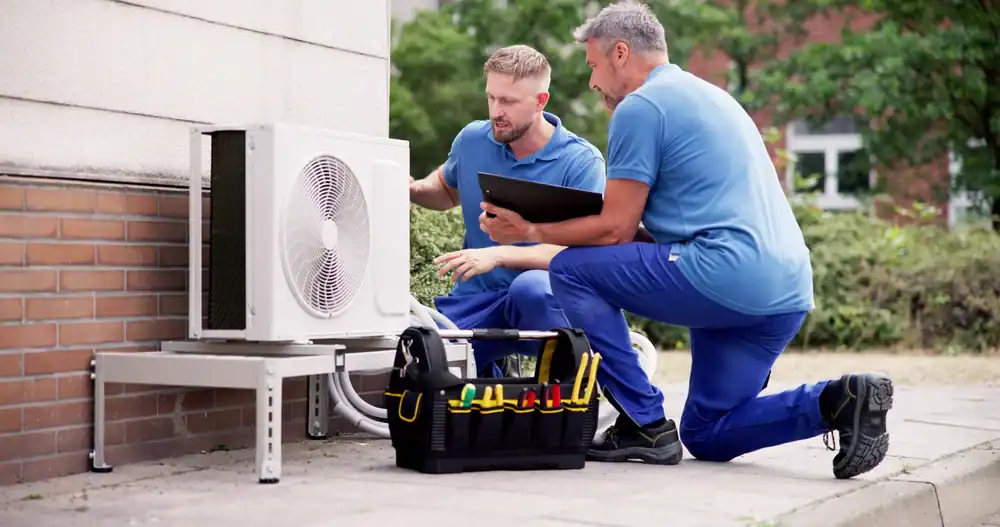
Yes — but this is where the minor work distinction becomes useful. Under the NJ DCA’s guidelines, the replacement of an existing boiler, warm air furnace, air conditioning unit, or air conditioning condensing unit with a new appliance of like capacity qualifies as “minor work” under N.J.A.C. 5:23. A permit is still required, but the process is different: work can begin after the contractor gives notice to the local code enforcement agency. That notice can be oral, written, or by email — formal permit issuance doesn’t have to happen before the wrench turns.
This matters for emergency situations. If your furnace fails on a Friday night in January, a properly licensed contractor can give notice to the local construction office and begin the replacement without waiting days for a permit to be formally issued. The paperwork follows; the heat doesn’t have to wait. This is exactly why we offer 24/7 emergency service — and why the minor work provision exists in the first place.
The key word in all of this is “like.” Like capacity, like fuel type, like configuration. The moment any of those variables change, the project moves out of minor work territory and into full permit territory. Replacing a gas furnace with a gas furnace of the same capacity? Minor work. Replacing an oil boiler with a gas boiler? Full permit. Adding ductwork that wasn’t there before? Full permit. The distinction isn’t arbitrary — it reflects the actual scope of the change and the level of review that change warrants.
Ordinary maintenance — filter changes, thermostat adjustments, cleaning, minor part swaps — doesn’t require any permit at all. The permit requirement kicks in at installation, replacement, and significant modification. If you’re ever unsure which category your project falls into, the right move is to ask your contractor directly and get a clear answer before the work starts.
What to Do Before Any HVAC Work Starts in Essex County
The permit question is really a protection question. Unpermitted HVAC work can void your homeowner’s insurance if something goes wrong, complicate or delay a home sale when an inspector flags it, and leave you on the hook for retroactive permits and potential rework — none of which is the contractor’s problem once they’ve cashed the check and moved on.
The simplest way to protect yourself is to ask for both license numbers before anyone touches your system, verify them through the NJ Division of Consumer Affairs, and confirm that your contractor will pull the appropriate permit before work begins. A contractor who’s reluctant to answer those questions directly is telling you something important.
We’ve been doing this work in Essex County since 1973. We pull permits, we hold both required NJ credentials, and we’re happy to walk you through exactly what your project requires before you commit to anything. Adriatic Aire offers free estimates on every project — reach out and we’ll give you a straight answer.
Article details:
- Published by:
- Adriatic Aire LLC
- Published to:
- Last modified:
- August 11, 2026
Share:
Continue learning: