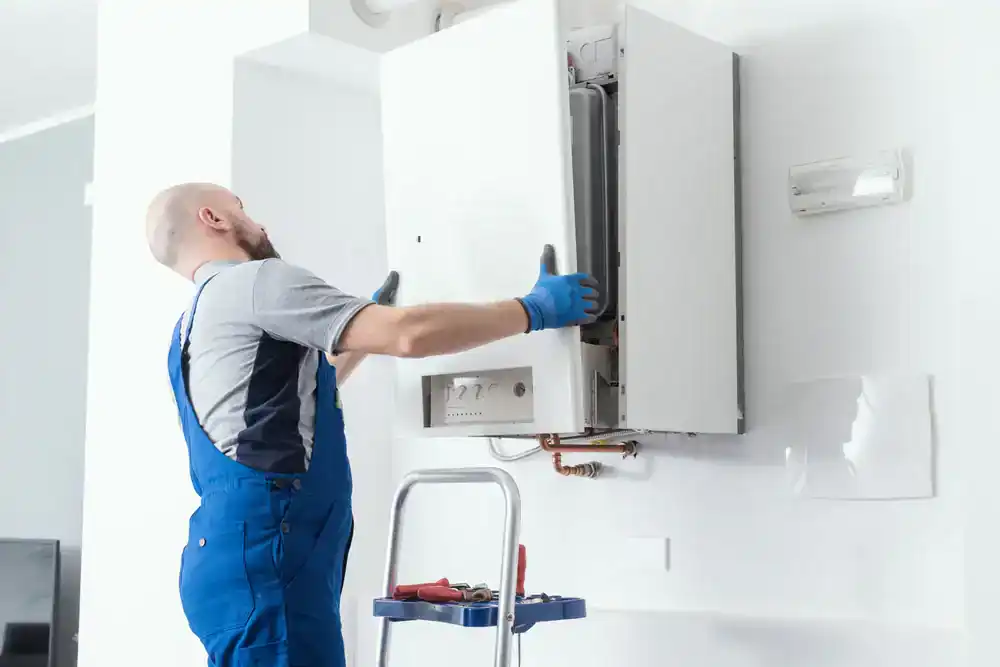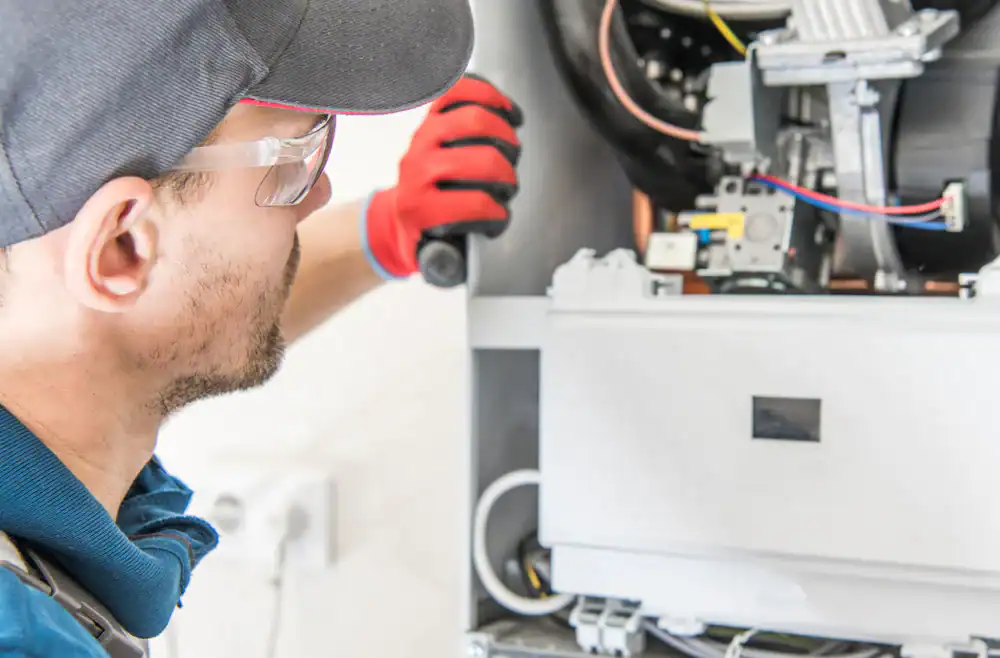
Real Furnace Repair Costs in Essex County, NJ by Fix Type
Share:

Your furnace stopped working. It’s January, it’s cold, and you have no idea what you’re about to spend. You start searching online, and every HVAC company tells you the same thing: “Call for a quote.” That’s not an answer — that’s a runaround.
So here’s what most companies won’t publish: real furnace repair costs, broken down by the specific part that failed. Whether it’s a bad igniter, a dying blower motor, or a cracked heat exchanger, you deserve to know what you’re looking at before anyone shows up at your door. That’s exactly what this covers.
What Furnace Repair Actually Costs — By the Part That Failed
The national average for a furnace repair lands around $318, but that number alone doesn’t tell you much. What you’ll actually pay depends almost entirely on which component failed — and the range between the cheapest and most expensive repair is enormous.
A faulty igniter is the single most common furnace failure, and it’s also one of the least expensive to fix — typically $150 to $250 for parts and labor. A flame sensor that just needs cleaning can cost even less. On the other end of the spectrum, a heat exchanger replacement runs $1,000 to $2,500, and in some cases higher — and it’s not just expensive, it’s a safety issue, since a cracked heat exchanger can allow carbon monoxide to mix with the air circulating through your home.
In between, you’ve got blower motor replacements ranging from $300 to $900 for a standard motor, and up to $1,700 to $2,000 for a variable-speed unit. Gas valve replacements typically run $500 to $1,000. A control board — the brain of the system — usually falls between $500 and $950. Draft inducer motor repairs land somewhere between $200 and $1,500 depending on the unit. And a full annual tune-up, if your system just needs maintenance rather than a repair, generally runs $150 to $200.
Why Essex County Homes See More Furnace Problems Than You’d Expect
If you live in Montclair, South Orange, Maplewood, Glen Ridge, or any of the older established neighborhoods across Essex County, NJ, there’s a good chance your home is working against you a little. Pre-war and mid-century construction is everywhere here — Victorian colonials, Tudor revivals, older cape cods — and a lot of those homes are still running on furnaces and boiler systems that have been in place for decades. Some of them are well past the 15-to-20-year lifespan most manufacturers design for.
That matters because Essex County winters are not gentle. Average January lows hover around 24°F, and nor’easters and polar vortex events regularly push temperatures into the single digits. A furnace that’s been running hard for six months a year, year after year, accumulates wear fast. The heating season here runs roughly October through April — that’s a long stretch for any mechanical system.
The other factor that comes up constantly in this area is oil heat. A significant number of Essex County, NJ homes — particularly in the older, more established neighborhoods — are still on oil. And this creates a decision point that’s different from what a homeowner with a gas furnace faces. If your oil furnace breaks down and needs a major repair, the conversation isn’t just about fixing it — it’s about whether this is the moment to convert to gas entirely. Oil-to-gas conversion eliminates fuel delivery logistics, typically reduces annual heating costs, and aligns with where New Jersey’s energy infrastructure is heading.
We don’t offer oil furnace repair — that’s a deliberate choice, not an oversight. Our focus is gas systems and oil-to-gas conversion, and we’re straightforward about that distinction because it helps homeowners make better decisions rather than spend money on a temporary fix for a system they’ll eventually need to replace anyway.
What a Legitimate Furnace Repair Diagnostic Actually Looks Like
A proper furnace diagnostic isn’t a technician glancing at the unit and naming a number. It’s a systematic inspection — and knowing what it should include helps you tell the difference between a thorough contractor and one who’s guessing.
A legitimate diagnostic covers ignition testing to verify the igniter and flame sensor are functioning correctly, burner inspection to check for debris or corrosion affecting combustion, blower motor testing to confirm airflow is moving heat through your system properly, and heat exchanger inspection — which is the safety-critical part of the process, because a cracked heat exchanger is a carbon monoxide risk that can’t be deferred. A good technician also checks the pressure switches, the draft inducer motor, and the control board for error codes before drawing any conclusions.
What you should hear at the end of a diagnostic is a clear explanation of what failed, why it likely failed, and what the fix involves — in plain language, before any work begins. You should also hear an honest assessment of whether the repair makes sense given the age and overall condition of the system. A technician who skips straight to a quote without walking you through the findings isn’t doing you any favors.
We test before we guess. When we show up for an HVAC system repair, we run through the full system — not just the obvious symptom — because furnace problems often have upstream causes that a surface-level inspection misses. A blower motor that’s running hot, for example, might be a motor problem or it might be a clogged filter and restricted airflow that burned the motor out. Fixing the motor without addressing the root cause means you’re back in the same situation in another season.
HVAC Repair vs. Replacement: The Math That Actually Helps
This is the question most homeowners are really asking when they search for furnace repair costs. Not just “what does it cost to fix?” — but “is it worth fixing at all?” It’s a fair question, especially when your system is older and you’re looking at a significant repair bill.
There are two frameworks that cut through the noise. The first is the 50% Rule: if the repair quote exceeds 50% of the cost of a new furnace, and your system is approaching or past 10 years old, replacement starts to make more economic sense than repair. New furnace installation in Essex County, NJ typically runs $2,500 to $7,500 depending on the system — so the heater replacement cost threshold for the 50% Rule lands somewhere around $1,250 to $3,750.
The second is the $5,000 Rule: multiply the age of your furnace by the cost of the repair. If that number exceeds $5,000, lean toward replacement. A 12-year-old furnace needing a $350 repair comes out to $4,200 — repair it. A 16-year-old furnace needing a $450 repair comes out to $7,200 — that’s a replacement conversation.
When Furnace Repair Is Clearly the Right Call
If your furnace is under 10 years old and the repair is a single component — an igniter, a flame sensor, a thermocouple — repair is almost always the right answer. These are normal wear items. They fail on systems of all ages, and replacing them extends a healthy system’s life without any meaningful downside.
Even on older systems, repair can make sense when the fix is minor and the rest of the unit is in solid shape. A 14-year-old furnace with a $200 igniter problem is not a dying furnace — it’s a furnace with a worn igniter. If the heat exchanger is intact, the blower motor is running clean, and the system has been maintained, there’s no reason to replace it over a routine part failure.
The cases where repair clearly wins: the system is under warranty, the failed component is inexpensive, the rest of the system checks out during the diagnostic, and the homeowner has been keeping up with annual maintenance. If all four of those are true, you’re looking at a repair, not a replacement conversation.
A furnace that has been maintained annually tends to have a longer, more predictable service life than one that’s been ignored. We see this regularly in Essex County, NJ — a well-maintained 18-year-old unit in a Verona colonial that’s been tuned every fall will often outlast a neglected 12-year-old system in a newer build that’s never had a filter changed. Maintenance history matters as much as age when you’re making this call.
AC Emergency Repair and Why 24/7 HVAC Response Matters Year-Round
Furnace failures get most of the attention because they happen in the middle of winter, when the stakes feel highest. But Essex County, NJ homeowners know that HVAC emergencies aren’t seasonal — they just change direction. The same urgency that applies to a furnace going out at 2 a.m. in February applies to AC emergency repair when a heat wave hits in July and your system stops keeping up.
Newark holds a record of 100°F temperatures sustained for five consecutive days. That’s not a theoretical scenario — it’s documented local history. A cooling system that fails during that kind of heat is just as urgent as a heating system that fails during a nor’easter. The difference is that most homeowners only think about HVAC emergencies in winter, which means they haven’t thought about who they’d call in summer until the moment they need to know.
We answer calls 24 hours a day, seven days a week — including holidays. That’s not a marketing line; it’s documented in our reviews. Customers have reached us on the 4th of July, in the early morning hours of February, and during heat waves. When your system fails at the worst possible time, availability is the only thing that matters. A contractor who doesn’t pick up after hours isn’t an option when the temperature in your home is heading toward dangerous.
For Essex County, NJ homeowners specifically, the combination of old housing stock, extended heating and cooling seasons, and real weather extremes on both ends of the calendar makes year-round HVAC reliability a practical necessity — not a luxury. Knowing who you’d call before you need them is genuinely useful. Having a contractor who’s already been in your neighborhood for over 50 years makes that call a lot easier.
Getting Furnace Repair Right in Essex County, NJ
Most furnace problems have a straightforward answer once you know what failed and what it costs to fix it. The igniter that’s making your furnace click but not light is a $150 to $250 repair. The blower motor that’s running loud and slow is $300 to $900 depending on the type. The heat exchanger that’s cracked and raising carbon monoxide concerns is a serious repair — and sometimes the honest answer is that replacement makes more sense than a $2,000 fix on a 17-year-old system.
Use the $5,000 Rule and the 50% Rule before you commit to anything. And if you’re on oil heat and facing a major repair, run the conversion numbers before you spend money extending a system you’ll eventually replace anyway.
If you’re in Essex County, NJ and need a straight answer — not a runaround — Adriatic Aire has been doing this work in this area since 1973. Free estimates, 24/7 availability, and no pressure to spend more than the situation actually calls for. Give us a call.
Article details:
- Published by:
- Adriatic Aire LLC
- Published to:
- Last modified:
- September 15, 2026
Share:
Continue learning: