Oil-to-Gas Heating Conversion in Essex County, NJ
Share:
If you’re researching oil-to-gas heating conversion in Essex County, something probably triggered it. Maybe your oil boiler is limping through its third repair in five years. Maybe your heating bill last winter was genuinely painful. Maybe you’re getting ready to sell and just realized that oil tank in your basement is going to come up in the inspection.
Whatever brought you here, you’re not alone — and you’re asking the right questions at the right time. This guide covers what the conversion process actually involves, what it costs in New Jersey, how long it takes, and what to watch out for along the way.
Converting Oil Heat to Gas: What the Process Actually Involves
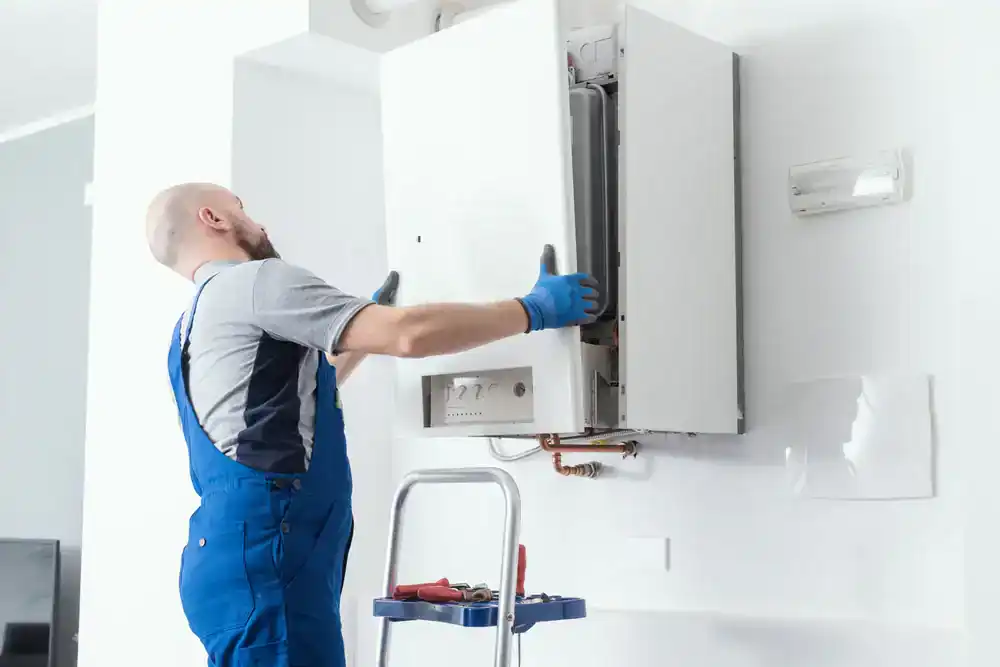
At its core, an oil-to-gas heating conversion means replacing your oil-fired boiler or furnace with a gas-fired system, running new gas piping inside the home, coordinating with PSE&G to bring a gas line to your house if one isn’t already there, pulling the required permits, and passing two rounds of inspections before the gas gets turned on.
That’s the short version. The longer version involves several moving parts — and understanding who handles each one makes the whole project a lot less intimidating. We handle the equipment, the interior gas piping, and the permits. PSE&G handles the gas main at the street. And oil tank decommissioning — which is required under NJDEP guidelines — is a separate scope that requires a licensed oil tank removal company. We’re upfront about that because homeowners who find out mid-project are rightfully frustrated.
How the Timeline Actually Breaks Down
The installation work itself — swapping out the equipment, running gas piping, connecting everything — typically takes one to three days inside your home. What stretches the total project timeline to four to eight weeks is everything that happens around that window: PSE&G’s scheduling process, permit approvals from your local building department, and the two-stage inspection process that follows installation.
PSE&G serves most of Essex County. If your street doesn’t already have a gas main, they’ll need to extend one — that alone can take four to six weeks after the permit is approved. If gas is already at the curb, which is the case for most homes in Montclair, Maplewood, South Orange, West Orange, and the other densely developed parts of the county, the utility coordination piece moves faster.
Permits are not optional. Every heating system replacement in New Jersey requires permits pulled from the local building department, and PSE&G will not activate gas service until the municipal inspection is signed off. A contractor who suggests skipping that step is a red flag, full stop. We pull all permits and include those costs in your estimate so there are no surprise line items after you’ve agreed to the work.
One thing worth knowing before you start: your existing radiators and baseboard heaters almost certainly stay in place. When you switch from an oil boiler to a gas boiler, you’re changing the heat source — not the distribution system. The radiators, the piping, the baseboards — they all remain. This surprises a lot of homeowners who assumed they’d need an entirely new heating system from end to end.
The process begins with a proper assessment. We look at what you currently have, confirm gas availability at the street, size the new equipment correctly for your home, and give you a complete picture of what the project involves before you commit to anything. Free estimates, no pressure — that’s how we’ve operated since 1973.
What Oil-to-Gas Conversion Costs in Essex County, NJ
Here’s where most homeowners hit a wall. They see a number — $12,000, $15,000, $18,000 — and stop reading. So let’s put that number in context, because the sticker shock is real but the math usually works out in favor of converting.
A complete oil-to-gas conversion in New Jersey — meaning new gas equipment, interior gas piping, permits, and coordination with PSE&G — typically runs $12,000 to $18,000. If a gas line already exists at your street, that range can come down to $8,000 to $12,000, since you’re not waiting on PSE&G to extend the main. These are the New Jersey-specific ranges we work with; national averages you’ll find on general home improvement sites don’t reflect what projects actually cost here.
The payback math is worth doing. Most New Jersey homeowners save approximately $950 per year on heating costs after converting from oil to gas, and some sources put that figure higher depending on the age and efficiency of the old system. At that savings rate, a $14,000 project pays for itself in roughly three to six years. After that, the savings continue for the life of the system — and modern gas boilers and furnaces are built to last fifteen to twenty-five years.
PSE&G and the New Jersey Clean Energy Program offer rebates of approximately $300 to $600 for qualifying high-efficiency gas equipment, which takes a real bite out of the upfront cost. We also offer financing through FTL Finance for homeowners who’d rather spread the investment over time than pay it all at once. A fully subsidized “free conversion” is not something that’s widely available in New Jersey — be skeptical of any offer framed that way.
One more thing the numbers don’t capture: the liability that goes away. In Essex County’s competitive real estate market, an oil tank — especially an underground one — can complicate or kill a home sale. Buyers increasingly want gas heat, and lenders sometimes flag oil tanks during the transaction. Converting before you list removes that variable entirely.
Is Oil-to-Gas Conversion Worth It for Essex County Homes?
That depends on a few things — the age of your current system, whether gas is already available at your street, and what your heating costs have looked like over the past few years. But for most Essex County homeowners with oil systems that are fifteen years old or older, the answer is usually yes.
The housing stock across Essex County tells the story. A significant share of homes in Montclair, Glen Ridge, South Orange, Maplewood, and West Orange were built before 1960 — back when oil heat was the standard and natural gas infrastructure hadn’t reached most suburban neighborhoods. Those homes have been running oil ever since, and many of them are still on original or near-original boiler systems that have been patched and repaired repeatedly. At some point, the repair math stops making sense.
When a Boiler Repair Quote Should Make You Reconsider
This is the situation we see most often: a homeowner calls because their oil boiler stopped working. We come out, assess it, and find a system that’s twenty-plus years old and needs a repair that costs $1,500 to $3,000. At that point, the honest conversation isn’t about whether we can fix it — it’s about whether fixing it makes sense.
Spending $2,000 on a repair for a system that’s near the end of its life is money that doesn’t come back. If the system fails again next winter, you’re back to square one — except now you’ve spent $2,000 and you’re making the same decision under more pressure, possibly in January with no heat. Converting proactively, before a complete failure, gives you time to do this properly: schedule during spring or summer when contractor availability is better, coordinate with PSE&G without rushing, and get through the inspection process without a deadline hanging over you.
We’re not in the business of pushing a conversion when a repair is the right call. If your system is relatively young and the repair is straightforward, we’ll tell you that. But if you’re looking at a system that’s been around since the Clinton administration and you’ve already spent real money keeping it alive, the full picture — upfront cost, payback period, what you stop spending on oil deliveries and emergency repairs — usually points in one direction.
Frequently Asked Questions About Oil-to-Gas Conversion in Essex County
**Can I keep my radiators when I switch from oil to gas?** In almost every case, yes. When you replace an oil boiler with a gas boiler, the radiators, baseboard heaters, and existing piping stay exactly where they are. You’re changing what heats the water — not how that heat gets delivered through your home. This is one of the most common misconceptions we hear, and it’s worth clearing up early because homeowners sometimes assume a conversion means gutting the entire system.
**Do I have to remove my oil tank?** Under NJDEP guidelines, oil tanks must be properly decommissioned when a home converts from oil heat. That typically means removal. This is not part of our scope as an HVAC contractor — it requires a licensed oil tank removal company. We’re transparent about that from the start so you can plan accordingly and aren’t surprised when it comes up. An undocumented or abandoned oil tank creates real liability, particularly when you go to sell the home in Essex County, where lenders and buyers increasingly scrutinize these issues.
**How do I know if gas is available on my street in Essex County?** PSE&G serves most of Essex County. You can contact their Construction Inquiry Office at 1-800-722-0256 (for northern counties) or email [email protected] to find out whether a gas main already runs to your street. If it does, the project timeline is shorter. If it doesn’t, PSE&G will need to extend the line, which adds several weeks to the process. We coordinate with PSE&G on your behalf once the project is underway.
**What happens to my water heater when I convert?** If your home has an oil-fired indirect water heater connected to the boiler, you’ll need a new heat source for hot water once the boiler is removed. Bundling a gas water heater with the boiler replacement is the most cost-effective approach — it saves on labor and keeps the project consolidated. We’ll flag this during the initial assessment so it’s part of the plan from the beginning.
**How do I change oil to gas heating — where do I even start?** Start with a free estimate. We assess your current system, confirm gas availability at your street, explain what the project involves, and give you a complete quote before you commit to anything. From there, we handle the permits, the PSE&G coordination, the installation, and the inspection process. You don’t have to manage multiple contractors or navigate the utility process on your own.
Who to Call for Oil-to-Gas Conversion in Essex County, NJ
Converting from oil to gas is a real investment — and it deserves a contractor who will give you a straight answer about whether it makes sense for your specific situation, not just a pitch for the most expensive option.
We’ve been doing HVAC work in the Montclair area and across Essex County since 1973. That’s more than fifty years of heating systems, honest assessments, and showing up when people need us — including on holidays, and including when the answer is “repair it, don’t replace it.” Our 500-plus Google reviews at a 5.0 rating reflect what that kind of consistency looks like over time.
If you’re weighing a repair against a conversion, or you’re just starting to research what switching from oil to natural gas would actually involve for your home, reach out to Adriatic Aire. Free estimates, no pressure, and no surprises about what we will and won’t handle. That’s the starting point.
Article details:
- Published by:
- Adriatic Aire LLC
- Published to:
- Last modified:
- September 10, 2026
Share:
Continue learning: