Oil-to-Gas Conversion in NJ: Full 2026 Cost Breakdown for Essex County
Share:
You’ve probably seen the $6,000–$13,000 range floating around online. Maybe you’ve already gotten a quote that’s higher and you’re wondering if something’s off. It’s not. That range is real — it’s just incomplete. It almost never includes oil tank removal, and in New Jersey, that’s not optional. A complete oil-to-gas conversion in Essex County, done properly and permitted correctly, typically runs $12,000–$18,000. That’s the honest number. We walk you through every piece of that cost so you know exactly what you’re looking at — and what questions to ask any contractor before you commit.
What Does Oil Boiler Replacement Cost in Essex County?
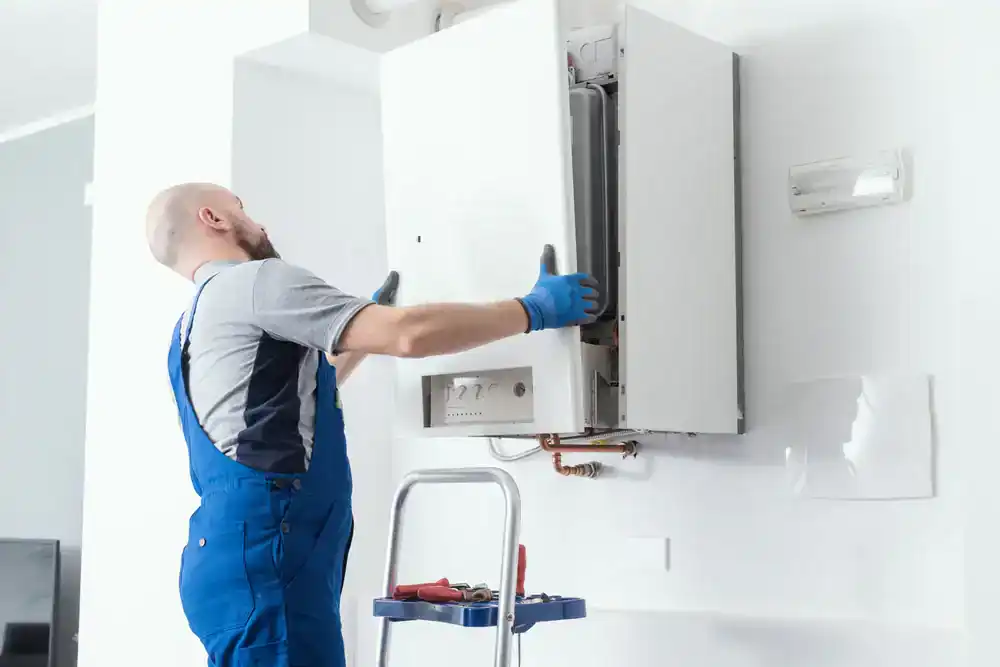
The equipment itself — a new gas boiler — is usually the largest single line item in a conversion project. For a standard-efficiency model (80–89% AFUE), you’re typically looking at $2,200–$7,000 installed. High-efficiency units rated at 90% AFUE or above run $6,000–$11,000. In the Newark and broader Essex County area, the installed average tends to land around $8,750, though that number moves depending on the system type, the home’s layout, and how complex the existing setup is.
Essex County homes — particularly in Montclair, Glen Ridge, South Orange, and Bloomfield — are disproportionately older. Many were built between the 1890s and 1940s, which means steam boilers and multi-zone hot water systems are the norm, not the exception.
Those configurations require more care and more expertise than a straightforward forced-air swap. If your home has a steam system, make sure the contractor you hire actually knows how to work on one. We’ve been working with Essex County’s older housing stock since 1973, and we know what questions to ask before we even schedule an estimate.
PSE&G Gas Conversion: What the Utility Handles and What You’re Responsible For
PSE&G serves the majority of Essex County for natural gas, so if you’re converting in Montclair, Bloomfield, Maplewood, West Orange, or most other towns in the county, this is the utility you’ll be dealing with. Understanding what they handle versus what falls on you — and your contractor — makes the whole process less confusing.
PSE&G is responsible for the exterior gas line: running service from the street main to your home, installing the meter, and coordinating the excavation if a new line needs to be trenched. If gas is already available at the street, this part of the process is coordinated through PSE&G’s application process, and the timeline from application to completed installation is typically four to six weeks. That’s not the installation of your heating equipment — that’s just getting the gas to your house. The actual boiler or furnace swap takes one to three days once the gas line is in place.
The interior side — running gas piping from the meter to the new heating equipment — is the contractor’s responsibility. Depending on the length of the run and the complexity of your home’s layout, interior gas piping typically adds $500–$2,000 to the project cost. This is separate from the utility’s scope and is part of what your HVAC contractor quotes you directly.
One thing that makes a real difference in this process: we submit the PSE&G application on your behalf. We handle that coordination for every conversion we do, which removes a significant administrative burden from you. Most people have never dealt with a utility application before, and navigating it alone while also managing permits and scheduling can get overwhelming fast. Having someone who knows the process handle it keeps your project moving on schedule.
PSE&G also offers rebates for qualifying high-efficiency systems, and their on-bill repayment program (OBRP) allows homeowners to finance up to $25,000 in project costs at 0% interest, repaid over 84 months. Program terms change, so it’s worth confirming current availability when you’re getting your estimate — but these incentives are real and worth factoring into your decision.
Why Your Conversion Quote Is Higher Than What You Read Online
This is the question we hear most often, and it deserves a direct answer. The $6,000–$13,000 range that appears on most NJ HVAC websites is not wrong — it’s just incomplete. That range typically covers the new gas boiler or furnace, interior gas piping, and labor. What it almost never includes is oil tank removal.
In New Jersey, you cannot simply abandon an oil tank in place and call the job done. Underground tanks in particular are subject to NJDEP regulations that require proper decommissioning, soil testing, and documentation — documentation that matters when you go to sell your home or refinance your mortgage. Above-ground tanks are less regulated but still need to be properly drained, removed, and disposed of. Depending on the tank’s location, size, and whether any soil testing is required, removal adds $1,500–$4,000 or more to the total project cost.
When you add that to the equipment, piping, permits, and labor, you get to the $12,000–$18,000 range that reflects a complete, properly permitted conversion in Essex County. A contractor who quotes you $8,000 for the full job isn’t necessarily offering a better deal — they may simply be leaving pieces out that will show up later as separate charges, or worse, leaving them undone entirely.
Permits are the other piece that sometimes gets glossed over. NJ’s Uniform Construction Code requires permits for full HVAC system replacements. After installation, a PSE&G safety inspection is required for northern counties including Essex County. Any contractor who suggests skipping the permit process is not someone you want working on your home. Beyond the legal exposure, an unpermitted installation can void your homeowner’s insurance and create serious complications when you sell.
Gas Line Installation Cost: What Goes Into That Number
Gas line installation is one of the less-discussed components of a conversion, but it’s a meaningful part of the budget. The total cost depends on two separate scopes: what PSE&G handles on the exterior, and what your HVAC contractor handles inside the home.
If your street already has a gas main and you’re just adding service to a home that doesn’t currently have it, PSE&G coordinates the exterior work. The interior piping — from the meter to the new heating equipment — is your contractor’s responsibility and typically runs $500–$2,000 depending on the distance and complexity of the run. If your home is large, has an unusual layout, or requires running pipe through finished spaces, that number can climb.
In older Essex County homes, interior runs are often longer and more complex because the boiler or furnace may be located in a basement corner far from where the meter will be installed. We factor that into our estimates upfront, so there are no surprises when the work begins.
How Long Does Oil-to-Gas Conversion Take in Essex County?
Timeline is one of the most practical questions homeowners ask, and it’s one where honest expectations matter. The short answer: if you’re starting from scratch with no existing gas service, plan for six to ten weeks from your first call to the day your new gas system is running. If gas is already at the street and it’s just a matter of connecting service and replacing the equipment, that compresses to two to four weeks.
The PSE&G coordination piece — submitting the application, getting approval, scheduling excavation and meter installation — is what drives that longer timeline. PSE&G typically takes four to six weeks for new gas line installations in Essex County, and that window can stretch depending on permit approvals and weather. This is not something we control. It’s a utility process with its own schedule.
What this means practically: if you’re thinking about converting before next heating season, the time to start is now. Homeowners who wait until October or November to call often find themselves going through another winter on oil because the PSE&G timeline simply doesn’t leave enough room to complete the project before cold weather arrives. The spring and early summer window — March through July — is genuinely the best time to schedule a conversion in Essex County. The weather is mild, there’s no urgency around heat, and you have enough lead time to get everything done before fall.
The actual installation — removing the old oil equipment and installing the new gas system — takes one to three days. You will be without heat during that window. We make arrangements to keep your home comfortable during the work, and we’re upfront about what to expect before we start.
Should You Repair Your Old Oil Boiler or Convert to Gas?
This is the question that comes up most often in the middle of winter, usually after a boiler has already stopped working. You’ve called for emergency service, you’ve been told the repair will cost $1,500–$3,000, and now you’re trying to figure out whether it makes sense to fix a 20-year-old system or put that money toward a conversion instead.
A repair on an aging oil boiler buys you time, not security. If the system is already past its expected lifespan and one component has failed, others are likely to follow. You’re also still on oil — still subject to volatile fuel prices, delivery scheduling, and the ongoing cost of maintaining a system that wasn’t built to last forever. The repair cost doesn’t go away; it just gets absorbed into a system you’ll eventually replace anyway.
The financial case for conversion is built on the long-term difference in fuel costs. Natural gas is generally cheaper per BTU than heating oil in NJ, and multiple sources cite 30–50% savings on annual heating costs for homeowners who make the switch. The payback period on a full conversion — accounting for the $12,000–$18,000 project cost — typically runs three to ten years depending on how much you heat and where fuel prices go. That’s a wide range because it depends on assumptions no one can make with certainty. What is certain is that you’ll stop writing checks to an oil delivery company and start paying a utility bill that’s billed monthly and doesn’t require anyone to show up at your house.
There’s also a real estate angle worth considering. In Essex County’s active housing market — particularly in towns like Maplewood, South Orange, and Millburn — natural gas heat is consistently viewed as a more attractive feature than oil. No tank, no delivery logistics, no environmental liability. If you’re planning to sell in the next five to ten years, converting now is an improvement that pays you back twice: in lower fuel costs while you’re there, and in buyer appeal when you list.
We don’t offer oil heating repair. That’s a deliberate choice. When a customer calls us about a boiler that’s struggling, we assess the system honestly and have a direct conversation about whether repair or replacement makes more sense for their situation. Sometimes the answer is clear. Sometimes it takes a few minutes of math. Either way, you’ll get a straight answer — not a recommendation designed to maximize our invoice.
Ready to Get a Real Number for Your Essex County Conversion?
The most important thing to take away from this guide is that a complete oil-to-gas conversion in Essex County, NJ costs $12,000–$18,000 when the full scope is included — equipment, interior gas piping, permits, PSE&G coordination, and oil tank removal. If a quote you’ve received is significantly lower, ask what it excludes before you sign anything.
The second most important thing: if you’re in Essex County and you want to convert before next winter, the PSE&G timeline means you need to start the process well before fall. Four to six weeks for utility coordination, plus installation time, adds up fast.
We’ve been doing this work in Essex County since 1973. We know the housing stock, we know the PSE&G process, and we handle the coordination on your behalf so you’re not navigating it alone. If you want a free estimate and a straight answer about what your specific home will cost, reach out to Adriatic Aire — we’ll give you the complete picture.
Article details:
- Published by:
- Adriatic Aire LLC
- Published to:
- Last modified:
- August 11, 2026
Share:
Continue learning: