Oil-to-Gas Conversion Costs in Essex County, NJ Explained
Share:
If you’ve been heating your home with oil and you’re starting to wonder whether it’s time to switch, the first question is almost always the same: what is this actually going to cost me? Not the ballpark. Not the “it depends.” The real number, with everything included.
That question is harder to answer than it should be, because most of what’s out there either gives you a wide range without context or leaves out half the line items. We’ve been doing oil-to-gas conversions in Essex County since 1973, and we’ve seen the confusion that comes from incomplete information. So here’s the honest breakdown — what goes into the cost, what drives it up or down, and what you can realistically expect to pay in New Jersey.
The Real Cost of Switching From Oil to Gas Heat in Essex County
A complete oil-to-gas conversion in Essex County typically runs between $12,000 and $18,000. That’s the all-in number for most homes — new gas boiler or furnace, interior gas piping, permits, chimney work, and oil tank decommissioning. If your home already has a natural gas line at the street, the range often comes in closer to $8,000 to $12,000.
The spread exists because no two homes are identical. An older colonial in Maplewood with a 40-year-old oil boiler, an underground tank, and a deteriorating chimney liner is a very different job than a 1990s split-level in Livingston that already has gas service for a dryer and just needs a boiler swap. The scope of work drives the cost — which is why getting a full assessment before any quote is the only way to get a number you can actually rely on.
What’s Actually Included in an Oil-to-Gas Conversion Cost?
This is where most homeowners get caught off guard. A contractor might quote you a price for the equipment and labor, and then you find out later that the oil tank removal, chimney liner, and permit fees aren’t in there. So let’s go through each piece.
The new heating equipment — a gas boiler or gas furnace — is usually the largest single cost. High-efficiency models cost more upfront but qualify for better rebates and deliver lower operating costs over time. Interior gas piping connects your new system to the gas supply, and depending on where your meter is and how your home is laid out, this can be a straightforward run or a more involved job. Either way, it’s not optional.
Permits are required for every regulated component of this work in New Jersey — HVAC, gas line, and often chimney and electrical subcodes depending on your municipality. In Livingston, for example, a boiler replacement alone requires Fire, Plumbing, and Electric subcodes plus a chimney certification. An oil-to-gas conversion triggers additional requirements on top of that. Any contractor who doesn’t mention permits in their quote is a red flag.
Then there’s the oil tank. If you have an above-ground tank in your basement, removal is relatively straightforward. An underground tank is a different story — it requires excavation, and if there’s any evidence of a leak, you’re looking at soil testing and potentially environmental remediation. This is one of the most significant hidden costs in the conversion process, and it’s one that some contractors quietly leave out of their initial estimate. Ask about it directly.
Finally, if your existing chimney was lined for an oil system, it likely needs a new liner sized for gas. Oil and gas have different flue requirements, and running a gas appliance through an improperly lined chimney is a safety issue. This cost varies depending on chimney height and condition, but it’s a real line item that belongs in any honest quote.
After PSE&G rebates — which range from $300 to $600 on qualifying systems, and up to $1,750 through the SAVEGREEN program for high-efficiency equipment — most Essex County homeowners find the net project cost lands somewhere between $7,000 and $11,000. That’s still a meaningful investment, but it’s a number you can plan around.
Cost to Replace an Oil Furnace With a Gas Furnace: How It Differs From a Boiler Conversion
Whether your home has a furnace or a boiler matters — not just for the equipment cost, but for how the rest of the conversion plays out.
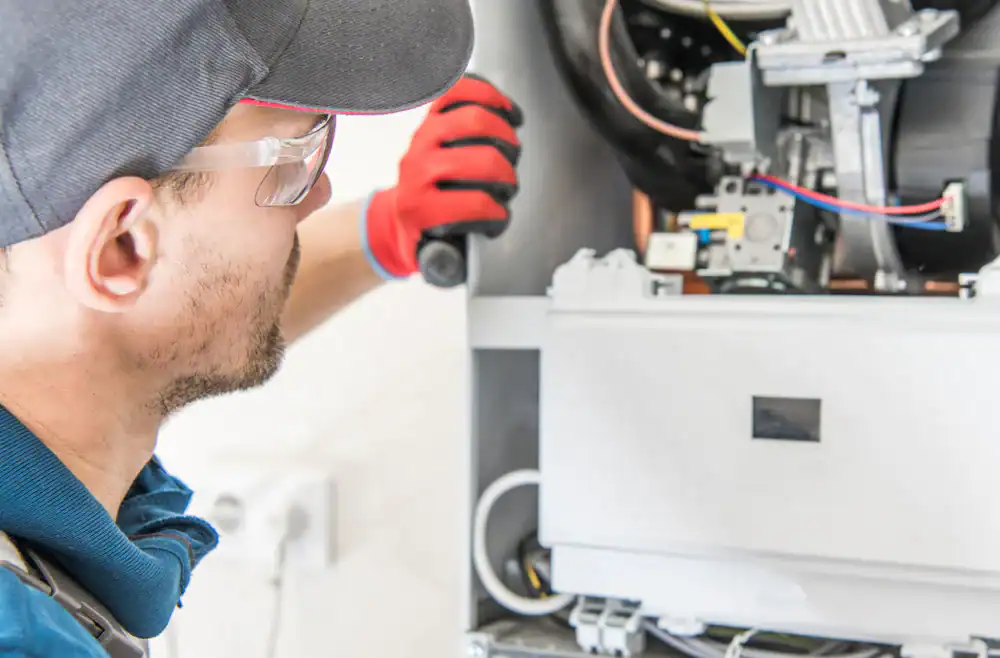
Homes with forced-air systems use a furnace to heat air and push it through ductwork. If you’re replacing an oil furnace with a gas furnace, the ductwork typically stays in place, which simplifies the job. The main costs are the furnace itself, gas piping to the unit, venting modifications, and the associated permits. A high-efficiency gas furnace in this configuration can be a cleaner, more contained project than a boiler conversion.
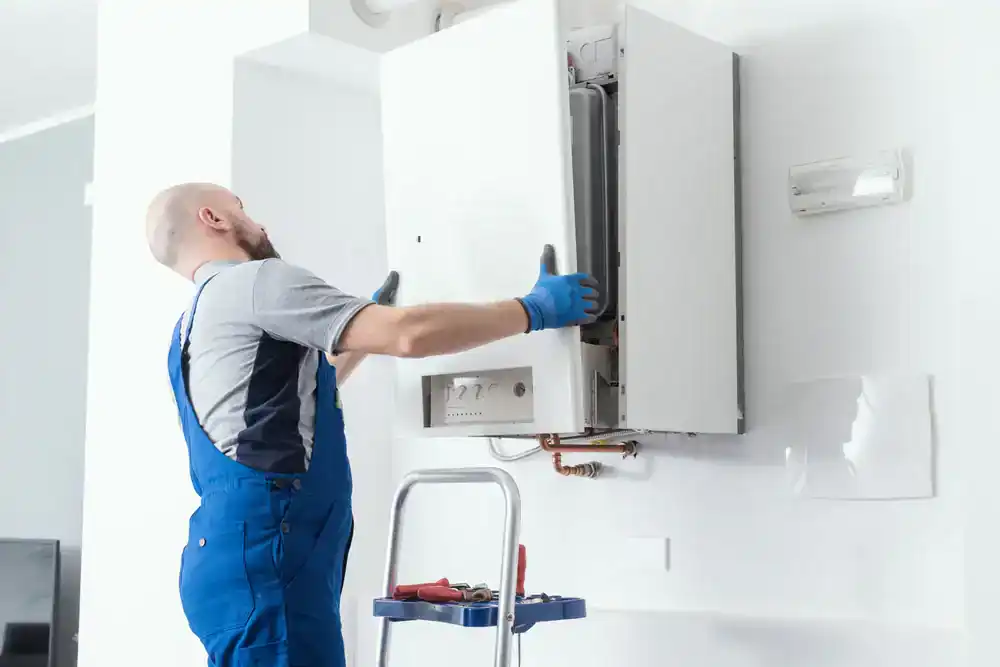
Homes with hot water heating systems use a boiler to heat water and circulate it through radiators or baseboard convectors. The good news here is that your existing radiators almost always stay. The boiler is the heat source — the distribution system (the pipes, the radiators, the baseboards) works with whatever boiler you install, oil or gas. This is a common misconception worth clearing up: you don’t have to gut your home’s heating distribution to convert to gas.
One thing we want to address directly, because we see it come up frequently: some contractors will offer what’s called a “conversion burner” — essentially swapping the oil burner on your existing boiler for a gas burner, leaving the rest of the system in place. It’s cheaper upfront, and it sounds appealing. We don’t recommend it. Conversion burners are less efficient, less reliable, and they put new stress on an aging system that was designed around oil combustion. The right approach is a full equipment replacement — a new gas boiler or furnace that’s engineered for gas from the ground up, properly sized for your home, and eligible for utility rebates. It costs more initially, but it’s the version that actually holds up.
For Essex County homeowners specifically, the age of the housing stock matters here. Many homes in Montclair, South Orange, Glen Ridge, and Bloomfield were built in the 1920s through 1950s, when oil heat was standard. The oil systems in these homes are often original or close to it. A conversion burner retrofit on a 50-year-old boiler is not a long-term solution — it’s a short-term patch on a system that’s already near the end of its useful life.
Is Converting From Oil to Gas Worth It? The Payback Period Math for Essex County Homeowners
The cost question and the “is it worth it” question are related but different. Most homeowners aren’t just asking what they’ll spend — they’re asking when they’ll get it back.
According to data from the U.S. Energy Information Administration, homeowners with oil-fired heating spend approximately $1,390 on heating over a typical winter. Homeowners who switch to natural gas pay an average of $642 for the same period. That’s a savings of roughly $748 per year. On a net project cost of $7,000 to $11,000 after rebates, you’re looking at a payback period in the range of 9 to 15 years under normal conditions — and faster if oil prices spike, which they have a history of doing.
That math changes depending on how long you plan to stay in the home, your current system’s efficiency, and whether you layer in additional upgrades like insulation or duct sealing that unlock further rebate programs through PSE&G.
PSE&G Rebates and Financing for Oil-to-Gas Conversion in Essex County
Essex County falls within PSE&G’s northern New Jersey service territory, which means you have direct access to their rebate and financing programs — and they’re worth understanding before you commit to a project.
The SAVEGREEN Project is PSE&G’s primary energy efficiency incentive program. It offers rebates up to $1,750 for qualifying high-efficiency gas furnaces, boilers, and water heaters. To qualify, the equipment needs to meet ENERGY STAR efficiency thresholds, which most modern high-efficiency gas systems do. On top of the rebate, PSE&G offers 0% APR on-bill repayment financing up to $25,000 for eligible residential customers — meaning the cost of the project is repaid through your monthly gas bill over time, with no interest.
The on-bill repayment program is particularly useful for homeowners who want to convert but don’t have $10,000 to $15,000 sitting in a savings account. Spreading the cost over several years at 0% interest changes the financial picture meaningfully. At that point, the monthly financing payment can be partially or fully offset by what you’re no longer spending on heating oil — which makes the conversion cash-flow neutral or even positive from day one in some cases.
Beyond PSE&G, financing is also available through FTL Finance for homeowners who prefer a separate financing arrangement rather than on-bill repayment. We walk through all of these options during the estimate process so you can choose what fits your situation.
One important coordination note: if you already use gas for other appliances in your home — a dryer, a water heater, a stove — we need to provide PSE&G with the gas usage specifications of the new heating equipment before installation. PSE&G will then confirm whether your existing gas supply can handle the additional load. If it can’t, they’ll schedule a service upgrade. This is a step that gets missed when homeowners try to coordinate directly without a contractor who knows the process.
Common Questions Essex County Homeowners Ask Before Converting to Gas
**How do I know if my street has a gas line?** Most streets in established Essex County communities — Livingston, West Orange, Millburn, Nutley, Bloomfield — already have natural gas infrastructure. The quickest way to confirm is to call PSE&G’s Construction Inquiry Office for northern counties at 1-800-722-0256, or ask us to check during the initial assessment. If your street doesn’t have gas, PSE&G can often extend a main line, though this adds cost and timeline to the project.
**What happens to my oil tank?** If you have an above-ground tank, removal is typically straightforward and is included in the scope of a full conversion project. An underground tank requires excavation and inspection. New Jersey environmental guidelines require that any evidence of a leak triggers soil testing and, if contamination is found, remediation. This is the single biggest wildcard cost in the conversion process, and it’s also a significant factor in real estate transactions — buyers’ attorneys in markets like Maplewood, South Orange, and Montclair routinely flag oil tanks as a condition of sale. Resolving the tank before you list removes that friction entirely.
**How long does the whole project take?** The actual installation work in your home takes one to two days. The full project — permits, PSE&G coordination, inspections — typically runs four to eight weeks from start to finish. We handle the permit coordination and utility communication as part of the job, so you’re not navigating the Livingston Building Department or PSE&G’s scheduling process on your own.
**Do I need to replace my radiators?** In most cases, no. If your home has a hot water heating system with cast iron radiators or baseboard convectors, those stay in place. The new gas boiler connects to the same distribution system. The heat source changes; the delivery system doesn’t.
**What about gas price volatility — what if gas gets expensive too?** Natural gas in New Jersey is a utility-regulated fuel. Its pricing goes through a regulated rate structure, not the global commodity market the way heating oil does. Oil prices are directly tied to crude oil markets and can spike dramatically based on geopolitical events or cold snaps. Gas prices move more slowly and more predictably. That stability is part of what makes the long-term math work.
Ready to Get a Real Number? Here’s What to Do Next in Essex County
The oil-to-natural-gas conversion cost question doesn’t have a single answer — but it does have a real one, specific to your home, your street, your existing equipment, and your timeline. The range is $12,000 to $18,000 for most complete projects in New Jersey, often landing closer to $7,000 to $11,000 after PSE&G rebates. The payback period for most Essex County homeowners runs roughly 9 to 15 years in fuel savings alone, and the non-financial benefits — no more oil deliveries, no tank liability, no exposure to oil price spikes — start on day one.
What moves the needle most is getting an honest, itemized estimate from a contractor who knows the full scope of the work and isn’t going to hand you a low number and add on later. If you’re in Essex County and you want a straight answer, reach out to Adriatic Aire. We’ve been doing this work in this county for over 50 years, and a free estimate is exactly what it sounds like — no obligation, no pressure, just a real number you can actually plan around.
Article details:
- Published by:
- Adriatic Aire LLC
- Published to:
- Last modified:
- September 9, 2026
Share:
Continue learning: