Is an HVAC Maintenance Contract Worth It in Essex County, NJ?
Share:
Here’s the honest answer: it depends. Not on the contract itself, but on who’s offering it and how they run their business. Some HVAC maintenance contracts are genuinely useful — they catch small problems early, protect your warranty, and get you to the front of the line when your heat goes out in February. Others are structured to generate easy recurring revenue for the company, with priority service that’s more of a promise than a practice. If you’re trying to figure out which is which, you’re asking the right question. Let’s work through it.
What an HVAC Service Contract Actually Covers
An HVAC service contract is a direct agreement between you and a licensed HVAC contractor. You pay a set amount, and in return, we come out on a scheduled basis — typically twice a year — to inspect and tune up your system before the seasons that stress it most. One visit before summer, one before winter.
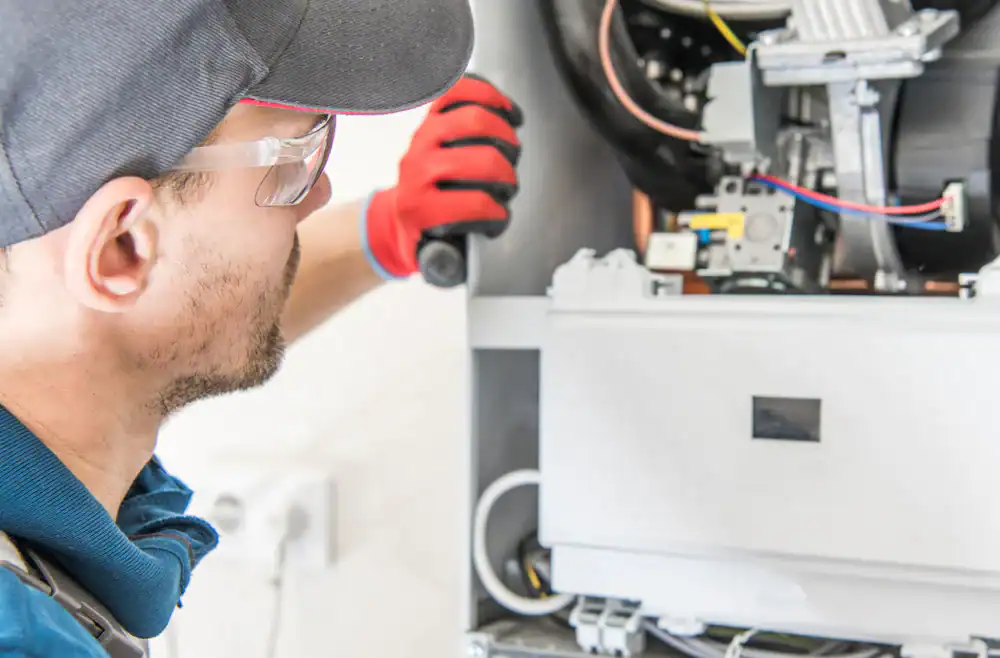
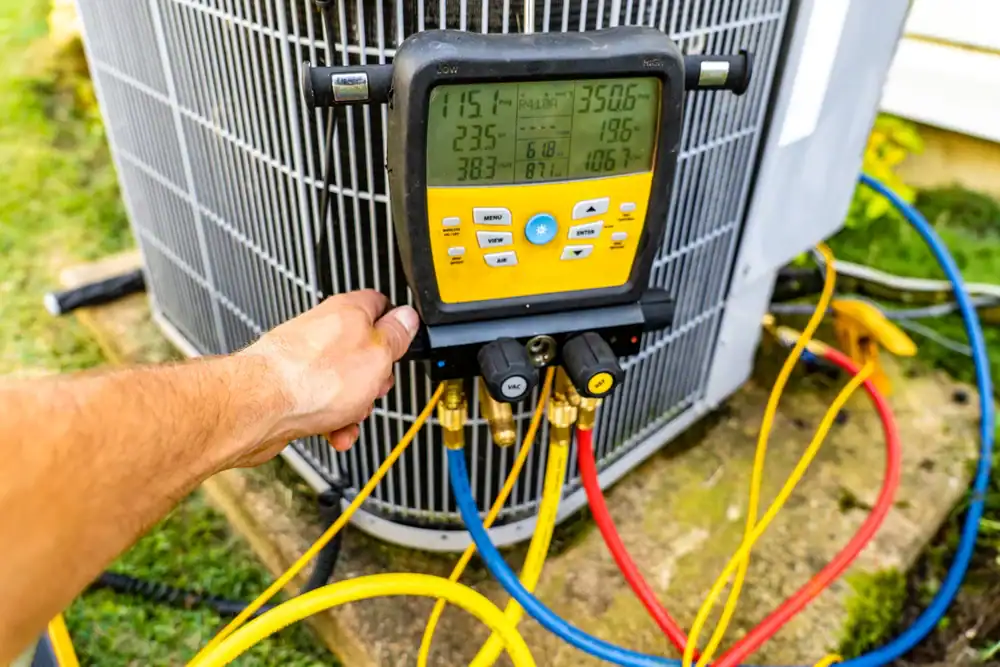
What that visit covers matters more than the contract itself. A thorough maintenance visit includes checking refrigerant levels, inspecting electrical components like capacitors and contactors, testing thermostat calibration, cleaning evaporator and condenser coils, and — critically — inspecting the heat exchanger for cracks. That last one isn’t just about efficiency. A cracked heat exchanger on a gas furnace can leak carbon monoxide into your home. It’s a safety check, not a sales opportunity.
A service contract is not the same as a home warranty. A home warranty covers multiple systems and appliances with deductibles and coverage limits that vary by plan. An HVAC service contract is specific — it’s between you and a technician who knows your equipment, your home, and your history.
The Warranty Protection Most Essex County Homeowners Miss
This is the argument that doesn’t get nearly enough attention, and it’s the most financially concrete reason to take a maintenance contract seriously.
Most major HVAC manufacturers — including Trane and Lennox, both brands we service — require documented proof of annual maintenance to keep extended warranties valid. Not a receipt. Not your word. Documented proof, with records showing who serviced the system and when. If a major component fails and you can’t produce that documentation, the manufacturer has the right to deny the warranty claim. A repair that should have cost nothing out of pocket can turn into a multi-thousand-dollar expense overnight.
This matters most if you’ve had a system installed in the last few years. You spent real money on that equipment. The warranty is part of what you paid for. Skipping maintenance doesn’t just risk a breakdown — it quietly erases a financial protection you already own.
For homeowners in Millburn, Livingston, South Orange, and throughout Essex County who’ve recently invested in a high-efficiency Trane or Lennox system, this isn’t an abstract risk. It’s a clause in the paperwork that most people never read until they need it.
The fix is straightforward: schedule maintenance annually, keep the service records, and make sure the contractor performing the work is licensed. In New Jersey, that means verifying your contractor holds a valid NJ HVACR license — ours is No. 19HC00022600, issued by the State Board of Examiners of Heating, Ventilating, Air Conditioning and Refrigeration Contractors. That’s a verifiable credential, not a marketing claim.
If your system is still under warranty and you’ve missed a year or two of documented maintenance, the time to get back into compliance is now — before something breaks and the question becomes academic.
The “Call When It Breaks” Approach — and What It Actually Costs
This is the most common alternative to a maintenance contract, and it’s worth taking seriously rather than dismissing. For some homeowners, reactive maintenance genuinely makes sense — newer systems, mild climates, straightforward equipment. We’re not going to tell you otherwise.
But in Essex County, the math tilts pretty quickly in the other direction.
The problem with calling when something breaks is that things tend to break at the worst possible moment. HVAC systems fail during heat waves and cold snaps — the exact times when every HVAC company in the county is already booked. Without a service agreement, you’re calling as a new customer during peak demand. Waiting several days for a technician is not unusual. If you’ve spent a July night in a Bloomfield or West Orange row house without air conditioning, you know how long those days feel.
There’s also the repair cost itself. Typical HVAC repair costs range from $130 to $2,000 depending on what failed. A maintenance visit that catches a failing capacitor — a $50 to $150 part — before it takes out the compressor can save you from a repair bill that dwarfs the entire year’s contract cost. The math isn’t complicated. The question is whether the problem gets found in October during a scheduled visit or in July when the system stops running entirely.
There’s a subtler cost too: efficiency loss. A dirty evaporator coil or a clogged filter forces the system to work harder to move the same amount of air. That extra effort shows up on your energy bill every month, quietly, without any obvious sign that something is wrong. Regular cleaning keeps the system running at the efficiency it was designed for.
None of this means a maintenance contract is automatically worth it. It means the “call when it breaks” approach has real costs that don’t always show up until they’re unavoidable.
HVAC Preventive Maintenance in Essex County — Why Local Conditions Change Everything
Essex County is not a generic suburban market. It has a specific housing stock, a specific climate, and specific HVAC challenges that make preventive maintenance more valuable here than in many comparable markets.
A large portion of homes throughout Essex County were built before 1960. In communities like Montclair, Glen Ridge, the Oranges, and Bloomfield, steam boilers and older forced-air systems are common — equipment that requires professional attention for both efficiency and safety in ways that a five-year-old system in a new-construction suburb simply doesn’t. These systems have aging components, older heat exchangers, and years of accumulated wear that benefit from a trained eye twice a year, not just when something obviously fails.
We’ve been maintaining these exact systems in these exact communities since 1973. That’s not a marketing line — it’s a practical reality. Knowing how a 1958 Weil-McLain boiler in a Montclair Victorian behaves differently from a modern forced-air system in a West Orange split-level is the kind of knowledge that only comes from decades of doing the work.
What to Look for in an HVAC Maintenance Plan
The most legitimate concern people have about HVAC maintenance contracts is that the maintenance visit becomes a sales call. You sign up for a tune-up, and suddenly the technician has found three things that need replacing, all of which happen to be available right now at a conveniently quoted price.
That concern is valid. It happens. And it’s worth knowing what to look for before you commit to anything.
A trustworthy maintenance provider will tell you what they found, explain what it means, and give you an honest assessment of urgency — including when something can wait. They won’t manufacture urgency around a part that has years of life left. They won’t recommend replacement when repair is the right call. And they won’t use the visit as an opportunity to sell you equipment you don’t need.
Our policy on this is straightforward: we don’t sell what you don’t need. That’s not a tagline — it’s the reason we’ve been in business in Essex County for over 50 years. A family-owned company that’s been in the same community since 1973 doesn’t survive by burning through customers. Our reputation is the business.
When you’re evaluating any maintenance plan, ask specifically what the visit covers. Ask whether the contract includes repair discounts or just the maintenance visits. Ask how priority scheduling actually works — not in theory, but in practice. If a company can’t answer those questions clearly, that tells you something. A good contract has no hidden fees, no surprise charges, and no vague language about what’s included.
We also want to be clear about something that most HVAC companies won’t say: if your system is relatively new, in good condition, and you’re disciplined about scheduling your own annual service, you may not need a formal contract. What you do need is documented annual maintenance — whether that’s through a contract or a scheduled standalone visit. The documentation is what protects your warranty. The contract is just one way to make sure it happens consistently.
Commercial HVAC Maintenance Contracts — Different Stakes
For business owners and commercial property managers in Essex County, the maintenance contract calculation is different — and the stakes are higher.
A residential system going down is uncomfortable. A commercial system going down means employees can’t work, customers don’t come in, and inventory or equipment may be at risk depending on the building. Commercial HVAC repair calls typically run $350 to $2,000 per visit, and a full system replacement can reach $7,000 to $45,000 or more depending on the size and complexity of the setup. An unplanned breakdown at either end of that range is a significant operational disruption.
Commercial systems also run harder than residential ones. They operate longer hours, handle larger spaces, and are often subject to more demanding conditions — higher occupancy, more heat-generating equipment, less consistent airflow. That additional wear means the case for preventive maintenance is even stronger than it is on the residential side.
We work with commercial clients across Essex County on both planned maintenance agreements and emergency repair. The structure is similar to the residential plan — scheduled visits before the peak seasons, priority scheduling for contract holders, documented service records — but calibrated to the demands of commercial equipment and commercial schedules. If you manage a multi-unit building in Newark, run a retail space in Bloomfield, or operate an office in Montclair, we can build a maintenance plan around your specific system and your operating calendar.
The goal is the same as it is for a homeowner: catch the small problems before they become expensive ones, keep the system running efficiently, and make sure you’re not scrambling for a technician at the worst possible moment. For a business, that last point alone often justifies the cost of a contract.
So Is an HVAC Maintenance Contract Worth It in Essex County?
For most Essex County homeowners and business owners, yes — with the right provider. The value is real: warranty protection, priority access when demand peaks, efficiency savings, and the kind of early catches that prevent expensive emergency repairs. But the contract is only as good as the company behind it.
What makes the difference is a provider who treats the maintenance visit as an inspection, not a sales opportunity. One who’s honest about what needs attention and what can wait. One who actually answers the phone when your heat goes out on a cold January night in Verona or Cedar Grove.
We’ve been that provider in Essex County since 1973. If you want to talk through whether our Home Comfort Maintenance Plan makes sense for your system — or just want an honest assessment of where your equipment stands — reach out to Adriatic Aire. No pressure, no pitch. Just a straight answer.
Article details:
- Published by:
- Adriatic Aire LLC
- Published to:
- Last modified:
- September 22, 2026
Share:
Continue learning: