Heating Oil vs. Gas Cost in Essex County, NJ: The Annual Savings Comparison
Share:
If you heat your home with oil in Essex County, you already know the feeling. The oil truck shows up, you hand over $1,000 or more for a single fill, and you start watching the gauge like a hawk for the rest of the winter. Meanwhile, your neighbor on gas heat isn’t thinking about any of that.
The question most oil homeowners eventually get around to asking is a simple one: is the switch actually worth it? Not in a vague “gas is cheaper” way — but in real dollars, for a real Essex County home, with a real price tag on the conversion. That’s what this page is for.
Heating Oil vs. Natural Gas Cost: What Essex County Homeowners Are Actually Paying
The honest way to compare heating oil and natural gas isn’t price per gallon versus price per therm — those are different units measuring different amounts of energy. One gallon of heating oil contains about 138,700 BTU. One therm of natural gas contains about 100,000 BTU. To compare them fairly, you have to look at what you’re paying per unit of heat delivered.
When you run that math using current New Jersey prices — roughly $4.67 per gallon for heating oil and $1.84 per therm for natural gas — gas comes out 40 to 60 percent cheaper per BTU. That gap is the whole story. Everything else flows from it.
What Does a Typical Essex County Heating Season Actually Cost on Oil vs. Gas?
A typical Essex County home burning 800 gallons of heating oil over a winter is spending roughly $3,700 on fuel alone. That’s not an unusual number — last winter, the average outdoor temperature in Essex County was 33.5°F, and these are older homes with older systems that work hard to keep up.
When you factor in a mid-efficiency oil boiler running at around 85% AFUE, the effective heating season cost for a home of that size lands somewhere between $1,800 and $2,500. The same home heated with natural gas through a high-efficiency furnace typically runs $800 to $1,200 for the heating season. That’s a difference of $600 to $1,300 every single year — and that’s using current prices.
When oil spikes, as it does regularly and without much warning, that gap widens fast. Natural gas rates in New Jersey are regulated utility rates through PSE&G. They change, but they don’t swing 30 or 40 percent in a single season the way heating oil can when global crude markets move. For homeowners who’ve been white-knuckling it through oil price volatility for years, that stability has real value beyond the dollar savings.
One thing worth clarifying: a lot of homeowners in Montclair, Glen Ridge, Maplewood, and the Oranges assume that converting to gas means ripping out their radiator system. It doesn’t. A gas boiler can replace an oil boiler and run on the same hot-water or steam radiator piping you already have. The fuel changes. The heat distribution system often stays exactly where it is.
Is It Worth Converting from Oil to Gas in Essex County, NJ? Running the Payback Math
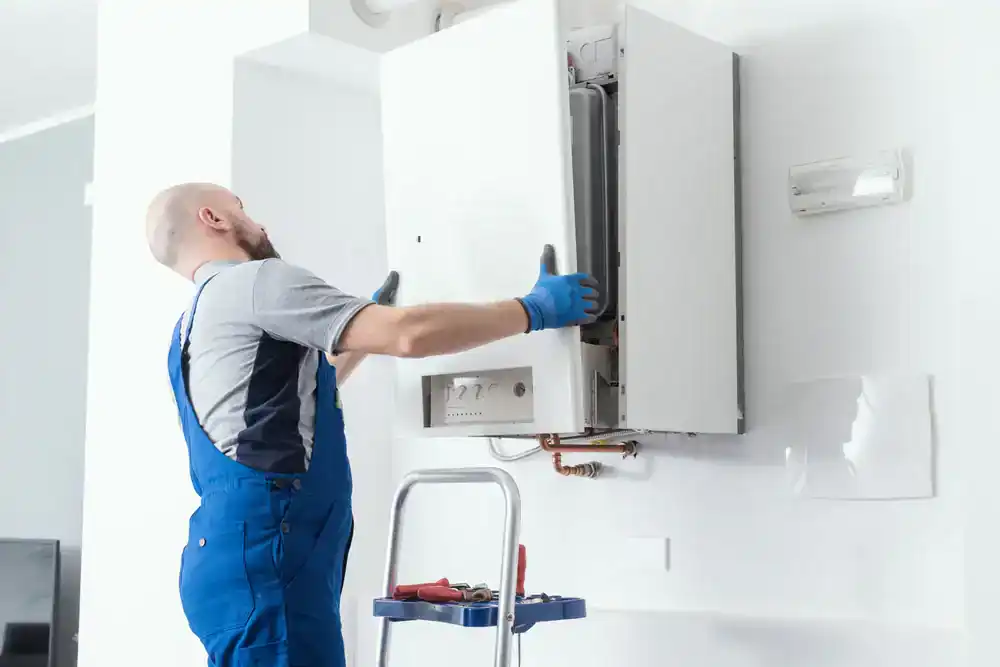
The upfront cost of an oil-to-gas conversion in New Jersey typically runs between $6,000 and $13,000, depending on the scope of work — new equipment, gas line installation, permits, and oil tank handling all factor in. That’s a real number, and it’s worth taking seriously.
Here’s how the math plays out for most Essex County homeowners. If you’re saving $600 to $1,300 per year on fuel, and you paid $9,000 for the conversion, you’re looking at a payback period somewhere between seven and fifteen years. If your savings are on the higher end — which they often are for homes that were burning through 800+ gallons of oil per winter — that payback compresses significantly.
What changes the calculation is how long you plan to stay in the home and what your current system looks like. If your oil boiler is aging and you’re facing a repair bill anyway, the decision gets simpler. Repairing an old oil system buys you a few more years of high fuel costs and continued uncertainty. Replacing it with a gas system resets the clock on equipment life and starts generating savings immediately.
There’s also a real estate angle worth considering. Oil tanks — especially older underground tanks — are a known friction point in Essex County home sales. Buyers flag them, inspectors flag them, and they often become a negotiating issue. Converting to gas before you sell removes that complication entirely and positions the home as fully updated for buyers who’ve come to expect gas heat in this market.
Essex County homeowners consumed 10 million gallons of heating oil last year across 26 oil suppliers. That’s a county-wide fuel bill of roughly $46 million at current prices. A significant portion of those homeowners have natural gas available on their street and simply haven’t made the move yet. For most of them, the math favors conversion — the question is usually timing and finding a contractor who actually knows what they’re doing with older North Jersey homes.
HVAC and Furnace Replacement Cost in Essex County: What to Budget
If you’re already thinking about converting from oil to gas, you’re also — whether you realize it or not — thinking about a furnace or boiler replacement. The two decisions often happen at the same time, and understanding the cost of new equipment separately from the conversion itself helps you plan the full project more clearly.
In New Jersey, a gas furnace installation typically runs between $3,000 and $7,500 for most residential applications. A full HVAC system replacement — furnace plus cooling — generally lands between $9,000 and $16,000. North Jersey labor rates and the complexity of older housing stock tend to push costs toward the higher end of those ranges.
What Affects Furnace Replacement Cost in Essex County?
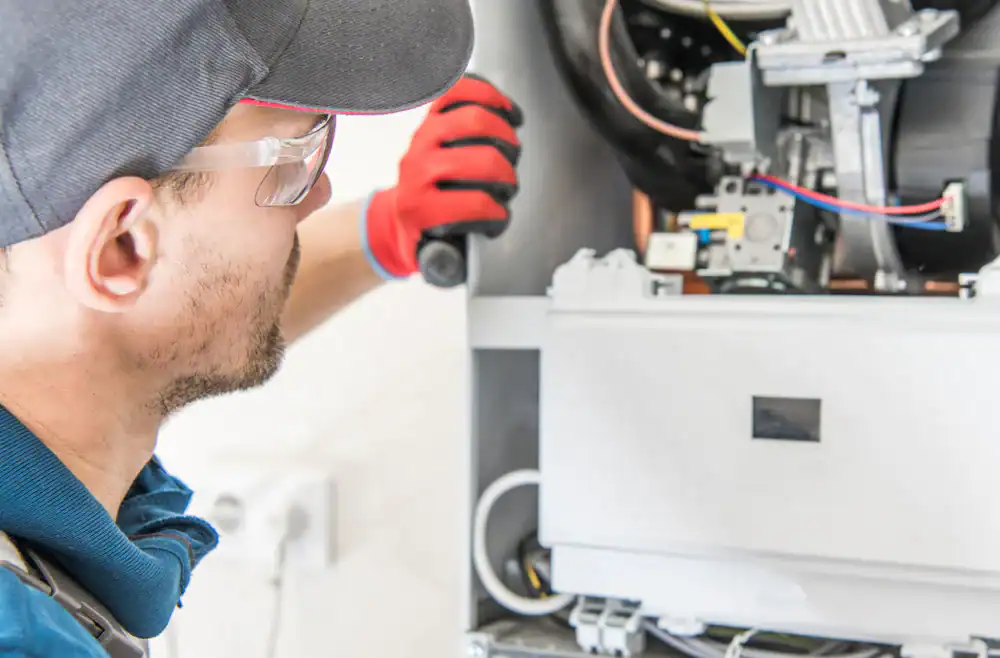
The biggest variables are system size, equipment efficiency rating, and the condition of any existing ductwork. A properly sized furnace requires a heat-load calculation — a step that reputable contractors perform and that unlicensed ones often skip. Getting the sizing wrong in either direction costs you money: an oversized system short-cycles and wears out faster; an undersized one runs constantly and never quite keeps up on the coldest nights.
Efficiency rating is the other major cost driver. High-efficiency gas furnaces (90%+ AFUE) cost more upfront but deliver lower operating costs over time. In a climate like Essex County’s — where last winter averaged 33.5°F and systems run hard from November through March — the efficiency premium tends to pay off faster than it would in a milder market.
For homes in Montclair, Glen Ridge, or the Oranges that are converting from oil-fired boilers, there’s an additional layer of complexity: many of these homes were built before forced-air ductwork was standard. If you’re moving from a radiator system to forced-air gas heat, ductwork installation adds to the project cost. If you’re replacing a gas boiler with another gas boiler and keeping your radiators, it’s a more straightforward swap.
A contractor who has worked in these homes for decades — and knows the difference between a Weil-McLain steam system and a modern hydronic setup — is going to give you a more accurate estimate than one who primarily works on newer construction. Get the estimate before the boiler fails. Emergency replacements in the middle of January cost more, happen under pressure, and don’t give you time to make a thoughtful decision about what system actually makes sense for your home.
Cost to Install Central Air with Existing Ductwork — and Why Conversion Timing Matters
Here’s something most Essex County homeowners converting from oil to gas don’t think to ask about until after the project is done: if you’re installing new ductwork as part of a gas conversion, you now have the infrastructure for central air conditioning. Adding AC at the same time as the conversion costs significantly less than coming back to do it as a separate project later.
Central air installation in New Jersey typically runs between $5,200 and $12,000 installed, depending on home size, system efficiency, and duct layout. For a standard North Jersey home — call it 1,800 square feet with a 3-ton system — you’re generally looking at $5,500 to $9,500 installed. If ductwork needs to be replaced or extended, that adds to the cost, typically in the range of $4,200 to $9,600 depending on the layout.
The reason timing matters so much is mobilization. When a contractor is already in your home installing a new gas furnace and running ductwork, adding an AC system to that same project is far more efficient than scheduling a second project, pulling separate permits, and paying for a second crew to work in the same spaces. You save on labor, and you avoid the disruption of doing it all over again.
For older Essex County homes — the kind of pre-war colonial or Victorian in Maplewood or South Orange that has beautiful radiators but no central air — this is often the moment homeowners finally solve two problems at once. They get off oil, they get lower heating bills, and they get central air for the first time. It’s a meaningful quality-of-life upgrade, not just a financial calculation.
The homes in this county were built for oil heat because that’s what was available. Gas infrastructure has long since caught up. For most Essex County homeowners, natural gas is available at the street — the conversion is a matter of equipment and installation, not waiting for infrastructure that isn’t there yet.
Ready to See What Switching from Oil to Gas Would Actually Save You?
The numbers are pretty consistent: Essex County homeowners on oil heat are spending $600 to $1,300 more per year than comparable homes on gas — often more, depending on how much oil they burn and what prices do in a given winter. The conversion cost is real, the payback period is real, and neither one should be glossed over. But for most homeowners who plan to stay in their home and are tired of the volatility, the math works.
If your oil system is aging or you’ve been watching your fuel bills climb, this is worth looking at seriously — not as a sales pitch, but as a genuine financial question with a calculable answer for your specific home.
We’ve been working in Essex County homes since 1973, and we know the older housing stock here — the steam systems in Glen Ridge, the cast iron radiators in Montclair, the pre-war boilers in Maplewood and South Orange — better than most. If you want to understand what a conversion would actually cost for your home and what you’d realistically save, we at Adriatic Aire offer free estimates and can walk you through the numbers without any pressure.
Article details:
- Published by:
- Adriatic Aire LLC
- Published to:
- Last modified:
- September 1, 2026
Share:
Continue learning: