Fall Heating and Air Conditioning Servicing: Essex County, NJ Pre-Winter Guide
Share:
October in Essex County has a way of arriving fast. One week you’re running the AC; the next, you’re reaching for the thermostat and hoping something happens. If your furnace or boiler hasn’t been looked at since last winter — or longer — that moment carries more risk than most people realize. This guide covers what fall heating and air conditioning servicing actually includes, what you can reasonably do yourself, and what needs a licensed technician. We’ll also be straight with you about the cost comparison between a fall tune-up and a January emergency call, because the numbers make a stronger case than any sales pitch.
Furnace Maintenance Service: What It Covers and Why Fall Is the Right Time
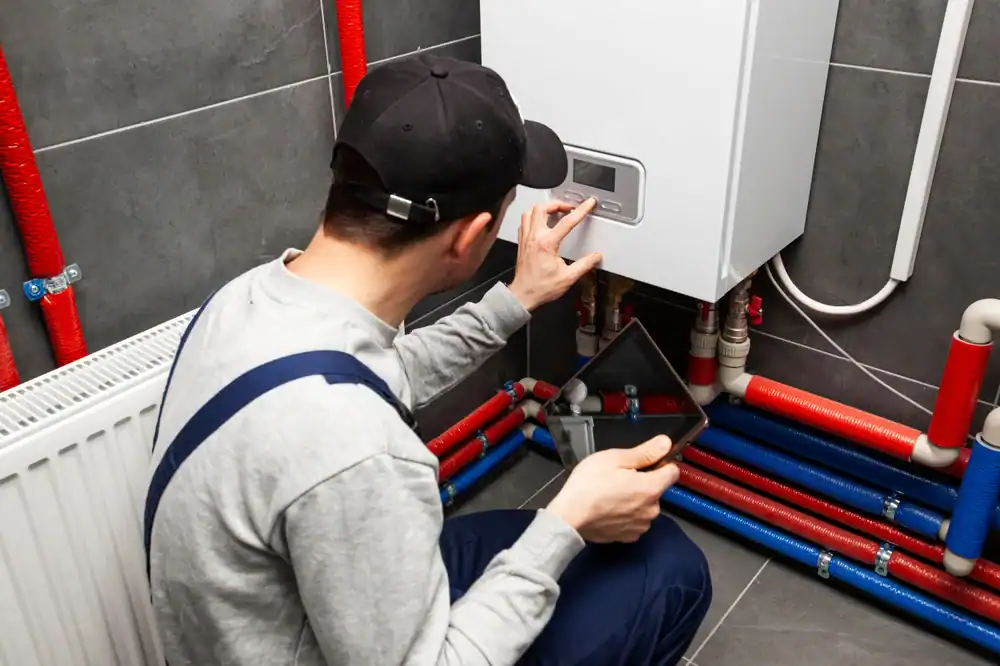
A furnace tune-up isn’t a technician glancing at your equipment and handing you an invoice. Done properly, it’s a full inspection and cleaning of every component that affects how safely and efficiently your system runs — heat exchanger, burners, blower motor, electrical connections, flue venting, thermostat calibration, and more. The goal isn’t to find problems. The goal is to make sure none are quietly developing.
Fall is the right window for this because of basic supply and demand. HVAC technicians across Essex County are fully available in September and October. By November, emergency calls start stacking up, and scheduling a routine tune-up becomes harder. Wait until December and you’re competing with homeowners who are already without heat. Getting your service done early means you get the appointment you want, at a competitive rate, with enough time to address anything we find before the first hard freeze.
Heating and Cooling Repair Services: When a Tune-Up Turns Into Something More
Here’s something worth understanding before you schedule a service call: a tune-up and a repair are different things, but one often leads to the other — and that’s not a bad thing. A thorough fall inspection is specifically designed to surface small issues while they’re still small. A worn igniter, a failing circulator pump, a heat exchanger that’s starting to crack — these are all problems that show up during a proper tune-up and cost far less to fix in October than in January.
The cost comparison is worth being direct about. A standard furnace tune-up runs $100–$300. An emergency furnace repair, when your heat goes out mid-winter, runs $300–$1,200 — and that’s before any after-hours labor surcharges that apply when you’re calling at 11 p.m. on a Tuesday in February. The Department of Energy’s data on this is consistent: properly maintained systems reduce the probability of a breakdown by 95%. That’s not a marketing claim — that’s the documented difference between a system someone has been maintaining and one that’s been left alone.
There’s also an efficiency argument that goes beyond the breakdown scenario. A furnace that hasn’t been serviced in a few years can drop to 75% efficiency or lower. A maintained system holds close to 95% of its original efficiency rating. In New Jersey, where heating costs are real and winters are long, that gap shows up on your energy bills every month from November through March.
The other thing worth knowing: we won’t use a tune-up as an excuse to recommend a replacement you don’t need. When we find something during a service call, we tell you what it is, what it costs to fix, and whether fixing it makes sense given the age and condition of your system. If a repair is the right answer, that’s what we recommend. You deserve to know the difference before we hand you an estimate.
What You Can Do Yourself Before the Technician Arrives
There are things a homeowner can and should handle between professional service visits, and being honest about that is part of giving you useful information. The most straightforward one is your air filter. Filters should be replaced at least every 90 days — more often if you have pets or anyone in the household with allergies. A clogged filter forces your system to work harder, reduces airflow, and accelerates wear on components that are expensive to replace. Filter replacement runs $20–$50 depending on the type, and it’s genuinely a DIY task.
Beyond the filter, you can check that your thermostat is responding correctly — set it to heat mode, raise the temperature above the current room temperature, and confirm the system kicks on within a minute or two. You can also walk your home and check that vents and registers aren’t blocked by furniture, rugs, or storage. If you have a boiler system, take a look at the pressure gauge — most residential boilers operate between 12 and 25 psi, and a reading outside that range is worth flagging when you call for service.
What you shouldn’t attempt yourself: heat exchanger inspection, refrigerant checks, electrical connection testing, flue and venting inspection, and anything involving the burner assembly or gas line. These aren’t tasks that require a special kind of courage — they require specific training, tools, and in New Jersey, a state license. A cracked heat exchanger, for example, can allow carbon monoxide to enter your living space. That’s not a visible problem from the outside of the unit. It requires a trained technician with the right equipment to check properly. The DIY checklist is real and useful. But it ends at the panel.
If you have a boiler — which is likely if you live in an older home in Montclair, Bloomfield, Newark, or Belleville — the pre-winter checklist looks a little different. Boilers have pressure relief valves, expansion tanks, zone valves, and circulator pumps that all need to be checked by someone who actually knows them. These systems are durable and can last 20–25 years or more with proper care. But “still running” and “properly maintained” are not the same thing.
Essex County’s Heating Systems Are Different — and Your Service Should Reflect That
Most HVAC content you’ll find online is written for forced-air furnace owners with relatively new construction. That describes a portion of Essex County, but far from all of it. A significant share of homes in the county — particularly in older communities — run on hot water or steam boiler systems. Cast-iron radiators. Weil-McLain and Utica equipment that’s been in place for decades. These systems are built to last, but they require a technician who actually knows them, not someone whose entire training is on modern split systems.
We’ve been servicing these systems in Essex County since 1973. That’s not a number we throw around to sound impressive — it means we’ve worked on the specific equipment in the specific homes in this specific county for over 50 years. When a technician from Adriatic Aire walks into a Bloomfield colonial with a 30-year-old Weil-McLain boiler, that’s not an unfamiliar situation for us.
Heat and Air Repair in Older Essex County Homes: What to Watch For
Older homes in Essex County present a specific set of heating challenges that don’t show up in generic HVAC guides. Steam boiler systems, for example, operate differently from hot water boilers — they require the right water level, functioning steam traps, and properly pitched pipes to distribute heat evenly. When something’s off, you might notice one room that’s always cold, a banging or knocking sound in the pipes, or a system that cycles on and off more than it should. These aren’t random quirks — they’re signs that the system needs attention from someone who understands steam.
Hot water boiler systems have their own set of common pre-winter issues: low system pressure, air trapped in the lines causing uneven heat distribution, zone valves that aren’t opening and closing correctly, and circulator pumps that are wearing out. Any of these can cause the system to underperform during the coldest stretch of winter, and all of them are things a fall service visit is designed to catch.
If your home has an oil boiler that hasn’t been converted to gas, pre-winter servicing is especially important. Oil systems require more involved annual maintenance than gas systems, and the consequences of deferred service are more immediate. We also have significant experience with oil-to-gas conversions for homeowners in Essex County who are ready to move away from oil — but that’s a separate conversation. The starting point is making sure whatever system you have is ready for winter.
For homes with central air conditioning that also runs through the same ductwork as the heating system, fall is also a good time to confirm the system is transitioning correctly from cooling to heating mode, that the heat exchanger is intact, and that airflow is balanced across the house. A system that ran fine all summer isn’t automatically ready for heating season without a check.
How to Choose a Heating and Air Conditioning Service Company in Essex County, NJ
This is a question a lot of Essex County homeowners struggle with, and it’s worth answering plainly. The first thing to verify is licensing. In New Jersey, HVAC contractors are required to hold a state HVACR license — it’s not optional, and you can look it up. Our license number is 19HC00022600. If a contractor can’t give you a specific license number, that’s a problem before anything else.
Beyond licensing, look at review volume alongside rating. A 5.0-star average across 500+ Google reviews means something different than a 5.0 average across 12 reviews. Volume is harder to fake, and it tells you that the experience is consistent across a wide range of customers and situations — not just a handful of best-case scenarios. We’ve been HomeAdvisor Screened and Approved for five consecutive years, which includes background checks, license verification, and insurance verification.
Ask whether the company will give you a written estimate before work begins, and whether they offer free estimates for the initial assessment. Ask whether they’re available for emergency calls — and not just “available” in theory, but genuinely reachable at 2 a.m. in January when your heat is out and the temperature in your house is dropping. Same-day service and 24/7 availability aren’t marketing language for us; they’re the practical reality of what heating system failures look like in Essex County.
One more thing: find out whether the company has specific experience with the type of system you have. If you have a steam boiler, ask directly. If you have an older Weil-McLain or Utica unit, ask if they’ve worked on them. A company that primarily installs new construction systems isn’t always the right call for a 40-year-old boiler in a Montclair Victorian. Experience with the specific equipment matters more than a polished website.
Financing is also worth asking about if a service call reveals that your system needs significant repair or replacement. We offer financing through FTL Finance, which means a larger repair doesn’t have to become a reason to delay getting the work done before winter.
Fall Heating Service in Essex County, NJ: The Short Version
The case for fall heating and air conditioning servicing isn’t complicated. A tune-up costs $100–$300 and takes a couple of hours. An emergency repair in January costs $300–$1,200, arrives on someone else’s schedule, and often happens because something small was missed. The September–October window is when technicians are available, pricing is competitive, and you still have time to fix what’s found.
If you’re in Essex County — especially if your home runs on a boiler or steam system — the generic advice you find online doesn’t fully apply to your situation. The equipment is different, the maintenance requirements are different, and the technician you hire should actually know the difference.
If you want a straight answer about what your system needs before winter, reach out to Adriatic Aire. We’ll tell you what we find, what it costs to address, and what can wait — no pressure, no manufactured urgency.
Article details:
- Published by:
- Adriatic Aire LLC
- Published to:
- Last modified:
- July 21, 2026
Share:
Continue learning: