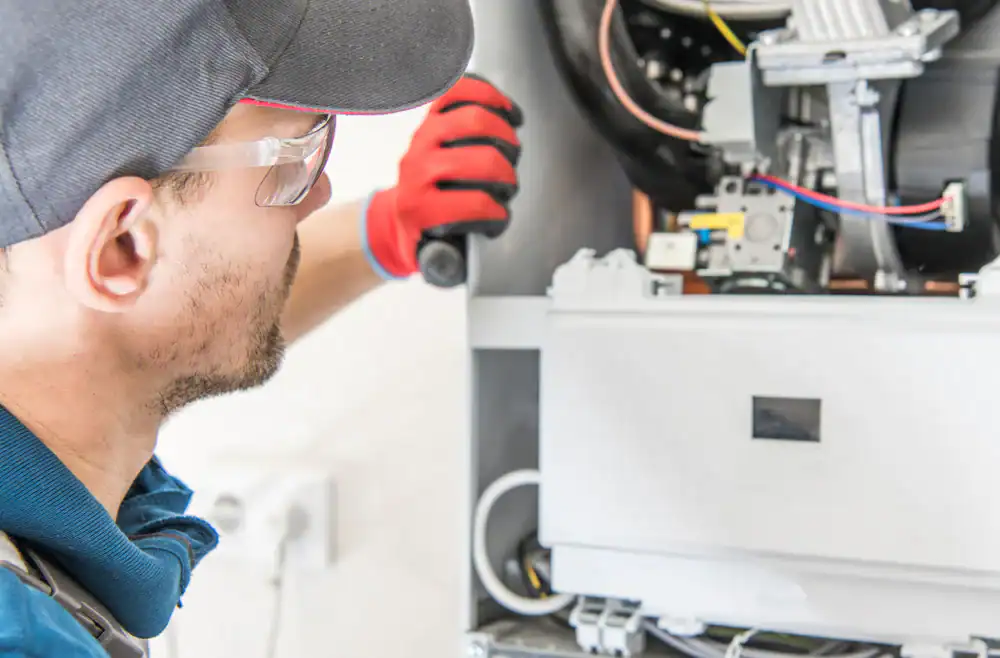
Essential NJ HVAC Permit Requirements for Homeowners
Planning HVAC work in Essex County? Understanding New Jersey's permit requirements and contractor licensing rules protects your home, your wallet, and keeps you on the right side of the law.
Share:
Summary:
Most HVAC installations and major repairs in New Jersey require permits. That’s not a maybe—it’s the law. But here’s what catches homeowners off guard: the permit is only part of the equation. New Jersey has strict licensing requirements for HVAC contractors, mandatory insurance and bonding rules, and enforcement actions that result in thousands of dollars in fines for violations.
If you’re planning HVAC work in Essex County, understanding these requirements before you sign anything protects you from penalties reaching $10,000, keeps you from hiring contractors who can’t legally do the work, and ensures your system meets safety standards. Let’s break down exactly what you need to know about permits, licenses, and the regulations that keep your HVAC project legal.
HVAC Contractor License Requirements New Jersey Homeowners Should Know
In New Jersey, anyone performing HVAC work must hold a Master HVACR Contractor License issued by the State Board of Examiners of Heating, Ventilating, Air Conditioning and Refrigeration Contractors. This isn’t a suggestion. It’s state law, and violations carry serious consequences.
The Master HVACR license is the only type of HVAC license New Jersey issues. Getting one requires contractors to be at least 21 years old, complete significant education and experience requirements, and pass two separate exams covering both technical knowledge and business law. Minimum five years in the trade before they can even sit for the test.
Once licensed, these contractors renew every two years and complete five hours of continuing education before each renewal. That requirement ensures the contractor working on your system stays current with technology, safety protocols, and code changes.
Education and Experience Requirements for Licensed HVAC Contractors
The path to becoming a licensed Master HVACR contractor in New Jersey is rigorous. Your heating and cooling system affects your family’s comfort, safety, and your home’s energy efficiency. The state ensures only qualified professionals work on these systems.
To qualify for the licensing exam, contractors must meet one of several education and experience combinations. The most common path is completing a four-year U.S. Department of Labor approved apprenticeship program followed by one year of journeyperson experience under a licensed master contractor. Five full years of hands-on training before independent operation.
Alternatively, contractors can earn a four-year bachelor’s degree in HVACR from an accredited institution plus one year of relevant work experience. There’s also a middle path: a two-year degree from a technical or community college, at least two years of approved apprenticeship, and one year of journeyperson experience under a licensed contractor.
Every applicant must pass two exams regardless of their educational path. The Business and Law exam covers risk management, contract law, bidding, and project management. The Trade exam tests technical knowledge about heating and cooling principles, electrical systems, refrigeration, ductwork, and ventilation. Both exams have 50 questions, a 130-minute time limit, and require a minimum score of 70%.
After passing both exams, contractors must secure a $3,000 surety bond and $500,000 in general liability insurance before the state issues their license. The bond protects you financially if the contractor fails to comply with licensing regulations or complete work properly. The insurance covers property damage or injuries that might occur during installation or repairs.
This entire process ensures that when someone shows up at your door claiming they can install or repair your HVAC system, they actually have the knowledge, experience, and financial backing to do it right. For homeowners in West Orange, Montclair, Clifton, or any Essex County municipality, this licensing system is your first line of protection.
Continuing Education Keeps Licensed Contractors Current
Getting licensed is just the beginning. New Jersey requires Master HVACR contractors to complete five hours of continuing education from board-approved courses every two years before they can renew their license. This requirement keeps contractors updated on evolving technology, changing building codes, and new safety standards.
HVAC technology has changed dramatically in recent years. Smart thermostats, high-efficiency heat pumps, advanced air filtration systems, and variable-speed compressors weren’t standard even a decade ago. Energy codes have gotten stricter. Refrigerants have changed due to environmental regulations.
A contractor who got licensed ten years ago and never updated their knowledge would be working with outdated information. The continuing education requirement prevents that scenario. It means your contractor understands modern equipment, current codes, and the latest installation techniques.
The New Jersey State Board of Examiners publishes a list of approved continuing education sponsors and instructors. Contractors must maintain verification of their continuing education attendance for four years in case the board audits them. No completed hours means no renewal.
Every Master HVACR license expires on June 30th of even-numbered years. The renewal fee is $160. If a contractor lets their license lapse, they cannot legally perform HVAC work in New Jersey until they reinstate it. Operating with an expired license carries the same penalties as operating without one.
This system creates accountability. For homeowners throughout Essex County, it ensures the person working on your system stays qualified through ongoing education, not just based on what they knew years ago.
NJ HVAC License Verification: Check Contractor Credentials Before Hiring
Before you hire any HVAC contractor in New Jersey, verify their license. Takes less than five minutes. Could save you thousands of dollars in headaches, penalties, and repairs. The New Jersey Division of Consumer Affairs maintains an online license verification system available 24/7.
Search by the contractor’s name, business name, or license number. The system shows whether their license is active, when it expires, and if there are disciplinary actions against them. This is public information every homeowner should check before signing contracts or making payments.
Don’t just take the contractor’s word for it. Anyone can claim to be licensed. Verify it yourself through the official state system.
How to Verify HVAC Contractor Licenses Through NJ Division of Consumer Affairs
Verifying a contractor’s license through the New Jersey Division of Consumer Affairs is straightforward. Visit newjersey.mylicense.com, the official license verification portal. You’ll see a search function for looking up contractors by name, business name, or license number.
Searching by name requires the contractor’s last name and first name as they appear on business cards or estimates. The system pulls up matching results. Look for the entry matching your contractor and check the license status. Should say “Active” or “Current.”
Pay attention to the expiration date. All Master HVACR licenses in New Jersey expire on June 30th of even-numbered years. If you’re hiring someone in 2025 and their license expired in 2024, they’re not currently licensed to work in New Jersey. Period.
The verification system also shows disciplinary actions, complaints, or violations on file. Multiple complaints or serious violations are red flags. Even one legitimate complaint deserves a conversation with the contractor to understand what happened and how it was resolved.
You can also contact the State Board of Examiners of HVACR Contractors directly if you have questions about a contractor’s status or want to confirm information. Their office is located at 124 Halsey Street in Newark, convenient for Essex County residents.
Don’t skip this step. The Division of Consumer Affairs has conducted multiple enforcement operations in recent years. In one three-day operation in 2025, investigators issued notices of violation and $2,500 civil penalties to 18 unregistered home improvement contractors in a single township. A separate two-day operation resulted in $5,000 penalties against 11 unlicensed companies.
When contractors work without licenses, they’re not just breaking the law. They’re putting you at risk. Verify the license before work begins, before you sign anything, before you hand over a deposit.
Unlicensed HVAC Contractor Risks That Put Homeowners in Jeopardy
Hiring an unlicensed HVAC contractor creates problems that extend far beyond poor workmanship. You’re exposing yourself to financial liability, legal penalties, and complications that can haunt you for years. Understanding these risks helps explain why license verification isn’t optional.
Unlicensed contractors don’t carry the required $500,000 liability insurance or $3,000 surety bond. If they damage your property during installation, if someone gets injured on your property while they’re working, or if the work causes problems down the line, you have limited recourse. They don’t have insurance to cover damages. The bond that would protect you doesn’t exist.
Projects done by unlicensed contractors typically lack proper permits. That creates immediate problems with your local building department and long-term problems when you sell or refinance. Many municipalities in Essex County require permit documentation for HVAC work. West Orange, for example, specifically requires permits for air conditioning and furnace installation or replacement. Without permits, you may face fines, be required to have work inspected and brought up to code, or deal with buyers’ lenders who won’t approve mortgages on homes with unpermitted work.
Unlicensed contractors often cut corners because they’re not subject to inspections. They may use substandard materials, skip important safety steps, or install equipment incorrectly. The work might seem fine initially, but problems emerge later—inefficient operation, premature equipment failure, safety hazards, or systems that don’t meet code requirements.
New Jersey enforces these rules aggressively. Individuals who engage in unlicensed HVAC work face civil fines of up to $10,000 for a first offense and $20,000 for each subsequent violation. In cases involving fraud or severe non-compliance, criminal charges are possible. Contractors arrested in enforcement operations have faced fourth-degree criminal offenses carrying up to 18 months in jail upon conviction.
For homeowners, there’s another risk many don’t consider until it’s too late. New Jersey’s Contractors’ Registration Act provides that unlicensed contractors are not entitled to enforce contracts for home improvement work and can be compelled to return money paid. But getting your money back requires legal action, time, and expense. The contractor may have already spent the money or disappeared entirely.
The best approach is prevention. Always verify licenses before hiring. Check insurance and bonding. Ensure permits are pulled. Work with legitimate contractors who follow the law. The few minutes spent on verification protect you from risks that could cost thousands to resolve.
Ensuring Code Compliance and Safety with Proper HVAC Permits in New Jersey
Understanding New Jersey’s HVAC permit requirements and contractor licensing rules protects your home, your family, and your financial investment. When you work with properly licensed contractors who pull the right permits, you ensure your HVAC system is installed safely, meets all code requirements, and won’t cause problems when you sell or refinance.
The verification process takes minutes. The peace of mind lasts for years. Before you hire anyone for HVAC work in Essex County, check their Master HVACR license through the New Jersey Division of Consumer Affairs portal. Confirm they carry the required $500,000 insurance and $3,000 bonding. Ask about permits and make sure they’re pulled before work begins.
If you’re looking for a licensed, bonded, and insured HVAC contractor who understands Essex County’s requirements and treats your home with care, we’ve served the area since 1973. We handle all permits, maintain current licensing, and focus on transparent communication throughout every project.
Article details:
- Published by:
- Adriatic Aire LLC
- Published to:
- Last modified:
- November 23, 2026
Share:
Continue learning: