Essential Furnace Tune-Up Guide for Essex County, NJ Homeowners
Share:
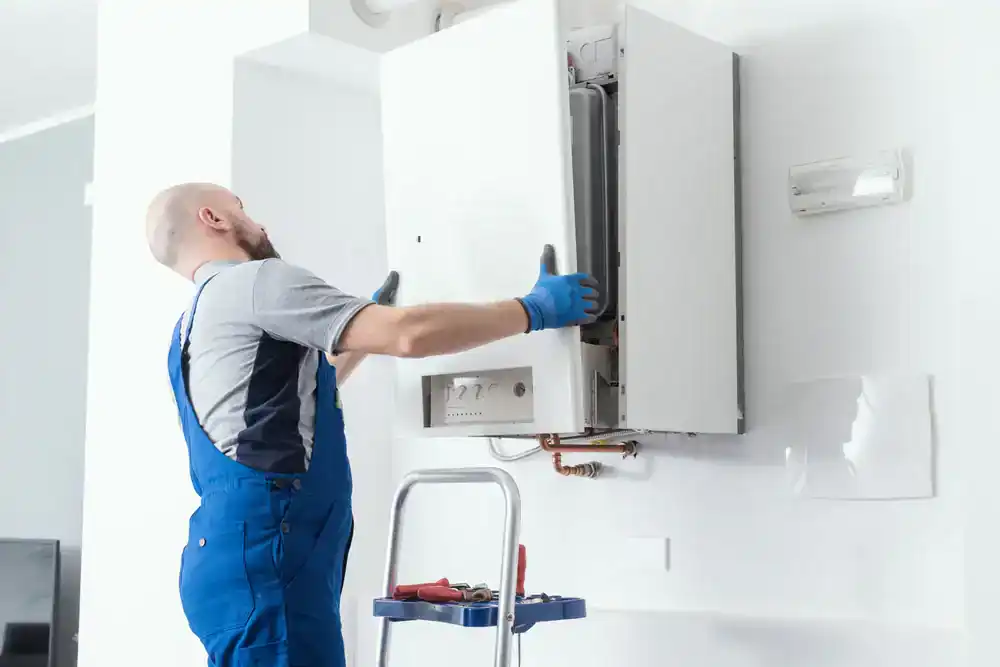
Your furnace has been sitting untouched since April. That’s five or six months of dust, oxidation, and parts quietly wearing down with no one the wiser. Most homeowners don’t think about any of this until the first genuinely cold night of October — when they flip the heat on and nothing happens. A furnace tune-up is how you avoid that moment. But there’s a lot of noise out there about what a tune-up actually includes, whether it’s worth the cost, and whether some companies use them as an excuse to push unnecessary repairs. We’re going to clear all of that up.
What a Furnace Tune-Up Actually Includes
A furnace tune-up is a professional inspection and adjustment of your heating system — not just a filter swap and a handshake. A legitimate service visit covers the mechanical, electrical, safety, and combustion sides of your furnace. Think of it as a full physical for a system that’s about to work hard for the next seven months.
The reason it matters is simple: most furnace failures aren’t sudden. They’re the result of small problems — a flame sensor coated in residue, a blower wheel caked in dust, a heat exchanger developing a hairline crack — that go unnoticed until the system breaks down completely. A tune-up catches those things while they’re still cheap to fix.
What We Actually Do During a Furnace Tune-Up
This is the question most homeowners never get a straight answer to — and it’s the one that matters most. Here’s what a thorough, professional furnace tune-up involves.
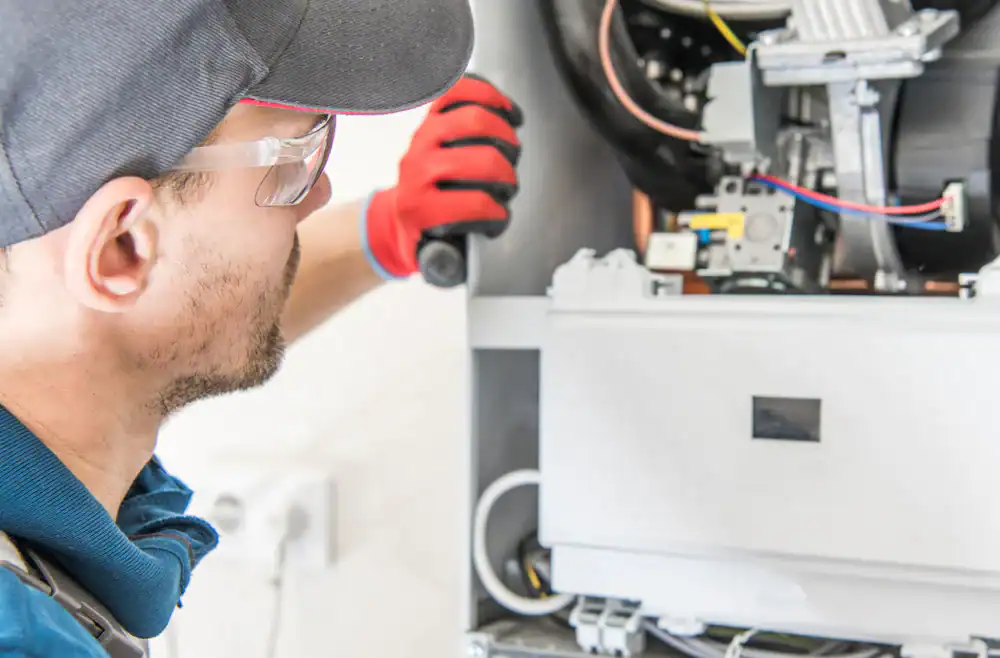
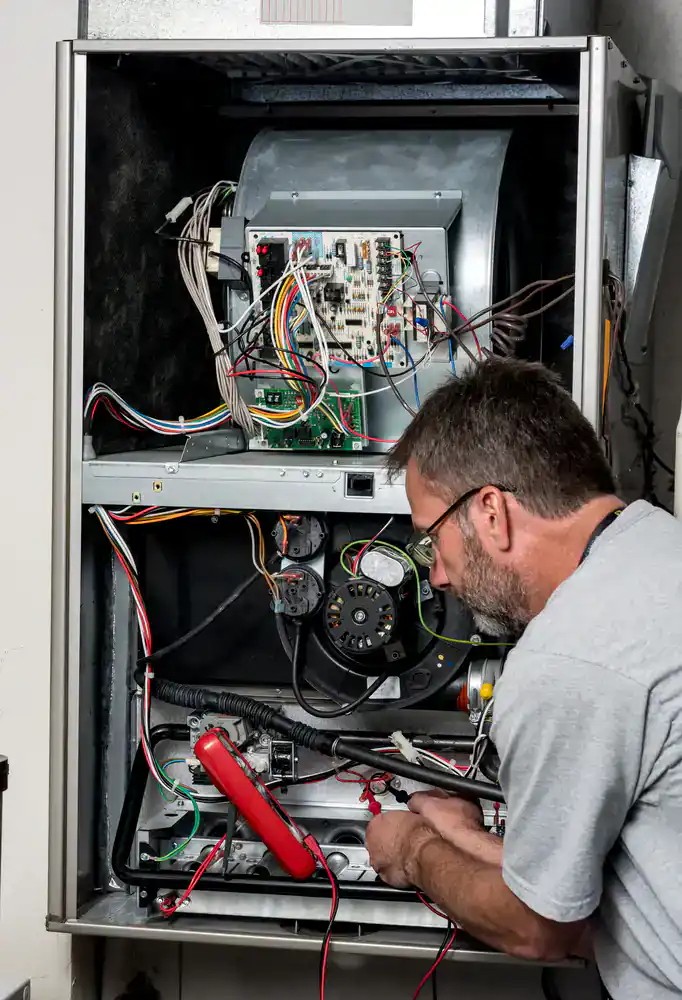
We start by running the system and taking temperature readings — specifically the difference between the air going into the furnace and the air coming out. That temperature differential tells us a lot about how efficiently the system is actually operating. From there, the inspection moves through the heat exchanger, burners, blower motor, igniter, and flame sensor. Each component gets cleaned, tested, and evaluated.
The heat exchanger deserves special attention. It’s the component that separates the combustion side of your furnace from the air that circulates through your home. When it cracks — and on older furnaces, it does — combustion gases including carbon monoxide can enter your living space. Carbon monoxide has no color, no odor, and no warning sign until someone gets sick. A visual inspection of the heat exchanger is one of the most important safety checks a tune-up provides, and it’s something no homeowner can do on their own.
Beyond that, a complete tune-up includes checking and testing all safety controls and limit switches, measuring gas pressure against the manufacturer’s specifications, testing for gas leaks, inspecting the venting and flue system for obstructions or rust, checking for backdrafting, calibrating the thermostat, and running a full operational test at the end. We check electrical connections and inspect the air filter. If there’s ductwork accessible, we look for obvious leaks.
What separates a good tune-up from a bad one is documentation and honesty. A technician who walks through your mechanical room, glances at the unit, changes the filter, and hands you an invoice hasn’t done a tune-up — they’ve done a filter change with extra steps. A real tune-up involves combustion analysis, gas pressure measurement, and a clear summary of what was found. If we tell you something needs to be replaced, we can show you why, not just describe surface rust on a component that has years of life left in it.
How to Tell a Legitimate Tune-Up From One That’s Just Looking for an Upsell
This concern is real, and it’s worth addressing directly. There are homeowners who’ve had a technician point to surface rust on a ten-year-old furnace and recommend full replacement — only for that same furnace to run without issue for another two decades. That kind of experience breeds skepticism, and honestly, some of it is earned.
Here’s what a trustworthy tune-up looks like in practice. We arrive, run the system, and work through a documented checklist. At the end of the visit, you get a clear explanation of what was inspected, what was found, and what — if anything — needs attention. If a repair is recommended, we explain the specific component, the specific problem, and the consequence of leaving it unaddressed. There’s no pressure. There’s no manufactured urgency. If your furnace is in reasonable shape, we’ll tell you that.
Red flags worth watching for: a technician who skips the operational test at the start, who can’t explain what they’re checking or why, who immediately pivots to replacement without a detailed diagnosis, or who quotes a repair cost on the spot without any documentation. A licensed HVAC contractor in New Jersey is required to hold a Master HVACR license — that’s not a formality, it’s a legal requirement that comes with professional accountability. Asking to see a license number is completely reasonable, and any reputable company will provide it without hesitation.
The honest reality is that most furnaces that receive regular annual maintenance don’t need major repairs. A tune-up is far more likely to end with “everything looks good, here’s what we adjusted” than with a parts list. The companies that use tune-up calls as a sales opportunity tend to not last long in tight-knit communities where word travels fast.
Furnace Tune-Up Cost, Timing, and What Essex County Homeowners Should Know
A professional furnace tune-up in Essex County, NJ typically costs between $80 and $150. That’s the range we quote, and it’s consistent with what you’ll find across reputable HVAC companies in the state. There are no hidden fees on top of that for the inspection itself — if something needs repair, that’s a separate conversation with a separate estimate.
The timing question is straightforward: schedule your tune-up in September or October, before the heating season begins in earnest. That’s the window when technicians have availability, parts are in stock, and you still have time to address anything that turns up before temperatures drop into the 20s.
Why Essex County’s Older Homes Make Annual Furnace Service More Important
Essex County has a housing stock that’s older than most people realize. Montclair, South Orange, Maplewood, and Glen Ridge are full of Victorian and Colonial homes built between the 1890s and 1930s. Livingston and West Orange have large stretches of mid-century construction from the 1940s through the 1960s. Many of these homes are still running the same forced-air furnace systems that were installed decades ago — some well past the 15-to-20-year lifespan that most manufacturers design for.
That matters for a few reasons. Older furnaces are more likely to have heat exchangers that have been through thousands of heating cycles and are approaching the point where cracks become a real possibility. They’re more likely to have blower motors and igniters that are working harder than they should because they’ve never been properly serviced. And they’re more likely to have ductwork that’s developed leaks over the years, which bleeds efficiency out of the system before the warm air ever reaches the rooms you’re trying to heat.
The western parts of Essex County — Livingston, South Orange, and the communities near the Watchung foothills — also tend to run colder in winter than coastal New Jersey. Heating season here runs roughly October through April, which is a long time to ask an aging system to perform without a checkup. A furnace that gets serviced annually simply lasts longer and fails less often. That’s not a sales pitch — it’s just how mechanical systems work.
We’ve been servicing furnaces in Essex County since 1973, which means we’ve worked on the systems in these neighborhoods for over 50 years. We know what the common failure points are in the housing stock here, and we know how to give you an honest assessment of where your system stands.
Frequently Asked Questions About Furnace Tune-Ups in Essex County, NJ
**How often should I get a furnace tune-up?** Once a year is the standard recommendation, and the best time is before the heating season starts — September or October. If your furnace is older or hasn’t been serviced in several years, it’s worth getting it done sooner rather than waiting until next fall.
**Can I just replace the filter myself and skip the professional visit?** Replacing your filter every one to three months is something you should absolutely be doing on your own — it’s a basic maintenance task that keeps airflow clean and reduces strain on the blower. But it doesn’t replace a professional tune-up. A filter change doesn’t inspect the heat exchanger, test the flame sensor, measure gas pressure, or check for carbon monoxide risk. Those are the things that actually prevent a breakdown or a safety issue.
**Is a furnace tune-up worth it if my system seems to be running fine?** Most furnace problems are invisible until they aren’t. A system can run fine by every outward measure while a heat exchanger is developing a crack or an igniter is slowly degrading. The cost of a tune-up — $80 to $150 — is a fraction of what an emergency repair call costs in January, especially when parts availability is tight and technicians are booked out. In Essex County, where heating season runs long and cold, that gap between a proactive tune-up and a reactive emergency call widens even more.
**What if a technician finds something wrong during the tune-up?** You’ll get a clear explanation of what was found and what your options are. We don’t pressure anyone into repairs they don’t need, and we don’t patch a failing system just to get through the visit. If something genuinely needs attention, we’ll tell you what it is, why it matters, and what happens if it’s left alone. The decision is always yours.
**Does it matter who I call for a furnace tune-up in Essex County?** Yes — and not just because of licensing, though that matters too. New Jersey law requires a Master HVACR license for HVAC work, and working with an unlicensed contractor can void your equipment’s manufacturer warranty. Beyond credentials, local experience matters. A company that’s been servicing furnaces in Montclair, Livingston, South Orange, and the surrounding Essex County communities for decades has seen the specific systems in these homes, knows the common failure patterns, and can give you an honest read on where your furnace stands.
Ready to Schedule Your Furnace Tune-Up Before Winter Hits?
The case for getting your furnace serviced before October isn’t complicated. Your system has been sitting idle for months. Essex County winters are long. And the difference between a $150 tune-up and a $500 emergency call in February comes down to whether you caught the problem before it became one.
A good tune-up gives you a clear picture of where your furnace stands, catches anything that needs attention while it’s still minor, and sends you into the heating season with confidence rather than crossed fingers. That’s the whole point.
If you’re ready to schedule or just want to know what a service visit would involve for your specific system, Adriatic Aire has been doing this work in Essex County since 1973. Give us a call — we’ll give you a straight answer.
Article details:
- Published by:
- Adriatic Aire LLC
- Published to:
- Last modified:
- September 1, 2026
Share:
Continue learning: