Boiler vs. Furnace: Which Heating System Fits Your Essex County Home?
Share:

Here’s the thing most heating guides get wrong: they assume you’re starting from scratch, picking between two shiny new options. But if you own a home in Essex County — in Montclair, Maplewood, South Orange, West Orange, or anywhere else in the county — you’re probably not. You already have a system. It’s aging, acting up, or costing you too much to run. And now you’re trying to figure out whether to replace it in kind, convert to gas, or switch systems entirely. That’s a very different question, and it deserves a real answer.
Boiler vs. Furnace: Understanding What You Actually Have
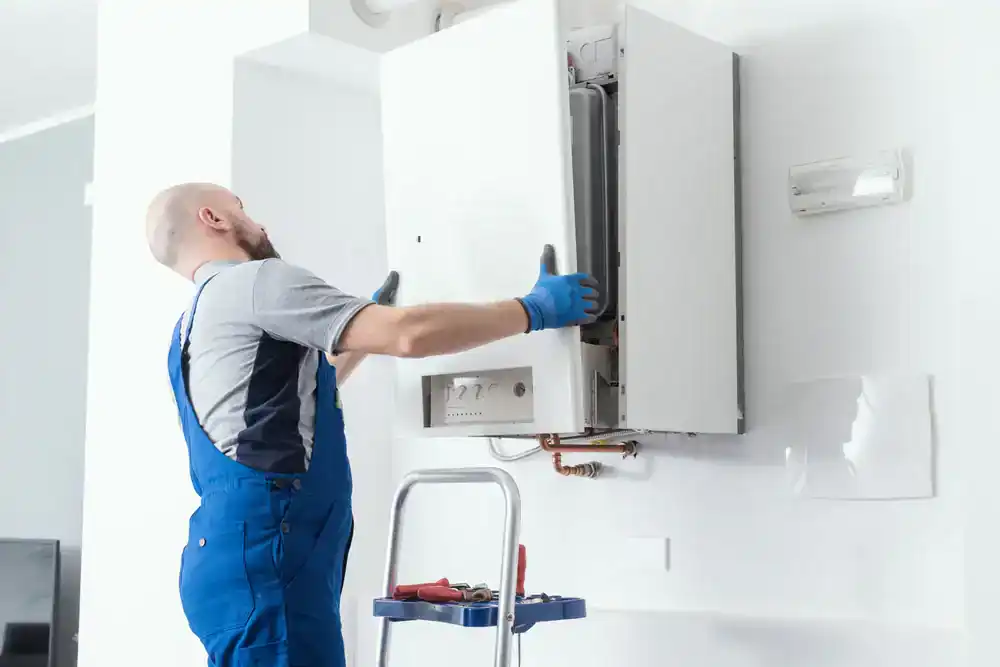
Let’s get the basics out of the way, because this is genuinely where a lot of confusion starts. A furnace heats air and pushes it through ducts and out of vents. A boiler heats water and sends it through pipes to radiators or baseboard units. If heat comes out of a vent in your wall or floor, you have a furnace. If it comes from a radiator or baseboard, you have a boiler. They are fundamentally different systems — not interchangeable, not upgrades of each other, just two different approaches to the same problem.
This distinction matters more in Essex County than almost anywhere else in New Jersey. The median home here was built in 1958, and nearly 40% of the county’s housing stock predates 1950. Those older homes — the colonials and Victorians lining the streets of Upper Montclair, the brownstones in South Orange, the pre-war two-families throughout West Orange — were built before forced-air ductwork became standard. They were built with boilers and cast iron radiators, and many of them still have those systems today.
Why Switching From a Boiler to a Furnace Costs More Than You Think
Converting from a boiler to a furnace isn’t just swapping one unit for another — it means installing an entirely new distribution system. If your home doesn’t have existing ductwork, you’re looking at $5,000 or more just to run the ducts before a furnace is even purchased or installed. In an older Essex County home with plaster walls and finished ceilings, that number can climb quickly depending on how accessible the spaces are.
On the flip side, if you’re replacing a boiler with another boiler, your existing radiator piping and distribution hardware stays in place. You’re swapping the heat source, not rebuilding the whole system. That’s a meaningful cost difference — and it’s one of the main reasons most homeowners in Essex County ultimately replace like-for-like unless there’s a compelling reason to do otherwise.
The one scenario where switching systems makes the most financial sense is when you’re also dealing with a fuel problem. If you have an aging oil boiler and you’re spending $1,800 to $2,500 a year on heating oil, converting to a gas system — whether a gas boiler or a gas furnace — can cut that cost to $800 to $1,200 per year. Over time, those savings add up fast. The question then becomes whether to convert to a gas boiler (keeping your existing radiators) or to a gas furnace (which requires ductwork). For most older Essex County homes, a gas boiler replacement is the more practical path — you keep the distribution system you already have and trade the expensive fuel for a cheaper one.
There’s also a comfort argument worth making here. Boiler heat — radiant heat — warms objects and surfaces, not just the air. It’s steady and even, without the temperature swings you get when a furnace cycles on and off. If you’ve lived with cast iron radiators your whole life, you know exactly what that feels like on a February morning. It’s not nostalgia — it’s physics. Water holds heat longer than air, which is why boiler-heated rooms tend to feel warmer and more consistent even at lower thermostat settings.
Gas Boiler vs. Oil Boiler: What Essex County Homeowners Need to Know
If you already have a boiler and you’re deciding what to replace it with, the fuel question is the one that will have the biggest impact on your long-term costs. Natural gas heats about 75% of New Jersey homes, and for good reason — it’s cheaper, more convenient, and more stable in price than heating oil. You don’t schedule deliveries. You don’t monitor a tank. The gas comes through a pipe in the ground and the bill arrives monthly.
Heating oil is volatile. The price swings dramatically with global markets, and Essex County homeowners who are still on oil have felt that firsthand over the past few years. Converting from an oil boiler to a gas boiler typically saves 30% to 50% on annual heating costs. A full oil-to-gas conversion in New Jersey runs $12,000 to $18,000 depending on the scope of work — or $8,000 to $12,000 if a gas line is already present at the property. Most homeowners recoup that investment in three to five years through energy savings alone. And when you factor in the real estate angle — natural gas heat is a genuine selling point in the NJ market — the financial case gets even stronger.
There’s also an efficiency gap between gas and oil systems that’s worth understanding. Modern high-efficiency condensing gas boilers reach AFUE ratings of 90% to 97%. That number — Annual Fuel Utilization Efficiency — tells you what percentage of the fuel you’re paying for actually becomes heat in your home. An older oil boiler might be running at 80% to 85% AFUE on a good day, and if it hasn’t been maintained properly, real-world performance is often lower than that.
One thing specific to Essex County that doesn’t get talked about enough: hard water. The local water supply has a mineral content that causes buildup inside boilers over time, gradually reducing efficiency and shortening the system’s lifespan. It’s not a reason to panic, but it is a reason to stay current on maintenance and to factor it into your thinking when a boiler is already aging. We’ve seen this play out in homes across Montclair, Caldwell, and Maplewood — systems that looked fine on paper but were running at a fraction of their rated efficiency because of mineral accumulation that had gone unaddressed for years.
Boiler vs. Furnace Cost: What to Budget for in Essex County
Cost is usually the first question, and the honest answer is that it depends heavily on what you already have. With existing ductwork in place, a new gas furnace installation in Essex County typically runs $2,500 to $6,000. A new boiler installation runs $5,400 to $12,000, with most homeowners landing around $8,750 for a mid-range system. Those ranges reflect real NJ pricing — not national averages that don’t account for labor costs, permit requirements, or the complexity of working in older homes.
What those numbers don’t include is the cost of switching systems. If you’re adding ductwork where none exists, add $5,000 or more to the furnace side of the equation. If you’re converting from oil to gas, that’s a separate project with its own cost range. The right comparison isn’t always boiler price vs. furnace price — it’s the total cost of getting from where you are to where you want to be.
Forced Air vs. Boiler: Which Heating System Is Cheaper to Run?
Installation cost is only part of the picture. What you spend every winter to heat your home is the number that compounds over time, and it’s where the fuel type matters more than the system type.
A gas furnace running at 95% AFUE will cost roughly $800 to $1,200 per heating season for a typical Essex County home. An oil boiler at 85% AFUE in that same home runs $1,800 to $2,500 per year. That’s a gap of $600 to $1,300 annually, and it widens if oil prices spike or if the boiler’s real-world efficiency has degraded from age and mineral buildup.
On the efficiency front, it’s worth pushing back on the assumption that furnaces are inherently more modern or efficient than boilers. A high-efficiency condensing gas boiler can reach 90% to 97% AFUE — competitive with the best furnaces on the market. The technology has come a long way. The older cast iron boilers that are common in pre-war Essex County homes were built to last — many are still running after 30 or 40 years — but they’re not delivering the efficiency numbers a new system would. That’s the real argument for replacement when a boiler is aging: not that boilers are outdated, but that this particular boiler has run its course.
There’s one efficiency caveat for furnaces that doesn’t get enough attention. The U.S. Department of Energy notes that duct systems can lose up to 35% of a furnace’s heat output when ducts run through unconditioned spaces like attics or garages. A furnace rated at 95% AFUE can deliver real-world efficiency closer to 60% if the ductwork is poorly sealed or running through an uninsulated space. That’s a meaningful gap — and it’s one reason why a well-maintained boiler with no duct losses can outperform a theoretically higher-rated furnace in practice.
Boilers, Furnaces, and Air Quality: Does It Actually Matter?
For a lot of Essex County homeowners — especially those with kids, or anyone dealing with allergies or asthma — this question comes up more than you’d expect. And the short answer is yes, it does matter, though not always in the way people assume.
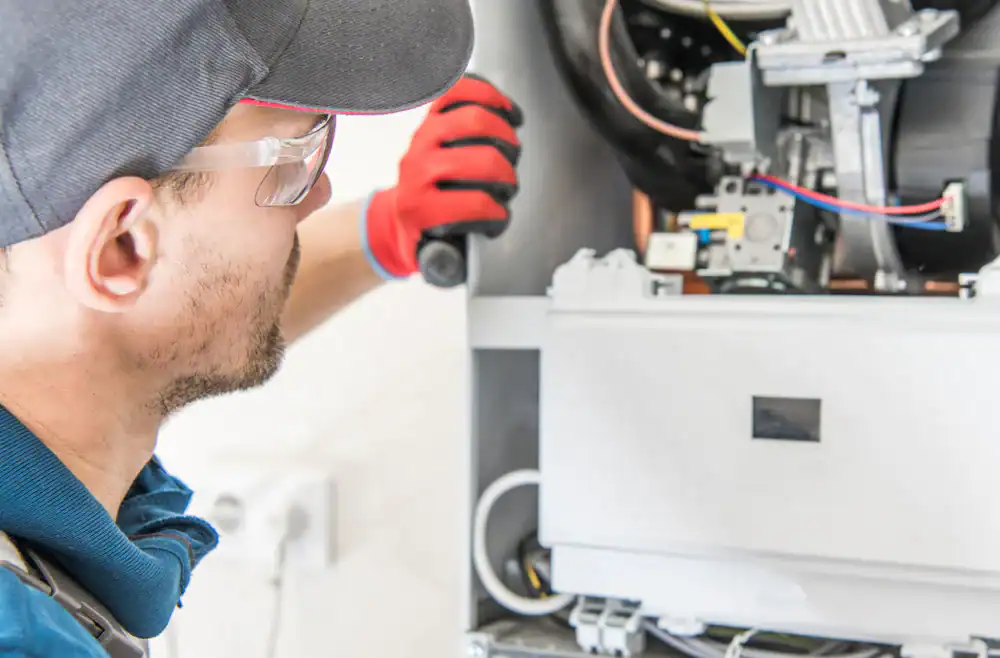
Furnaces work by heating air and circulating it through your home. That circulation is also moving dust, pet dander, pollen, and whatever else is in your ductwork. If the ducts haven’t been cleaned recently, or if filters aren’t being changed every 60 to 90 days, a forced-air system can actively spread allergens through every room in the house. It also tends to dry out indoor air, which can aggravate respiratory issues and create static electricity problems in winter.
Boilers don’t blow air. They heat water, send it through pipes, and let the radiators do the work. There’s no circulation of airborne particles, no filter to forget, and no blower motor cycling on and off. The indoor humidity stays more natural. For families where air quality is a genuine concern, that’s a real advantage.
The flip side is that boilers don’t integrate with central air conditioning the way furnaces do. A furnace uses the same ductwork for both heating and cooling, so adding central AC is relatively straightforward. With a boiler, you need a separate cooling solution. The most practical option in most Essex County homes is a ductless mini-split system, which provides efficient cooling without requiring any ductwork at all. It’s an additional investment, but it’s also a flexible one — mini-splits can be zoned to individual rooms, which gives you more control over comfort than a traditional central AC system.
Boilers are not high-maintenance systems. They have fewer moving parts than furnaces, no filters to change monthly, and typically need just one annual professional service visit to inspect water pressure, the heat exchanger, safety controls, and the circulator pump. Furnaces need filter changes every 60 to 90 days on top of their annual tune-up. For homeowners who want a reliable, lower-touch system, a well-maintained boiler is often the easier choice.
Which Heating System Is Right for Your Essex County Home?
Most of the time, the right answer is to replace what you have — and replace it well. If you have a boiler, a new high-efficiency gas boiler will almost always outperform your aging system and cost less to run. If you have a furnace with existing ductwork, a new high-efficiency gas furnace makes sense. The cases where switching systems pays off are real, but they’re specific: mainly when you’re on oil and the conversion to gas creates enough annual savings to justify the project cost.
What we’d encourage you to avoid is making this decision based on a generic article or a contractor who’s already decided what you need before they’ve seen your home. The right call depends on your system’s age, your fuel type, your home’s infrastructure, and your budget — and those factors look different in a 1920s colonial in Montclair than they do anywhere else.
We’ve been working on heating systems in Essex County homes since 1973. We know the housing stock, we know the systems, and we’ll tell you honestly whether repair, replacement, or conversion makes the most sense for your situation — even if that means a smaller job for us. If you’re trying to figure out your next move, Adriatic Aire offers free estimates and is available seven days a week.
Article details:
- Published by:
- Adriatic Aire LLC
- Published to:
- Last modified:
- August 25, 2026
Share:
Continue learning: