End-of-Season AC Maintenance Checklist for Essex County, NJ Homeowners
Share:
Your AC made it through another New Jersey summer. That’s not nothing — between the heat waves, the humidity, and the weeks where it never really cooled off overnight, your system logged a lot of hours. Now that things are starting to ease up, it’s tempting to just switch it off and forget about it until next May.
That’s exactly when most problems go unnoticed. The issues that turn into expensive repairs in July almost always start quietly — in September, October, when no one’s paying attention. This checklist is for the homeowner who wants to get ahead of that, not deal with it during the next heat wave.
What Happens During Professional Air Conditioner Maintenance
There’s a lot of confusion about what a tune-up actually involves. Some contractors show up, glance at the filter, and call it done in fifteen minutes. A legitimate maintenance visit looks nothing like that.
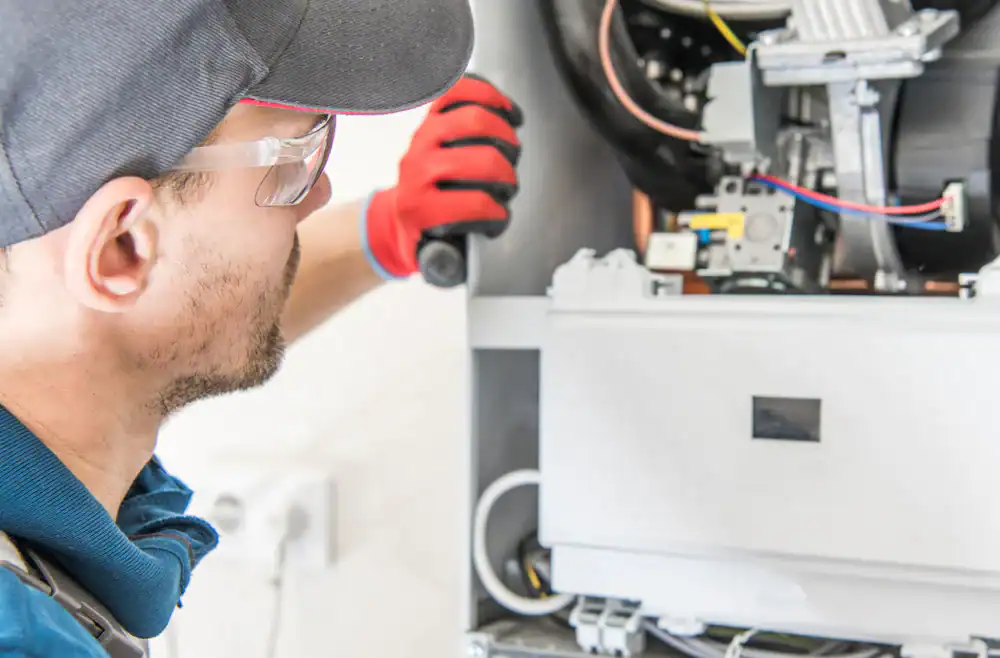
A thorough air conditioner maintenance visit covers the evaporator and condenser coils, the condensate drain line, electrical connections, motor voltage and current, refrigerant levels, blower components, and thermostat calibration — among other things. Each of those items has a real impact on how efficiently your system runs and how long it lasts.
A clogged evaporator coil alone can reduce your system’s cooling capacity by 20 to 40 percent, meaning your unit is working harder, using more electricity, and wearing out faster — while still technically cooling your home. That last part is what catches people off guard. The system feels like it’s working. The problem is invisible until it isn’t.
When to Service Your AC in Essex County — and Why Fall Is Often the Right Call
The standard advice is spring. Get your AC checked before cooling season starts, make sure everything’s in order, and you’re set. That’s solid advice — but it leaves out a big piece of the picture for Essex County homeowners.
By late August, your system has been running continuously through one of the more demanding climates on the East Coast. New Jersey summers aren’t just hot — they’re humid in a way that puts a specific kind of stress on HVAC equipment. Your AC isn’t just cooling the air; it’s acting as a dehumidifier, pulling moisture out continuously and routing it through a condensate drain line. In a summer like the ones Essex County regularly sees, that drain line is working overtime. Algae, buildup, and blockages are common — and a clogged condensate line means water backup, potential ceiling or wall damage, and indoor humidity that makes your home feel like a greenhouse.
So when to service your AC? If you got a spring tune-up, an end-of-season check is still a smart move — especially if your system is older or you noticed anything unusual this summer. If you skipped the spring visit entirely and your system has been running since Memorial Day without any professional attention, late summer isn’t too late. It’s actually the right time.
There’s also a practical scheduling reality worth knowing. Come June, quality HVAC contractors in Essex County book up fast. A homeowner who discovers a problem during a July heat wave is looking at a week or two wait — sometimes longer. Getting your system looked at in September or October means you’re not competing with emergency calls, you’re not waiting in a queue, and if something does need to be addressed, you have time to handle it without pressure.
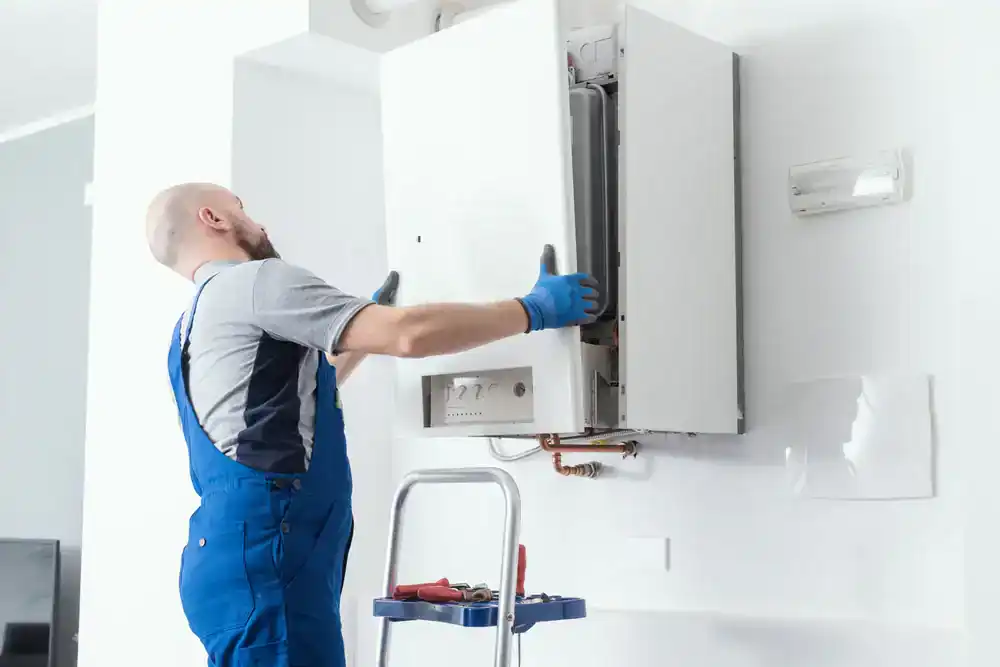
The end of cooling season is also the natural transition point to fall heating prep. If a technician is already at your home checking the AC, that’s the right moment to talk about your furnace or boiler before you need it. Two birds, one visit — and no scrambling in November when the heat won’t turn on.
What You Can Do Yourself vs. What Requires a Licensed Technician
This is the question most homeowners actually want answered, and most HVAC content either ignores it or buries it. So here it is plainly.
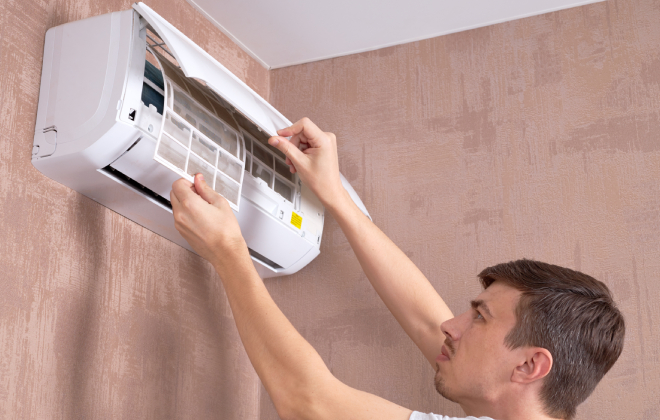
There are things you can and should do yourself. Changing the air filter is the most important one. A dirty filter forces your system to work harder, and the Department of Energy estimates that replacing a clogged filter alone can cut AC energy consumption by 5 to 15 percent. That’s a meaningful number for a task that costs under $30 and takes five minutes.
You should also keep the area around your outdoor condenser unit clear — no overgrown shrubs, no debris piled up against the unit — and make sure your vents inside the home aren’t blocked by furniture. One thing worth knowing: closing vents in unused rooms doesn’t save energy. It actually creates pressure imbalances that waste conditioned air and can stress the system.
That’s roughly where the DIY list ends. Anything involving refrigerant is federally regulated — technicians must hold EPA Section 608 certification to handle it legally, and a refrigerant charge that’s even 10 percent low cuts system efficiency by 20 percent. Cleaning evaporator and condenser coils properly requires specific chemicals and technique; doing it wrong damages the coils. Checking and tightening electrical connections, testing motor voltage, and inspecting the blower components all require tools and training that go beyond what a homeowner should reasonably take on.
There’s also the warranty angle, which most homeowners don’t find out about until it’s too late. Most major HVAC manufacturers — including Trane, Lennox, Daikin, and American Standard — require documented proof of annual professional maintenance to honor parts warranty claims. If your compressor fails on a system that’s six years old and you’ve never had it professionally serviced, the manufacturer may deny the claim entirely. That’s not a hypothetical. It happens. And a compressor replacement is not a small expense.
The honest division is this: filter changes and keeping the outdoor unit clear are yours. Everything else — coils, refrigerant, electrical, condensate drain, motor components — belongs to a licensed technician.
AC Filter Replacement and the Maintenance Tasks Essex County Homeowners Often Miss
Essex County has some of the oldest residential housing stock in New Jersey. In towns like Montclair, Irvington, Bloomfield, and East Orange, it’s not unusual to find homes where a third of the neighborhood was built before 1950. Many of those homes have HVAC systems installed in the 1990s or early 2000s — systems that are now 15 to 20 years old, at or past the point where maintenance stops being optional and starts being the difference between getting a few more good years out of the equipment or facing an unplanned replacement.
For homes like these, a generic checklist isn’t quite enough. The specifics matter.
How Often to Change Your AC Filter and Why It Matters More Than You Think
Most homeowners know they’re supposed to change the filter. Fewer actually do it on a consistent schedule. And in a place like Essex County, where summer air quality is affected by heat, humidity, and proximity to urban areas like Newark and East Orange, the filter in your system is doing more work than it might in a drier, less dense environment.
The general guidance is every one to three months, depending on the filter type, whether you have pets, and how much the system runs. In a home that ran the AC continuously from June through August — which describes a lot of Essex County households this past summer — the filter at the end of the season is not the same filter you’d find in a home that ran it occasionally. It’s carrying months of particulate, and that restriction is costing you efficiency every day it stays in.
MERV ratings are worth understanding briefly. A higher MERV rating means the filter catches smaller particles, which is good for air quality but creates more airflow resistance. For most residential systems, a MERV 8 to 11 filter is the right balance — effective filtration without straining the blower. Very high MERV filters (13+) are designed for specific systems and can actually reduce airflow in a standard residential unit to the point where it causes problems. If you’re not sure what your system is designed for, that’s a good question to ask during a maintenance visit.
The bottom line on filters: change them at the end of the season, before you shut the system down for fall. It’s the single most impactful thing you can do yourself, and it costs almost nothing relative to what a neglected filter can compound into over time.
The Condensate Drain Problem That’s More Common in Essex County Than Most Homeowners Realize
This one doesn’t get talked about enough, and it’s particularly relevant to Essex County homeowners.
When your AC runs, it removes moisture from the air — that’s part of how it makes your home feel comfortable, not just cooler. That moisture collects in a drain pan and exits through a condensate drain line. In a dry climate, this is a minor system function. In New Jersey, where summer humidity regularly makes the air feel thick and heavy, your AC is pulling significant amounts of moisture out of the air on a continuous basis. The condensate drain line is working hard.
The result is that these lines clog more often in our climate than the national average. Algae, mold, and general buildup accumulate inside the line over the course of a summer. When the line clogs, the drain pan overflows. That water has to go somewhere — and it usually goes into the ceiling, the wall, or the floor around the air handler. Water damage from a clogged condensate line is one of the more avoidable repair scenarios in residential HVAC, and it’s also one of the more expensive ones once drywall and mold remediation enter the picture.
End-of-season inspection and clearing of the condensate drain line is a standard part of a professional tune-up, and it’s one of the tasks that matters most for homes in this part of New Jersey. If your system has been running hard since June and no one has looked at that drain line, it’s worth getting it checked before you close everything down for the season. A small amount of attention now prevents a much larger problem from waiting quietly through the fall and winter, ready to surface the moment you turn the system back on next spring.
For older homes in places like Montclair, Glen Ridge, or Maplewood — where the air handlers are often in finished basements or tight utility spaces — the water damage risk from an overflowing drain pan is real and not always immediately visible. Don’t skip this one.
Getting Your AC Ready for the Off-Season in Essex County
The end of summer is the right time to take stock. Your system worked hard — probably harder than you realized — and a little attention now is worth a lot more than an emergency call next July when every contractor in the county is booked out.
Change the filter. Clear the outdoor unit. And get a licensed technician to handle the rest: coils, condensate drain, refrigerant, electrical connections, and everything that actually requires training and tools to do correctly. If your system is pushing 15 years and hasn’t had consistent maintenance, that conversation is worth having honestly — not to pressure you into anything, but because knowing where you stand is better than finding out mid-summer.
If you’re in Essex County and want someone who will give you a straight answer about what your system actually needs, we’ve been doing this work here since 1973. Reach out for a free estimate or ask about our Home Comfort Membership Plan — it covers both your spring cooling check and your fall heating prep, so you’re not trying to remember to schedule it twice a year.
Article details:
- Published by:
- Adriatic Aire LLC
- Published to:
- Last modified:
- September 10, 2026
Share:
Continue learning: