
Heating Replacement in Watsessing, NJ
When a Century-Old Home Can't Wait Another Winter


Boiler Replacement in Watsessing, NJ
Most Watsessing homeowners don’t think about their heating system until it stops working. You get home from the Watsessing Avenue station after a long commute, walk through the door, and the house is cold. In January, with temperatures dropping into the mid-twenties overnight, that’s not just inconvenient it becomes a real problem, especially if you have kids or elderly family members at home.
A new heating system changes that equation completely. You stop worrying about whether this is the winter it finally gives out. You stop calling for emergency repairs that cost more than a planned replacement would have. Your fuel bills drop sometimes significantly and you’re not burning through oil at $1,800 to $2,500 a winter when a high-efficiency gas system could cut that down to $1,000 to $1,500.
Watsessing’s homes were built in an era when heating systems were designed to be workhorses, not efficiency machines. The housing stock here is dense, old, and often under-insulated which means your boiler has been working harder than it was ever meant to. Replacing it doesn’t just solve a comfort problem. It removes the financial risk of a system that’s one cold snap away from leaving you without heat entirely.
HVAC Contractor Serving Watsessing, NJ
We’ve been doing heating replacements in Essex County since May 15, 1973. That’s more than five decades of working in homes exactly like the ones in Watsessing Victorian-era construction, cast-iron radiator systems, oil-fired boilers that have been patched and re-patched over the years. This isn’t a regional call center dispatching subcontractors. We’re a family-owned operation that knows the difference between a quick fix and a job done right.
With over 500 Google reviews at 5.0 stars and HomeAdvisor Screened and Approved status maintained for five years, our track record speaks for itself. We hold NJ HVAC License No. 19HC00022600, which means every heating replacement in Watsessing is pulled with the proper mechanical permit no shortcuts, no liability left on your end.
When you call, you reach people who have been in this market long enough to know what Watsessing homes actually need not a generic sales pitch, but a real assessment of what’s there and what makes sense to replace it with.
Heating System Replacement Process in Watsessing, NJ
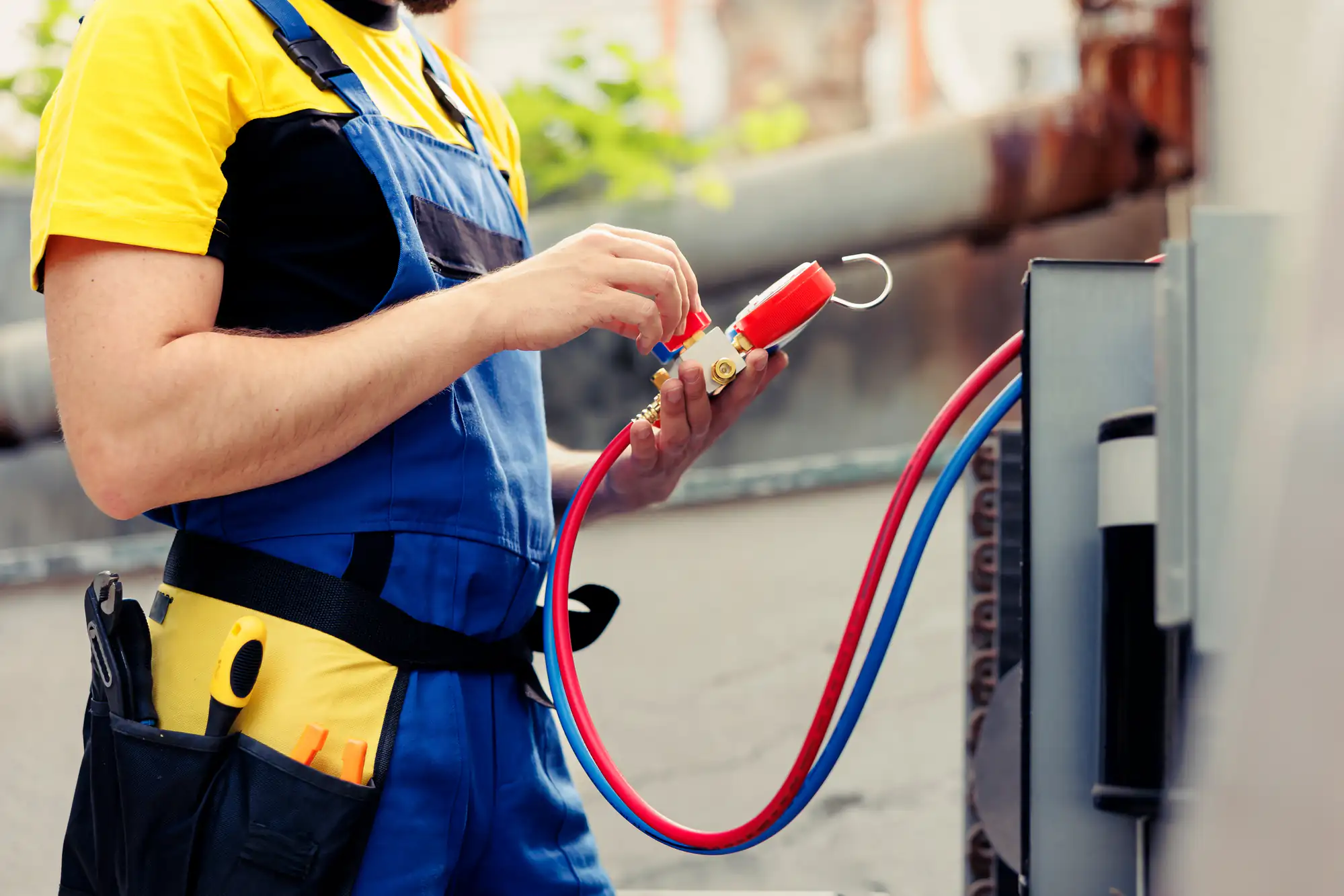
It starts with a free estimate. A licensed technician comes to your home, looks at what you have whether that’s an aging oil boiler, a failing furnace, or a system that’s been limping along for years and gives you a clear number before any work begins. No pressure, no vague ranges. If you’re considering an oil-to-gas conversion, that gets factored in at this stage too, including what PSE&G will need to do on the gas service side.
Once you decide to move forward, we pull the required mechanical permit through Bloomfield Township’s Construction Department. Because Watsessing falls under Bloomfield Township’s jurisdiction not a separate municipality all permitting runs through that office, and we handle it as part of the job. You don’t need to chase paperwork or make calls to the township yourself.
The installation itself is typically completed in a single visit. For oil-to-gas conversions in older Watsessing homes, there may be additional coordination with PSE&G to connect or upgrade the gas line, and if there’s an in-ground oil tank involved, that removal is coordinated separately under NJ environmental requirements. After the system is in and running, it goes through a full inspection before the job is closed out. Our workmanship guarantee covers the installation if something isn’t right, we make it right.
Ready to get started?
Oil to Gas Conversion in Watsessing, NJ
Heating replacement in Watsessing isn’t a one-size-fits-all job. The neighborhood’s housing stock predominantly built between the 1880s and 1940s means most homes are running boiler-based systems with cast-iron radiators, not forced-air ductwork. That matters because a straight furnace swap isn’t always the right answer. We service all major brands including Trane, Lennox, Weil-McLain, and Utica, so the equipment recommendation is based on what actually fits your home’s existing setup, not what’s easiest to install.
For homes still running on oil heat, the replacement conversation often becomes an oil-to-gas conversion. PSE&G’s gas infrastructure already runs through the Bloomfield Township area, which means most Watsessing homes can convert without major street-level gas line work. The savings are real switching from a mid-efficiency oil boiler to a high-efficiency gas system can bring your annual heating costs from the $1,800–$2,500 range down to $1,000–$1,500. Over five or ten years, that difference pays for a significant portion of the replacement itself.
We offer financing through FTL Finance, which matters when you’re looking at a full system replacement in an older home. Free estimates are included, and our 24/7 availability means that if your system fails on a Tuesday night in February, you’re not waiting until Thursday morning to get someone on the phone.
How do I know if my Watsessing home needs a full heating replacement?
The clearest sign is age. If your boiler or furnace is more than 20 years old, you’re past the point where repairs are a reliable long-term strategy. In Watsessing specifically, where the housing stock runs heavily toward 19th- and early 20th-century construction, it’s not unusual to find systems that are 30 or 40 years old or older original configurations that have been partially updated over time. These systems were never designed for the efficiency standards we have today, and they’re often working harder than they should because the homes themselves have high heat loss through old walls and windows.
Beyond age, watch for uneven heat distribution across rooms, a system that cycles on and off more frequently than it used to, or energy bills that keep climbing without a clear explanation. If you’ve had two or more repair calls in the past two winters, the math usually favors replacement over continuing to patch an aging system. A free estimate from us gives you a real number to compare against what you’ve been spending on repairs.
What's the difference between furnace replacement and boiler replacement, and which does my home need?
The short answer is that it depends on what your home already has. Furnaces use ductwork and vents to push heated air through the house. Boilers heat water and distribute it through radiators or radiant floor systems. Most homes in Watsessing were built before forced-air systems were standard, which means the majority have boiler-based setups with cast-iron radiators in each room not ductwork.
If your home has radiators, you’re almost certainly looking at a boiler replacement, not a furnace. Converting a radiator-based home to forced-air would require installing ductwork throughout the house, which is a significantly more invasive and expensive project than simply replacing the boiler with a modern, high-efficiency unit. In most cases, a like-for-like boiler replacement or an oil-to-gas boiler conversion is the more practical and cost-effective path for Watsessing homeowners. We can confirm what system you have and what makes the most sense for your specific setup during the free estimate visit.
Is oil-to-gas conversion worth it for a home in Watsessing, NJ?
For most Watsessing homeowners still running oil heat, the answer is yes and the timing matters. Natural gas infrastructure through PSE&G already serves the Bloomfield Township area, which means most homes in Watsessing can connect to gas without major street-level construction. That removes one of the bigger cost barriers that can make conversion less appealing in areas where gas lines aren’t already nearby.
The fuel savings alone are significant. A mid-efficiency oil boiler typically costs between $1,800 and $2,500 to run through a single winter. A high-efficiency gas system brings that down to roughly $1,000 to $1,500 annually. Over a decade, that’s a difference of $5,000 to $10,000 in fuel costs before you factor in the reduced maintenance burden and the liability removal of an aging oil tank. In New Jersey, underground oil tanks carry real environmental and legal exposure if they leak, and decommissioning one as part of a conversion eliminates that risk entirely. If your oil system is already aging and you’re facing a replacement anyway, converting to gas at the same time is usually the smarter financial decision.
Do I need a permit for heating replacement in Watsessing, and who handles that?
Yes, a mechanical permit is required for any heating system replacement in Watsessing. Because Watsessing is a neighborhood within Bloomfield Township not an independent municipality all building permits and HVAC inspections are handled through the Bloomfield Township Construction Department. New Jersey state law also requires that the permit be pulled by a licensed NJ HVAC contractor. You cannot legally do this work without one.
We hold NJ HVAC License No. 19HC00022600 and handle the permit process as a standard part of every job. You don’t need to navigate the township’s permitting office yourself or worry about whether the installation will pass inspection. The permit is pulled before work begins, the installation is done to code, and the inspection is completed before the job is closed out. This matters beyond just legal compliance an unpermitted heating system can create problems when you sell your home, and it can affect your homeowner’s insurance coverage if something goes wrong. Doing it right from the start protects you on every front.
How long does a heating replacement actually take to complete?
For a straightforward boiler or furnace replacement swapping out an existing system for a new one of the same type the installation is typically completed in a single day. The technician arrives, removes the old unit, installs the new equipment, connects it to the existing distribution system, and runs the system through a full test before leaving. Most homeowners have heat restored the same day the job starts.
Oil-to-gas conversions take a bit more coordination. In addition to the equipment installation itself, PSE&G needs to be involved to connect or upgrade the gas service line to the home. That step is scheduled separately and can add a few days to the overall timeline depending on PSE&G’s schedule. If there’s also an in-ground oil tank that needs to be decommissioned, that’s handled under a separate NJ environmental process and may require its own licensed contractor. We can walk you through what applies to your specific home during the estimate visit so you have a realistic timeline before any work begins not a surprise after the fact.
Does Adriatic Aire offer financing for heating replacement in Watsessing?
Yes, we offer financing through FTL Finance. A full heating replacement in an older Watsessing home particularly one that involves an oil-to-gas conversion with oil tank decommissioning can run into the range of $12,000 to $18,000 depending on the scope of the project. That’s a real number, and it’s not a cost most households can absorb out of pocket without some planning.
Financing makes it possible to replace a failing or inefficient system now, on your timeline, rather than waiting until a breakdown forces an emergency decision in the middle of winter. Emergency replacements almost always cost more rushed equipment sourcing, premium labor rates, and less time to evaluate options. For Watsessing homeowners who own their homes and have equity but don’t want to drain savings on a single repair, financing through FTL Finance gives you a way to get the job done properly and pay over time. The free estimate gives you the full number upfront so you can make an informed decision before committing to anything.
Other Services we provide in Watsessing