Fast HVAC Repair in Hoboken: Solving Common Heating and Cooling Issues
Share:

Your air conditioner stopped cooling on the hottest day of summer. Or your furnace quit in the middle of a January cold snap. Either way, you’re uncomfortable, frustrated, and need someone who can actually fix it—not just show up, poke around, and tell you it’ll be $12,000 for a new system.
HVAC problems don’t follow a schedule. They show up when your system is working hardest, and they rarely give you much warning. What you need is someone who understands what goes wrong with heating and cooling systems in Hoboken, NJ and Essex County, NJ, can diagnose it accurately the first time, and won’t waste your time or money. Let’s start with what’s actually happening when your system fails.
What Causes Most HVAC Repairs in Hoboken, NJ and Essex County
Living near the water changes how your HVAC system ages. Salt in the air from the Hudson River accelerates corrosion on outdoor units. Humidity during summer puts extra strain on air conditioning systems that are already working overtime.
Winter isn’t any easier. Cold temperatures demand reliable heat, and older boilers or furnaces in this area have been through decades of freeze-thaw cycles. Add in the fact that many homes in Hoboken, NJ and Bayonne, NJ were built before modern HVAC standards, and you’ve got systems that face more stress than equipment in newer construction.
Most HVAC repair calls we handle trace back to a handful of issues: clogged filters restricting airflow, refrigerant leaks in AC units, ignition problems in furnaces, or pressure issues in boilers. The key is catching these before a minor problem turns into a complete system failure.
Why Your Air Conditioner Stops Cooling When You Need It Most
You set the thermostat to 68. The system is running. But the air coming out of the vents feels weak, or worse—it’s not cold at all.
This happens more often than you’d think during heat waves when your AC is running nonstop. The most common culprit is a clogged air filter. When filters get packed with dust and debris, airflow gets restricted. Your system has to work harder to push air through, which means it’s using more energy and delivering less cooling.
Dirty filters aren’t the only issue. Low refrigerant levels will also kill your cooling capacity. If there’s a leak in the refrigerant line, your air conditioning system can’t absorb heat properly. You might notice ice forming on the outdoor unit or hear hissing sounds near the compressor.
Frozen evaporator coils are another problem that shows up during heavy use. When airflow is restricted or refrigerant is low, the coils get too cold and ice over. Once that happens, the system can’t cool your home at all. You’ll see condensation or ice around the indoor unit, and the air coming from vents will be room temperature at best.
Hoboken’s coastal location makes condensate drain line clogs more common too. High humidity means your AC pulls a lot of moisture out of the air. That water has to drain away through a small line, and over time, algae and sludge can block it. When the line clogs, water backs up into the system or leaks around the indoor unit. If your AC shuts down unexpectedly during summer, a clogged drain line could be why.
Fixing these air conditioning repair issues isn’t always complicated, but it does require accurate diagnosis. Throwing parts at the problem or guessing wastes time and money. What you need is someone who knows what to look for and can get your system cooling again without the runaround.
Common Furnace Repair and Boiler Repair Problems That Leave You Without Heat
When your heat goes out in January, it’s not just uncomfortable—it’s urgent. Furnaces and boilers can fail for different reasons, but the result is the same: a cold house and a problem that needs fixing now.
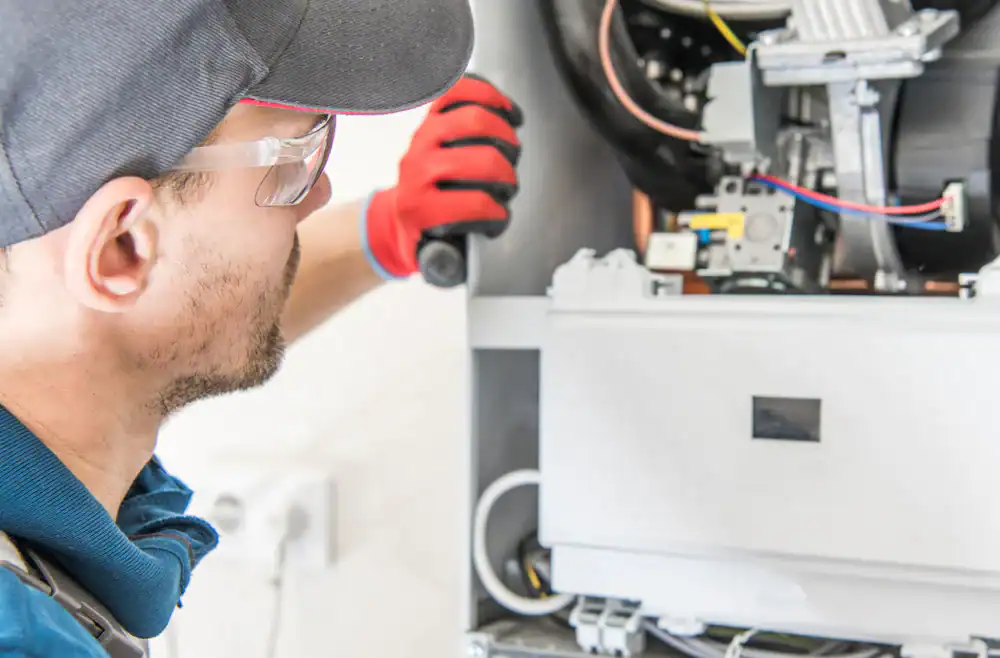
Furnace repair issues often start with the ignition system. If the pilot light won’t stay lit or the electronic ignition isn’t working, the burners won’t fire up. You might hear the system trying to start, but no heat comes out. Thermostat problems can mimic this too—if the thermostat isn’t reading temperature correctly or isn’t communicating with the furnace, your system won’t know when to turn on.
Dirty filters cause furnace problems just like they do with AC units. When airflow is blocked, the system overheats and safety switches shut it down to prevent damage. If your furnace keeps cycling on and off, or if it’s blowing air but the air isn’t warm, a clogged filter is often the first thing we check.
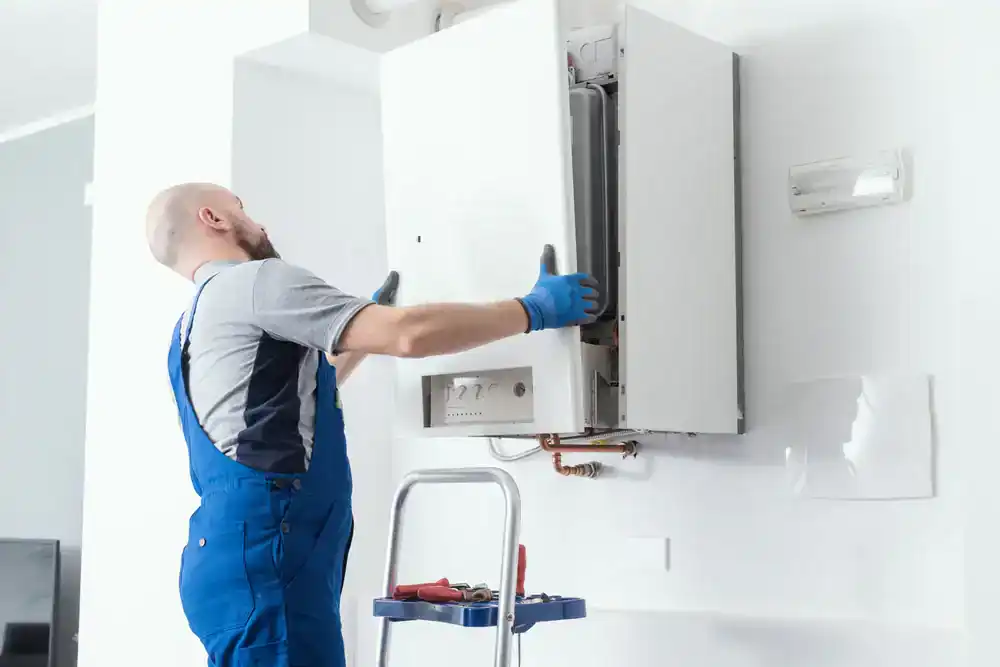
Boilers have their own set of issues. Leaks are common, especially in older systems throughout Essex County, NJ. You might see water pooling around the boiler, notice dampness on walls near radiators, or find that pressure is dropping on the gauge. Leaks can come from faulty valves, corroded pipes, or worn seals in the circulator pump.
Kettling is another boiler repair problem that’s hard to ignore. If you hear loud banging or rumbling sounds coming from the unit, limescale or sludge has built up on the heat exchanger. This restricts water flow and causes the trapped water to overheat and steam. It’s not just annoying—it puts stress on the system and can lead to bigger failures if it’s not addressed.
Pressure problems show up in boilers too. If pressure is too low, the system won’t heat properly. If it’s too high, the relief valve will release water to protect the boiler from damage. Either way, something’s not right, and it usually points to an issue with the expansion tank, a leak somewhere in the system, or a valve that’s stuck or failing.
Radiators that won’t heat evenly are often caused by trapped air. Bleeding the radiators can fix this, but if the problem keeps coming back, there’s likely a deeper issue with circulation or pressure. Older homes in Hoboken, NJ often have radiator systems that need attention, and knowing how to maintain them makes a difference in how reliably they perform.
The bottom line with heating repair is this: when you’re cold, you don’t have time for trial and error. You need someone who can walk in, identify what’s wrong, and fix it so you’re warm again. Not next week. Today.
HVAC Repair vs Replacement: How to Know Which One You Actually Need
This is the question every homeowner dreads: is it worth fixing, or do you need a new system?
There’s no universal answer, but there are some guidelines that help. If your HVAC system is under 10 years old and the repair is straightforward—like replacing a capacitor or fixing a valve—repair almost always makes sense. If your system is 15 years old or older and you’re looking at a major repair like a compressor or heat exchanger replacement, the math starts to shift.
A good rule: if the repair cost is more than half the price of a new system, and your equipment is already past its expected lifespan, replacement is usually the smarter long-term move. HVAC systems in New Jersey typically last 12 to 15 years with proper maintenance. Once you’re past that point, efficiency drops, repairs become more frequent, and parts get harder to find.
What HVAC Repair Actually Costs in Essex County, NJ
Repair costs vary depending on what’s broken and how complex the fix is. In New Jersey, you’re looking at higher labor rates than the national average—experienced HVAC contractors typically charge between $125 and $180 per hour. That’s just the reality of working in this region.
For most repairs, homeowners pay somewhere between $150 and $600. Simple fixes like replacing a thermostat, changing a capacitor, or clearing a clogged drain line fall on the lower end. More involved repairs—like fixing a refrigerant leak, replacing a blower motor, or addressing ignition system failures—can push costs higher.
Boiler repair can get expensive fast, especially if you’re dealing with a heat exchanger or circulator pump replacement. Those jobs can run over $1,000 depending on the part and labor involved. Emergency HVAC repair calls during peak heating or cooling season will add $100 to $200 to the total, and weekend or after-hours service usually costs more.
Here’s something most people don’t realize: regular maintenance can cut your repair costs by up to 40%. Catching small issues during a tune-up—like a worn belt, a dirty coil, or low refrigerant—prevents those problems from turning into major breakdowns later. An annual maintenance visit costs between $150 and $300, which is a lot less than an emergency repair in the middle of summer or winter.
The other thing to consider is energy costs. If your system isn’t running efficiently, you’re paying for it every month on your utility bill. New Jersey’s electricity rates are already high and climbing. A system that’s struggling to keep up doesn’t just cost more to repair—it costs more to operate. Sometimes a repair that restores efficiency pays for itself in energy savings over the next year or two.
When you’re getting a repair quote, make sure it’s detailed. You should know exactly what part is being replaced, what the labor involves, and whether the price includes any follow-up if the problem persists. Vague estimates or prices that seem too good to be true usually are. We’ll always explain what’s wrong, why it needs to be fixed, and what it’s going to cost before any work starts.
Warning Signs You Shouldn’t Ignore Before Calling for HVAC Repair
Some HVAC problems can wait a few days. Others can’t. Knowing the difference can save you from a more expensive repair—or a complete system failure.
If your system stops producing heat or cooling entirely, that’s an obvious call. But there are earlier warning signs that tell you it’s time to get help before things get worse.
Strange noises are a big one. Banging, rattling, screeching, or grinding sounds mean something inside the system is loose, worn out, or failing. Ignoring these noises doesn’t make them go away—it just gives the problem more time to cause damage to other components.
Weak airflow is another red flag. If some rooms aren’t getting enough air, or if the air coming from vents feels weak even when the system is running, there’s likely a blockage, a duct issue, or a problem with the blower. Uneven temperatures throughout your home aren’t just uncomfortable—they’re a sign your system isn’t distributing air the way it should.
Leaks around your HVAC equipment need immediate attention. Water pooling near your furnace, boiler, or indoor AC unit can cause structural damage, promote mold growth, and indicate a serious problem with the system. If you see water where it shouldn’t be, turn off the system and call for service.
Foul odors are worth investigating too. A burning smell when you first turn on your furnace in the fall is normal—it’s just dust burning off. But if the smell persists or if you smell gas, that’s a safety issue. Shut off the system and get a technician out right away.
Frequent cycling—where your system turns on and off repeatedly in short bursts—is a sign of a deeper problem. It could be a faulty thermostat, a refrigerant issue, or an incorrectly sized system. Short cycling puts excessive wear on your equipment and drives up energy costs.
If your energy bills suddenly spike without any change in how you’re using your system, that’s your HVAC telling you something’s wrong. Systems that are struggling use more energy to do the same job. The longer you wait, the more you’re paying in wasted energy on top of the repair you’ll eventually need anyway.
The key with any of these signs is not to wait until you’re completely without heat or cooling. Catching problems early almost always costs less than dealing with a full breakdown. And when you’re in the middle of a heat wave or a cold snap, getting on a technician’s schedule can take days. Calling at the first sign of trouble gives you options. Waiting until it’s an emergency doesn’t.
Getting Reliable HVAC Repair in Hoboken, NJ and Essex County
HVAC problems are never convenient, but they don’t have to be a nightmare either. When you know what to look for and who to call, you can get your system fixed quickly without overpaying or dealing with contractors who waste your time.
The most important thing is finding someone who’s honest about what’s wrong and what it’ll take to fix it. You don’t need a sales pitch. You need a diagnosis, a fair price, and work that actually solves the problem. Local experience matters too—understanding how coastal conditions and older building infrastructure affect HVAC systems in this area makes a difference in the quality of the repair.
If your heating or cooling system isn’t working the way it should, don’t wait for it to fail completely. When you need fast, honest HVAC repair in Hoboken, NJ, Bayonne, NJ, Jersey City, or anywhere in Essex County, NJ, reach out to us at Adriatic Aire and we’ll get it handled before it turns into an emergency.
Article details:
- Published by:
- Adriatic Aire LLC
- Published to:
- Last modified:
- April 29, 2026
Share:
Continue learning: