Boiler vs Furnace: Which Heating System Is Best for New Jersey Homes?
Share:
You need heat. That’s not negotiable when you’re facing a New Jersey winter. But figuring out whether a boiler or furnace is the right move for your home? That’s where things get confusing. These systems work completely differently, cost differently, and suit different situations. One heats water and sends it through pipes. The other heats air and blows it through ducts. Both can keep you warm, but the best choice depends on your home’s setup, your budget, and what matters most to you. This guide walks you through the real differences so you can make a decision that actually fits your situation.
How Boilers and Furnaces Actually Work
A boiler doesn’t boil water despite its name. It heats water using natural gas, oil, or electricity, then pumps that hot water or steam through pipes to radiators, baseboard heaters, or radiant floor systems throughout your home. The heat radiates from these surfaces into your rooms. No fans, no ductwork, no air movement.
A furnace works the opposite way. It pulls in air, heats it with a burner or electric element, then uses a blower to push that warm air through ducts and out of vents in your floors, walls, or ceilings. This is called forced-air heating. The system cycles on and off based on your thermostat setting, and you feel the heat almost immediately when it kicks on.
The difference matters because it affects everything else: installation requirements, energy costs, comfort levels, and what breaks when something goes wrong.
What a Boiler Heating System Includes
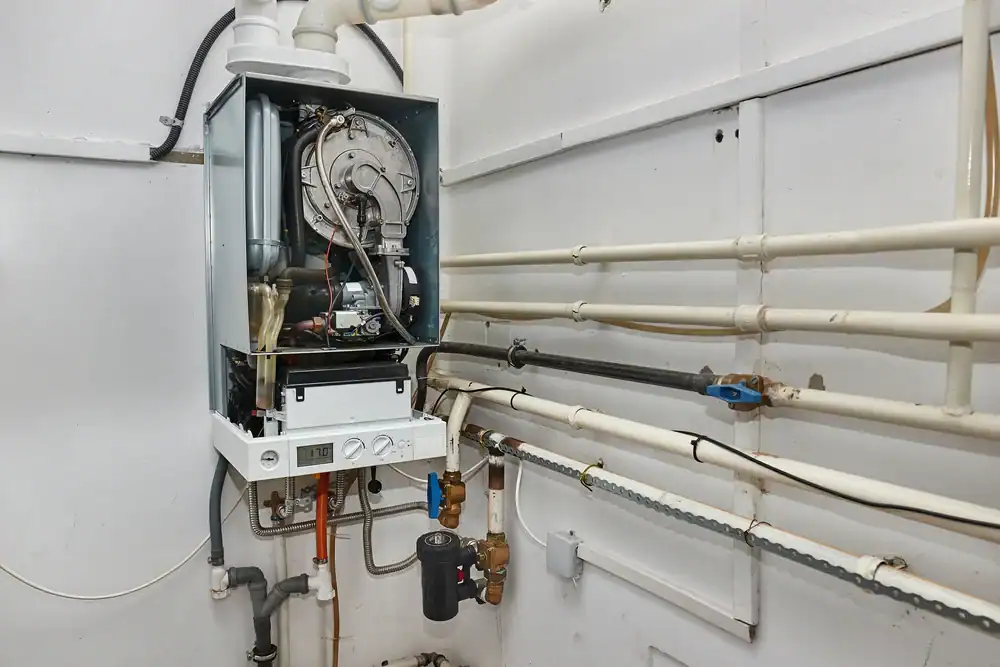
A boiler system is more than just the boiler itself. You’re looking at a network of components that work together to distribute heat through water instead of air.
The boiler unit heats the water. Most modern systems use natural gas, though oil and propane options exist. The heated water moves through a closed loop of pipes to radiators, baseboard units, or tubing installed under your floors. A circulator pump keeps the water moving through the system. Older homes in Essex County often have cast-iron radiators that you can’t miss. Newer installations might use sleeker baseboard units or in-floor radiant heat that you don’t even see.
Because the system uses water, you also need an expansion tank to handle pressure changes as the water heats and cools. A pressure relief valve prevents dangerous buildup. The whole system is sealed, meaning the same water circulates continuously. You’re not constantly adding new water unless there’s a leak.
Maintenance is simpler than you’d think. No filters to change monthly. The main tasks involve checking water pressure, bleeding air from radiators if needed, and having a technician inspect the system annually. The lack of moving parts compared to a furnace means fewer things can break. But when something does go wrong with a boiler, it often involves water, and that can mean leaks that damage floors, walls, or ceilings if not caught early.
What a Furnace Heating System Includes
A furnace system centers on the furnace unit, but it needs ductwork throughout your home to function. The furnace sits in your basement, attic, or utility closet. Inside, a burner or heating element warms a heat exchanger. A blower fan pulls air from your home through return ducts, pushes it across the hot heat exchanger, then sends the warmed air back out through supply ducts to vents in each room.
The ductwork is the hidden part most people don’t think about until there’s a problem. These metal or flexible tubes run through walls, floors, and ceilings. They need to be properly sized and sealed or you lose heat before it reaches the rooms. Leaky ducts can waste 20-30% of your heating energy, which shows up as higher bills and cold spots in your home.
Furnaces also need a thermostat, obviously, plus a filter that sits in the return duct. This filter catches dust, pet hair, and other particles before they reach the furnace. It needs to be changed every one to three months depending on how much dust your home generates. Skip this and your furnace works harder, costs more to run, and wears out faster.
The blower motor is another component that gets a workout. It runs every time the furnace cycles on, pushing air through the entire duct system. Over time, bearings wear out, belts can slip or break, and the motor itself may need replacement. This is one reason furnaces generally require more maintenance visits than boilers. More moving parts means more potential failure points. But furnaces also heat your home faster than boilers, and if you already have ductwork for central air conditioning, adding a furnace is usually more straightforward than installing a boiler from scratch.
Cost Comparison: Installation and Monthly Operating Expenses
The money question comes up first for most people, and the answer isn’t as simple as one number. Installation costs and monthly operating costs tell two different stories.
Furnaces typically cost less to install upfront. You’re looking at a lower equipment price and faster installation. Boilers cost more initially because the equipment itself is more expensive and installation takes longer. But here’s where it gets interesting: boilers usually cost less to operate month after month because water holds heat better than air. You use less fuel to maintain the same comfort level.
The real cost depends on what you’re starting with. If your home already has ductwork, a furnace makes financial sense. If you’re starting from scratch or your home has radiators and pipes already in place, working with what you have almost always costs less than ripping everything out.
Upfront Installation Costs in New Jersey
In New Jersey, installing a new boiler typically runs between $5,400 and $12,000, with most homeowners paying around $8,750 for a mid-range system. High-efficiency models push toward the upper end of that range. The equipment itself accounts for a big chunk, but labor matters too. Boiler installation takes specialized knowledge. The installer needs to size the system correctly, connect all the piping, set up the circulator pump, install the expansion tank, and make sure everything is sealed and pressure-tested.
Furnace installation usually costs less, somewhere in the range of $2,500 to $6,000 for the equipment and labor combined. The job goes faster because furnaces are more straightforward to install. The unit connects to existing ductwork, the gas line or electrical supply, and the thermostat. A good installer can often complete the job in a day.
But those numbers assume you already have the infrastructure. If you need to add ductwork to a home that doesn’t have it, that can add $5,000 or more to your furnace installation. Same goes for boilers. If you’re converting from a furnace to a boiler, you’ll need to install all new piping and radiators or radiant floor systems. That conversion can easily double the installation cost.
New Jersey also requires permits for boiler and furnace installations. Permit costs typically run $100 to $500 depending on your municipality. Your installer should handle this, but it’s part of the total cost. The state also requires inspections to make sure everything meets safety codes. This protects you, even if it adds a step to the process.
One more cost factor: if you’re switching fuel types, say from oil to natural gas, you’ll need a gas line installed if you don’t already have one. That can add another $1,000 to $1,500. And if your chimney isn’t compatible with your new system, you might need a liner installed, which can cost up to $2,000.
Monthly Operating Costs and Energy Efficiency
Operating costs depend on two things: how much fuel your system uses and how much that fuel costs. Efficiency ratings tell you the first part. Both boilers and furnaces use AFUE ratings, which stands for Annual Fuel Utilization Efficiency. This percentage tells you how much of your fuel actually becomes heat for your home versus how much escapes up the chimney or gets wasted.
Modern high-efficiency boilers typically hit AFUE ratings between 90% and 95%. Some newer models reach 98%. Modern furnaces can also achieve high efficiency, with the best units reaching 98.5% AFUE. So on paper, the efficiency numbers can look similar. But here’s what the numbers don’t show: boilers lose less heat through the distribution system. Water moving through insulated pipes loses less energy than air moving through ducts, especially if those ducts run through unheated spaces like attics or crawlspaces. Duct leaks alone can reduce a furnace’s effective efficiency by 10-15%.
This difference shows up in your monthly bills. Boilers generally cost less to operate because they need less fuel to maintain the same temperature. Water holds heat longer than air, so the system doesn’t have to work as hard. Furnaces heat your home faster, but they also lose that heat faster once the blower stops.
Fuel costs matter too. In New Jersey, natural gas is the most common fuel for both systems. Gas prices fluctuate, but they’re generally lower than oil or propane. If you’re comparing an oil boiler to a gas furnace, the fuel cost difference might offset some of the efficiency advantage. Your specific situation depends on what fuel options you have available and what the current prices are in your area.
Maintenance costs factor into the long-term expense as well. Furnaces need more frequent attention. You’re changing filters regularly, which costs $20-$50 per filter depending on the type. Annual tune-ups run $100-$300. Boilers need annual service too, but they don’t have filters to replace. The service visit focuses on checking water pressure, inspecting the heat exchanger, testing safety controls, and making sure the circulator pump is working properly. Over a 15-20 year lifespan, these maintenance differences add up.
Making the Right Heating Choice for Your Essex County Home
The best heating system is the one that fits your home’s existing setup, your budget, and what you actually need from your heating. If you have ductwork and want fast heat, a furnace makes sense. If you have radiators or want quieter, more even heat, a boiler is probably the better call.
Don’t ignore what’s already in your home. Converting from one system to the other costs significantly more than replacing like with like. And if your current system is more than 15 years old and needs frequent repairs, replacement usually makes more financial sense than continuing to patch an aging unit.
The efficiency numbers matter, but so does proper installation and regular maintenance. A perfectly efficient system that’s poorly installed or never maintained will cost you more than a slightly less efficient system that’s installed correctly and serviced annually. When you’re ready to make a decision about your heating system, we can walk you through the options that actually work for your specific home in Essex County.
Article details:
- Published by:
- Adriatic Aire LLC
- Published to:
- Last modified:
- April 16, 2026
Share:
Continue learning: